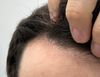
The conversation is about organizing hair regrowth results using a standard format in a single post for easier access. Treatments mentioned include oral minoxidil, oral finasteride, and dermarolling.
The user is experiencing a strange hair loss pattern despite using dutasteride for 3 years and minoxidil with tretinoin for 1.5 years. They recently added microneedling and are considering a scalp biopsy to understand the cause.
A dental technician claims malocclusion causes pattern hair loss due to poor scalp circulation. Users debate this, noting treatments like finasteride, minoxidil, and microneedling focus on DHT and blood flow.
A user is considering a hair transplant in a "mohawk" pattern with scalp micropigmentation (SMP) on the sides and back, questioning its feasibility and appearance. Others discuss donor region quality, potential scarring, and alternative treatments like dutasteride and RU58841.
The conversation is about finding a suitable hairbrush for diffuse thinning hair without causing separation or flattening. The user is using oral dutasteride, minoxidil foam, Nizoral, microneedling, and Pura D’or shampoo and conditioner.
Hair loss discussion includes Minoxidil and regrowth. Regrowing hairs start light and curly, then become dark and thick; losing temporal peaks is normal.
The user is using minoxidil, finasteride, dermarolling, and other treatments for hair regrowth, showing promising results in the temple area. Despite some skepticism, there is optimism about potential improvement.
The user is experiencing hair regrowth with oral minoxidil and dutasteride but still has fragile hairs that easily pluck out from the front center. Despite improvements, the user is concerned about the persistent fragility and shedding of these hairs.
Monthly microneedling combined with low-dose topical dutasteride shows promising results for hair density and thickness with minimal side effects, especially in the frontal area. Despite its effectiveness, it is not widely discussed or used due to availability and cost concerns.
Microneedling once a week at 1mm caused bumps, possibly scars, in the treated area. The user is considering cleaning the skin before microneedling to prevent this issue.
The conversation is about a female experiencing hair loss and seeking advice on why it's difficult to regrow hair. Specific treatments like Minoxidil, finasteride, or RU58841 are not mentioned.
A user is frustrated with slow and thin hair regrowth at the temples despite using Minoxidil for six months, along with dermastamping, oiling, vitamins, and exercise. They are seeking advice on why vellus hairs are not thickening.
The user is experiencing hair shedding despite using finasteride, minoxidil, and microneedling, and is concerned about the non-linear progress. Other users share similar experiences, suggesting shedding is normal and cyclical, with some recommending less frequent microneedling.
A gel of keratin microspheres promotes hair follicle growth, showing similar effectiveness to minoxidil in mice. The treatment activates hair growth pathways and reduces inflammation, with potential applications in drug delivery for hair-related disorders.
A person is experimenting with microneedling on one temple while using Minoxidil to address hair loss. They plan to needle weekly and apply Minoxidil twice daily, avoiding application around needling sessions.
To increase hair density appearance, options include using hair fibers, volume powders, scalp micropigmentation, and a combination of sea salt and holding sprays. Tape-in extensions and clip-in fringes are also considered, but cost and maintenance are concerns.
The user is experiencing hair regrowth in small clusters using oral minoxidil, oral finasteride, a red light cap, and Nizoral 2% shampoo. They are hopeful for continued improvement and thicker hair.
Keratin fusion bonds are discussed as an alternative to clip-on hair patches for men with diffused thinning. The conversation explores different styling options for hair loss.
User shared progress pictures of hair regrowth on the crown/vertex after a transplant and using finasteride, Minoxidil foam, and a dermapen. They hope to fully regrow or increase density in the crown area.
The conversation discusses concerns about using hair fibers while microneedling, specifically the potential for clogging pores. It is suggested that microneedling should not cause bleeding.
Microneedling frequency and depth, with suggested protocols involving 0.3mm every day before applying topical treatments like Minoxidil or Finasteride, and 0.5-1.5mm once or twice a month for wounding.
The conversation is about using micro needling and PTD-DBM for hair loss treatment. The user applies PTD-DBM drops on weekdays and performs micro needling weekly.
The user has been using oral minoxidil 2.5mg and finasteride 1mg for 3 months and is unsure if they are experiencing hair regrowth or if it's an illusion. Some responses suggest it is regrowth, while others think it's an illusion due to angles and lighting.
The user is using oral Minoxidil, oral Dutasteride, microneedling, and RU58841 for hair loss, noticing slow progress with small hairs appearing. They are inconsistent with microneedling frequency, sometimes doing it weekly or skipping weeks.
Using a Derma stamp with 3-4 contacts per area in multiple directions is effective for hair growth. A 1.5 mm needle with a week's rest between sessions is recommended for optimal healing and results.
A user's successful hair transplant, with some people questioning the donor area regrowth, and others speculating that hair fibre may have been used to help fill in areas.
A user who was losing their hair and found an effective solution; they asked for opinions on it and discussed treatments such as Minoxidil, Finasteride, and RU58841, as well as SMP.
A bodybuilder's hair transplant appears unnatural with a straight hairline and low density, possibly worsened by not using finasteride. The Turkish clinic is criticized for poor design, and the transplant may have been free for promotion.