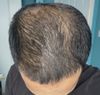
User tried Exosomes for hair loss with no success but experienced healing in other areas. Noticed people with previous hair transplants responded well to Exosomes.
Balding scalps have more androgen receptors, leading to increased TGF-beta, which causes blood vessel loss and hair follicle miniaturization. Blocking androgen signaling and TGF-beta may help prevent hair loss.
Kintor is testing Pyrilutamide with Minoxidil for hair loss. Users are skeptical about its effectiveness and concerned about limited treatment options if this fails.
The user suspects scarring alopecia and is exploring NSAIDs and turmeric/pepper for inflammation-related hair loss, having experienced burning and thinning with finasteride and testosterone reduction. They are seeking feedback while unable to afford a dermatologist.
A user shared an 8-month update on their hair transplant surgery, which used 1800 grafts for aesthetic refinement, resulting in a natural-looking hairline and improved confidence. The procedure was performed by Dr. Abhinav Kumar, and the user is pleased with the results.
Hair loss after telogen effluvium (TE) with thinning and possible scarring, treated with 5 mg oral minoxidil. Concerns about scarring alopecia and lack of regrowth, with suggestions to consider finasteride for better results.
Stopping microneedling may result in losing hair gains, as it enhances the effectiveness of treatments like minoxidil. Combining microneedling with minoxidil and finasteride is more effective than using microneedling alone.
The conversation discusses the effectiveness of using finasteride alone versus combining it with minoxidil, ketoconazole, and microneedling for hair loss treatment. It also touches on the affordability and accessibility of hair transplants, with differing opinions on the financial feasibility of such procedures.
The conversation discusses concerns that Anagenic's version of GT20029 might not be as effective or safe as Kintor's, with comparisons to issues faced by pyrilutamide. The chemical structure of the drug has been published.
The conversation discusses hair loss treatments, focusing on insulin resistance, microneedling with topical melatonin, and stress reduction. Users express skepticism about the advice, preferring proven treatments like minoxidil and finasteride, while some mention alternative methods like dermal incisions and verteporfin for reducing fibrosis.
A doctor criticized the use of Finasteride for hair loss, suggesting Minoxidil and a hair transplant instead, despite the patient experiencing no side effects from Finasteride. The patient disagreed, arguing that Minoxidil doesn't address the root cause and that Finasteride is necessary to protect donor hair in transplants.
A 36-year-old male had a 3000-graft FUE hair transplant in Turkey, with 2000 grafts to the front and 1000 to the crown. Post-operation, he experienced nausea, dizziness, itching, and pain, but saw hair growth and plans to take pictures once redness subsides.
User is 25, using oral finasteride for 4 years, topical minoxidil for 3 years, and microneedling. They ask if hair transplant can be done without scarring when shaving head completely bald later.
A user shared their positive experience with a hair transplant performed by Dr. Bekir Bek in Ankara, involving 3,897 grafts. They stopped using minoxidil and finasteride before the procedure but restarted finasteride afterward and plan to reintroduce minoxidil in a few months.
A user shared their 9-month post-hair transplant results with 4600 grafts, using only Nourkin hair vitamins, Vitamin D, and B12, and expressed satisfaction. The replies debated the necessity of medications like finasteride and minoxidil for maintaining hair health.
A 24-year-old male is considering a hair transplant after unsuccessful attempts with oral minoxidil, topical finasteride, ketoconazole shampoo, and lifestyle changes. He believes smoking and caffeine may worsen his hair loss and is looking into hair fibers for temporary coverage.
The user is using a regimen of dutasteride, oral and topical minoxidil, Nutrafol, and keto shampoo for hair regrowth, with plans for a hair transplant at the one-year mark. Users suggest adjusting treatments due to scalp inflammation and discuss the potential addition of RU58841, while noting impressive results so far.
Using tretinoin or tazarotene with minoxidil may eliminate the need for microneedling or dermastamping. Microneedling can enhance minoxidil's effects but may cause long-term scalp issues.
The conversation is about a person who underwent a hair transplant surgery after using Rogaine, finasteride, and Nutrafol. They received 2300 grafts and discussed the appearance and density of the transplant, with mixed opinions on the results and advice on future procedures.
A 39-year-old from Bangalore shared his successful hair transplant journey, which included 3537 scalp and 1521 beard grafts, boosting his confidence. He also started medication alongside the transplant.
The user is experiencing diffuse thinning and inflammation despite using 2.5mg dutasteride daily, ciclopirox, and ketoconazole shampoos. They are considering treatments like hydroxychloroquine and JAK inhibitors due to suspected scarring alopecia and have faced challenges in obtaining a scalp biopsy.
A user is experiencing hair thinning on the sides while wearing a hair system and has had a transplant to correct temple peaks. They are using finasteride, oral minoxidil, and rosemary oil serum, and are considering a corrective transplant to add density and achieve a natural look.
The user is experiencing significant hair regrowth using 1mg finasteride, 5mg minoxidil, and biotin since April, and may not need a hair transplant. Another user suggests that if a transplant is desired, around 4,000 grafts could provide good coverage.
Pirfenidone is suggested to treat fibrosis and baldness by blocking inflammation markers and reducing collagen. It is also available as a gel for scar removal.
Microneedling for hair loss and its potential long-term effects. Some users believe it can cause fibrosis and scar tissue if done too frequently or deeply, while others claim it has improved their hair loss when done correctly. There is limited scientific research on the topic.
The user had a hair transplant 5 years ago and is currently using 1 mg finasteride and topical minoxidil but is not seeing an increase in hair volume. They are considering another transplant to improve hair volume.
Setipiprant trial for hair loss failed, showing no difference between placebo and treatment. Discussion also noted placebo users reporting side effects.