Search
forProducts matching "isoenzymes"
Tracking 1 products like 132 URODART 0.5MG 28 capsule from by companies like Minoxidil Express. View product »
Sort by
Community Join
120-150 / 1000+ resultscommunity Autologus Exosomes, anyone tried it ?
Autologous exosome treatment for hair loss is being discussed as an emerging option. Minoxidil, finasteride, and RU58841 are also mentioned as treatments.
community Why don't do it yourself topical solutions not talk about ethosomes as delivery mechanism?
Ethosomes are suggested as an effective delivery method for topical finasteride solutions, requiring the addition of a phospholipid like soya lecithins. The user questions why do-it-yourself solutions don't commonly use ethosomes despite their potential benefits.
community What blood markers to get tested before starting any 5-AR inhibitor?
The conversation is about which blood markers to test before starting a 5-AR inhibitor for hair loss. The user mentions already testing Total T, Free T, SHBG, Estradiol, Haematocrit, Red blood cell count, and White cell count, and asks if DHT or additional markers are needed.
community Estradiol blood test on fin. Doctor dont want to give me the test.
The user has been taking 0.5 finasteride for 10 months and wants to repeat blood tests, including estradiol. However, their doctor is reluctant to test estradiol, arguing it's typically low in men, and the user is considering seeking a second opinion.
community REVOLUTION in AUGUST: New possibilities according to Dr. Muñoz (pinacidil, cromakalim, diazoxide and nicorandil)
Dr. Muñoz's discovery suggests that targeting potassium channels in fibroblasts could reactivate hair growth, offering new treatment possibilities for alopecia. Potential strategies include using minoxidil, diazoxide, and other potassium channel openers, as well as bioelectric devices and direct growth factor applications.
community IGF-1 and Peptides? Miracle molecule waiting to be found
The conversation discusses potential hair loss treatments focusing on stimulating IGF-1 at the follicle level using growth-factor cocktails and engineered peptides, such as Acetyl Tetrapeptide-3, Copper Tripeptide-1, Oligopeptide-20, Thymosin-β4, and Palmitoyl Tetrapeptide-7. It suggests that device-assisted delivery methods like microneedling may enhance effectiveness.
community I had the opportunity to visit the Everychem laboratory !
The conversation humorously discusses a visit to the Everychem laboratory, with a focus on hair loss treatments like Minoxidil, finasteride, and RU58841. The tone is satirical.
community Do the more newer gen topical retinoids e.g. tazarotene outperform tretinoin in inducing follicular sulfotransferase activity?
community Remember Exosomes? Did anyone ever go through with that method?
Hair loss discussion focused on exosomes as a potential treatment. Users shared experiences and asked if anyone tried or was offered this method.
community New angles to attack beyond DHT
Exploring hair loss treatments beyond DHT, including Minoxidil, pyruvate, Gt20029 targeting androgen receptors, and vasodilators. Other options like Kx826, adenosine signaling, growth factor topicals, and microneedling are also discussed.
community 20M What blood test panel should I take?
community Has anyone seen this study before? It claims that B6+Zinc can inhibit 5ar activity
The conversation discusses using B6 and Zinc to inhibit 5ar activity, similar to Fin and Dut. Minoxidil is mentioned as a supplementary treatment.
community isoflavones to combat gyno?
Isoflavones from soybeans may help limit estrogen's effects on the body, potentially preventing gyno. However, surgery is the only way to remove gland enlargement.
community Here's a recommended bloodwork panel before starting Fin.
The conversation provides a detailed list of blood tests recommended before starting finasteride to establish a baseline for monitoring potential side effects. A shorter list is also provided for those with limited funds, and the user shares personal experience of using finasteride without issues for about nine years.
community Minoxidil: Sulfotransferase Enzyme booster AVAILABLE NOW
A new product, Minoxidil booster, which enhances sulfotransferase enzyme activity in the scalp, is now available. The user has started using this product, applied before Minoxidil, to improve their hair loss treatment results.
community Shouldn't it be standard practice for anyone on Fin to take zinc (or another aromatase inhibitor)?
community Is IGF-1 the reason why some people don't respond well to min-fin treatment?
A user who didn't respond well to minoxidil and finasteride is considering the role of IGF-1 in hair loss treatment effectiveness. They discuss the potential of using HGH to improve hair growth and other health issues, referencing several sources that suggest IGF-1 levels may influence hair loss and treatment response.
community Before you spend another dollar on treatments please check your ferritin and thyroid
community do hyper responders just have better absorption in there gut?
community Im using a scalp serum which i need help identifying the ingredients anyone knows if anything here can affect dht scalp levels or not
The conversation is about identifying ingredients in a scalp serum and their effects on DHT levels. The serum contains various ingredients like Aqua, Biotin, and Oleanolic Acid.
community Aminexil, Nanoxidil, Stemoxydine and Kopexil. Anyone use them?
Aminexil, nanoxidil, stemoxydine, and kopexil are discussed as alternatives to minoxidil for hair growth, with concerns about dependence. Minoxidil is noted for its effectiveness in transitioning hair growth phases, but dependence is mainly linked to androgenic alopecia.
community Non-prescription topical supportive treatments (e.g. caffeine, alfatradiol, The Ordinary Serum, Zix, etc) in addition to the big 3/4???
Adding non-prescription topicals like alfatradiol and Zix to a standard fin/min/niz regimen may help with scalp inflammation and shedding, but their long-term effectiveness varies. Zix is recommended for reducing scalp inflammation and enhancing the effectiveness of other treatments.
community Attention Finasteride / Dutasteride and Your liver
Finasteride may cause elevated liver enzymes, potentially leading to liver issues, though this is rare. Users should monitor liver function and consider topical alternatives if liver sensitivity occurs.
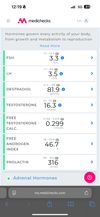
community Help me interpret my bloods
The user is concerned about high prolactin levels and low testosterone levels after stopping finasteride for three weeks. They are considering resuming finasteride but are worried it might further increase prolactin levels.
community Serioxyl / Stemoxydine no longer available
community Anyone have PRP/Exosome results to share?
Considering alternative treatments to hair loss, such as platelet-rich plasma (PRP) and exosome therapy, instead of using medications like minoxidil, finasteride/dutasteride.
community Another Creatine + Finasteride Experiment With Bloodwork
Experimenting with the effects of creatine and finasteride on DHT levels, as well as a discussion regarding the potential link between creatine supplementation and hair loss.
community Can I use minox with isopropyl alcohol to create topical spiro?
Minoxidil can be used with isopropyl alcohol to create topical spironolactone. Spironolactone may dissolve better in ethanol or propylene glycol.
community Mildly Interesting: Kintor removes the annotation that pictures are from clinical experiments and that KX-826 gives "real" visible results, editing their Amazon page once again
Kintor edited their Amazon page, removing claims that KX-826 provides "real" visible results from clinical experiments. The discussion includes treatments like Minoxidil, finasteride, and RU58841.