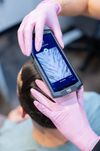
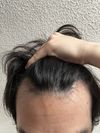
A user is developing a tool to track hair density, aiming to help those using treatments like minoxidil. They seek feedback on the tool's usefulness and are considering a low-cost model to cover expenses.
The GT20029 tincture, a topical androgen receptor degrader, showed significant hair growth and good safety in a China Phase II trial for male androgenetic alopecia (AGA), with the 1% dose twice weekly identified as optimal. The company plans to initiate Phase III trials in China and Phase II in the U.S., and the treatment also shows promise for acne.
A dutasteride simulator predicts that daily 0.5 mg dosing results in higher DHT suppression compared to less frequent dosing. Twice-weekly dutasteride may be as effective as finasteride 5 mg, providing a balance between efficacy and ease of use.
A new brand is seeking 10 U.S.-based individuals aged 25+ experiencing hair loss to test a topical product containing GHK-Cu and Acetyl Tetrapeptide-3. Participants must not be using other treatments like finasteride or minoxidil and will provide feedback and photos.
The conversation discusses Scube3, a seemingly new and obscure treatment for hair loss, with limited information available and a link to a patient intake form.
Sulfur soap may help with hair thickening and reducing scalp inflammation, but it can cause dryness. Nizoral, containing ketoconazole, is noted for its potential to reduce seborrheic dermatitis but may also cause scalp dryness and hair loss.
Clascoterone 5% solution showed a 539% improvement in hair count compared to placebo, but the actual increase in hair growth is minimal. Users express skepticism about the effectiveness of hair loss treatments.
Clascoterone, a topical anti-androgen, is generating interest for potentially fewer systemic side effects. Users are curious about its effectiveness and details like concentration and duration of use.
Dermastamp is preferred for hair growth and skin health due to fewer scars, with recommended needle sizes of 0.5-1.5mm. Dermapen is also favored over dermarollers, which are considered dangerous.
The conversation is about a user assessing their hair loss as Norwood 1.5 and discussing their use of oral minoxidil and finasteride for 2.5 years, which improved their hair density. They are content with their current progress but hope to reach Norwood 1.
The conversation discusses using ketoconazole, an anti-androgen, for hair loss and whether mesotherapy with dermarolling could enhance its absorption into the scalp. The user questions if the typical 2% ketoconazole shampoo dose would be effective when used after dermarolling to target androgen receptors in the scalp.
A user is considering making a 2% clascoterone lotion from powder due to unavailability in their location. They plan to mix clascoterone powder with retinol lotion and use literature to determine the correct dosage.
The trial for TDM-105795 has been completed, and it was in phase 2A. The discussion seeks input on the next phases, 2B or 3, based on safety and efficacy.
The conversation is about the preference for using a derma stamp over a derma roller for hair loss treatment, with users discussing its efficiency, needle material, replacement frequency, and personal experiences. Specific treatments mentioned include microneedling with a derma stamp.
The conversation discusses using Ketozolin shampoo in Germany as an addition to finasteride and minoxidil for hair loss treatment. Users recommend applying a small amount 2-3 times a week, leaving it on for 5-10 minutes.
The conversation discusses the application frequency of a 1% Koshine solution for hair loss, with recommendations varying between once or twice daily. It is noted that the 1% solution is more effective than the 0.5% solution.
A user created a free AI-powered hair transplant simulator to help visualize post-transplant results, seeking feedback and offering it as a tool for clinics. Users discussed its usefulness, limitations, and the requirement for email and phone verification to prevent abuse.
KX-826 (Pyrilutamide) 0.5% and 1.0% solutions showed promising results in increasing hair count for male androgenetic alopecia, with the 0.5% dose slightly outperforming the 1% dose. The treatment was well-tolerated with no sexual side effects, but skepticism remains due to past inconsistencies in trial results.
A user describes using a Dermastamp for microneedling their scalp, noting a crunching sound when pressing it firmly. Another user suggests the crunching might be from breaking up scalp calcification.
The conversation discusses using very low dose topical finasteride to achieve specific serum DHT reduction percentages. It concludes that finasteride dosage increases linearly between 5-30% DHT reduction but requires exponential increases for reductions up to 70%.
A user is creating a home topical solution for hair loss using zinc, essential oils, and caffeine, aiming for a 0.001% caffeine concentration. They also use topical finasteride and are considering other treatments like low-level laser therapy, while discussing the effectiveness of various hair loss treatments with others.
User tries dermapen for hair loss and plans to use non-mainstream topicals like c60, ghk-cu, and ptd-dbm with valproic acid. They also use a head massager and modified LLLT belt for additional treatment.
A user applied the 8T3 product for hair loss, targeting LPP and AGA, and plans to update on its effectiveness. The product uses a saline buffered phosphate vehicle, suitable for those intolerant to ethanolic vehicles.
User tried oral dut 0.5mg, oral min 5mg, topical RU 80mg, and weekly microneedling at 1.5mm for hair loss. Others commented on the significant improvement and potential for future hair transplant.
The conversation discusses the effectiveness of Dutasteride mesotherapy for hair loss treatment in Germany. The user is considering trying it and seeks opinions from others who have experience with it.
The user switched from finasteride to 2.5 mg dutasteride daily and added 1% pyrilutamide to address persistent scalp itch, but the itch remains. They also use 2% ketoconazole and 2.5% selenium sulfide shampoo for temporary relief.
A user is advocating for Phase 3 trials of the hair loss treatment PP405 to be conducted in Germany, citing benefits like a diverse patient base and faster access for European patients. Despite skepticism about the petition's influence, the user believes it can demonstrate significant interest and potentially influence strategic decisions.
Hair loss treatments, specifically, discussing the effectiveness and side effects of finasteride, minoxidil, and RU58841 in various microdoses. It also includes an updated graph which provides information on how different doses affect DHT levels, scalp skin and serum androgen levels, as well as hair count.
User discusses potential hair loss treatment SCUBE3 and shares mixed opinions on its effectiveness. One user reports positive results after applying SCUBE3 following microneedling.
A user is participating in a phase 3 trial for Clascoterone, a topical acne medication that may stimulate hair growth, and will share results after 6 months. They will have a section of their hair shaved and marked with a tattoo for the study.