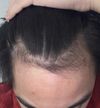
A 22-year-old is experiencing a receding hairline and has started using minoxidil and finasteride. They are considering using Jamaican black castor oil and are seeking advice on application and dosage, while also exploring microneedling and scalp massaging for hair regrowth.
RU58841 and Minoxidil can cause heart-related side effects like chest pain and heart racing. Pyrilutamide is suggested as a safer alternative, though it's new and costly.
The user increased their steroid dosage and noticed hair shedding, so they adjusted their regimen by reducing steroid doses and adding oral dutasteride. They are also experimenting with combining RU-58841 and KX-826/pyrilutamide in minoxidil to address hair loss.
Breezula's phase 3 enrollment for hair loss treatment is complete, but results have not been published, causing skepticism about its progress. Some users express doubt about its future, suggesting it may be reserved for exclusive use.
The conversation is about hair loss treatments, specifically setipiprant, which the user is considering after experiencing side effects from finasteride and dutasteride. Another user mentions that setipiprant was ineffective in clinical trials.
Using a combination of topical finasteride, minoxidil, caffeine and dermaroller treatments to help with hair loss, while discussing the potential results and other options.
Licorice is not recommended for hair loss as it inhibits hair growth and is a non-selective testosterone inhibitor. Alternatives like spironolactone are suggested for those considering hormonal treatments for hair loss.
The conversation discusses the use of RU58841 for hair loss, with one user sharing a one-month difference in their hair after using it. Users discuss where to buy RU58841, potential side effects including heart issues, and mixed opinions on its effectiveness, with some questioning the need for treatment based on the before and after pictures.
A user shared their hair loss journey, detailing their use of Kirkland Minoxidil 5%, finasteride, dutasteride, and weekly dermarolling. They experienced initial success with minoxidil but faced setbacks with oral minoxidil and are now back on topical treatments.
The user shared their positive experience using Zix and Rogaine foam for hair regrowth, noting new thick hairs and no side effects. They plan to continue and refine their regimen for better results.
A 17-year-old is experiencing rapid hair loss from NW1.5 to NW3 in six months and feels dermatologists are unhelpful. They are using Minoxidil (Rogaine) and seeking advice on application.
Researching the effectiveness of the hair loss treatment Pyril in comparison to other treatments such as Minoxidil, Finasteride, and RU58841. Replies suggest that users often fail to provide updates on their experience with Pyril.
The user is using finasteride 1mg every other day and seeks a topical solution to complement it, excluding minoxidil. They are considering various combinations of ingredients like finasteride, dutasteride, and tofacitinib, with options for nourishing oils and other additives.
The conversation discusses hair loss and specific treatments like Minoxidil, Finasteride, and RU58841. It also highlights Procyanidin B-2 as a secret ingredient for hair growth.
A 35-year-old man shared his hair transplant experience in Tijuana, Mexico, choosing Artline for 5,000 grafts at a lower cost than U.S. clinics. He plans to use topical minoxidil and possibly microneedling for better results.
RU58841 should be applied directly to the scalp, ideally once a day, a few hours before bed. Some users experienced side effects like shedding and systemic issues when using RU58841 and Minoxidil together, while others reported no side effects when using RU58841 alone.
A user shared their one-month progress using Minoxidil and RU58841 for hair loss, noting significant shedding after micro-needling and seeking opinions on their regrowth. They stopped micro-needling and added RU58841 to their treatment.
User "al_ick" shares progress with topical fin, min, tret, and micro needling for hair loss, showing good results. They use hims fin and min combination spray, applying 5-7 sprays for better coverage.
The conversation discusses the storage and use of pyrilutamide for hair loss, where one user advises against keeping it in the freezer as it may crystallize the active compounds.
Piroctone olamine is more effective than ketoconazole for increasing hair growth and reducing itching and dandruff. Treatments discussed include Minoxidil, finasteride, and RU58841.
A user who was part of an ongoing trial for a prolactin blocker and had regrowth, but the progress photos were not shared due to negative reactions from other users. Treatments mentioned include HMI-115, Minoxidil, Finasteride, and RU58841.
Redensyl is being compared to Minoxidil for hair loss treatment. Users discuss the effectiveness of Redensyl versus Minoxidil, with no clear consensus on which is better.
The conversation is about using pyrilutamide and RU58841 as topical solutions to prevent hair loss. Pyrilutamide is considered safer but less potent than RU58841, which some users find effective despite potential side effects like heart palpitations.
User used Finasteride, Dutasteride, and Minoxidil for one year to treat hair loss. They discussed possibly trying RU58841 or pyrilutamide in the future.
RU58841 can be ordered as a powder and compounded at home, but it should be stored at room temperature to avoid crystallization. Pyraulatmide may follow a similar principle.
Minoxidil and finasteride might help with hair regrowth, but a hair transplant may be necessary for significant improvement. The conversation humorously discusses the severity of hair loss, comparing it to various exaggerated Norwood scale levels.
The conversation discusses GT20029, a drug in Phase II trials that targets androgen receptors with minimal systemic effects, and TDM-105795, a growth stimulant with a different mechanism than minoxidil that may revive papilla stem cells. Both are potential new treatments for hair loss.
Clascoterone 5% solution shows strong potential for hair growth, offering a new treatment for alopecia with minimal side effects. It blocks androgen receptors locally and may be available by late 2026 or early 2027.