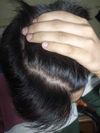
Minoxidil may not be effective due to low sulfotransferase activity, and the user considers adding tretinoin to the regimen. They are unsure about the timing and combination with microneedling.
The conversation is about disappointment with pyrilutamide's performance as a hair loss treatment, with some users expressing interest in other treatments like Verteporfin, GT20029, and RU58841, while others suggest sticking with established treatments like finasteride or dutasteride.
A user beginning to take Pyrilutamide as a treatment for their hair loss, and other users sharing their experiences with the drug or similar treatments such as Minoxidil, Finasteride, and RU58841.
A 21-year-old is using a topical solution with minoxidil and finasteride for hair loss, along with supplements and specific shampoos, and is considering switching to oral treatments if no progress is seen in a few months. They are concerned about diffuse thinning and potential future hair transplants, and are exploring additional treatments like microneedling and tretinoin.
User TopBack56 and friends tried pyrilutamide (KX-826) for hair loss without experiencing negative side effects. They observed fine vellus hairs but no thick hair growth yet, and plan to add GT20029 to their regime after safety trials.
The conversation is about someone seeking advice on choosing between stem cell therapy and PRP for treating hair loss, asking for personal results, side effects, overall satisfaction, and recommendations from others.
The conversation discusses a clinical trial for Setipiprant in the US, starting June 29th, with eligibility excluding recent users of minoxidil or finasteride. It encourages informed decision-making before signing up.
User is using minoxidil with tretinoin 0.025% and experiencing peeling and burning on the scalp. They are unsure if it's effective or if they are using it too frequently.
Using retinol with minoxidil may not be as effective as tretinoin, but retinaldehyde or adapalene could be alternatives. A micro-roller with minoxidil is suggested for better results.
User experienced scalp irritation from Kirkland 5% liquid minoxidil, likely due to propylene glycol. They are seeking non-PG liquid alternatives that are affordable.
The user reported slight improvement in hairline using 1% Clascoterone cream over three months but found it too costly to continue. They expressed interest in trying a 5% concentration if it becomes available at a reasonable price.
The user has been using Minoxidil and Finasteride for over a year with limited success and is now trying microneedling. They seek advice on using hyaluronic acid to help the microneedling pen glide smoothly on the scalp.
A user shared their 10-month progress using 1mg finasteride daily and micro-needling, noting significant hair regrowth and no side effects. They plan to add oral minoxidil to boost hair density.
The conversation is about a female experiencing hair loss and seeking advice on why it's difficult to regrow hair. Specific treatments like Minoxidil, finasteride, or RU58841 are not mentioned.
The conversation discusses using brewer's yeast for hair regrowth, either as a supplement or in a scalp masque. The user is considering adding it to their regimen.
The user switched from finasteride to 2.5 mg dutasteride daily and added 1% pyrilutamide to address persistent scalp itch, but the itch remains. They also use 2% ketoconazole and 2.5% selenium sulfide shampoo for temporary relief.
Pelage Pharmaceuticals' PP405 aims to treat hair loss by reactivating dormant hair follicle stem cells, showing promising results in early trials. The company plans to present their findings at the American Academy of Dermatology Annual Meeting in 2026.
A 22-year-old is frustrated with ongoing hair loss despite using treatments like topical minoxidil, finasteride, microneedling, oral dutasteride, and oral minoxidil. Their dermatologist suggests treating scalp inflammation with oral tretinoin and using exosomes for alopecia.
The conversation humorously discusses hair loss treatments, mentioning "oral miraclegro," "topical roundup," "spectracide," "Cow Dung mesotherapy," and "weekly Foot stepping sessions." The user jokingly considers switching to "weed and feed" as a treatment.
RU58841 caused chest tightness, throat irritation, and headaches, leading the user to stop its use. The user plans to restart with a lower dose if symptoms fully disappear but remains cautious due to anxiety and side effects.
The conversation is about a user's hair loss treatment regimen, which includes Dutasteride, oral Minoxidil, topical Dutasteride, Minoxidil sulfate, antioxidants, and various supplements. The user is also using a derma stamp and has paused Tretinoin due to a TCA peel recovery.
Microneedling is effective for hair growth, especially when combined with finasteride and minoxidil, but concerns exist about potential long-term skin damage. Users report increased collagen and elastin deposition, but the long-term effects on the scalp remain uncertain.
The user has seen significant hair regrowth using a routine of minoxidil, finasteride, microneedling, scalp massage, and Nizoral. They are considering adding red light therapy and PRP to their regimen.
A user shared their successful hair loss treatment using 1.25mg finasteride daily, 2.5mm microneedling every 1-3 weeks, zinc pyrithione shampoo, occasional scalp massages, and 40% glycolic acid on temples. They reported significant progress over 21 months.
User discusses potential hair loss treatment SCUBE3 and shares mixed opinions on its effectiveness. One user reports positive results after applying SCUBE3 following microneedling.