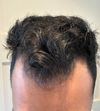
A 17-year-old is addressing hair loss with finasteride, topical minoxidil, and microneedling. They are considering adding GHK-Cu to their regimen, but others advise caution with finasteride due to age.
The conversation is about a transgender individual's experience with hair regrowth using topical minoxidil and hormone replacement therapy (HRT), expressing concern about the slow growth and thin appearance of their hair. Some responses encourage patience and highlight the variability of results, while others discuss the role of HRT and its effects.
A 19-year-old is using oral dutasteride, topical minoxidil, and dermastamping to address hair loss and enhance facial hair growth, experiencing minimal side effects and increased body hair. They report positive results in hairline thickness and temple closure.
The user experienced significant hair improvement with minoxidil and finasteride but later faced shedding and diffused thinning after developing seborrheic dermatitis. They are seeking advice after trying treatments like ketoconazole, coal tar shampoos, fluconazole, and hydrocortisone cream.
The conversation discusses the HMI-115 trial for hair loss, which was expected to end around July 2023 due to a late participant. Participants also mention Minoxidil, finasteride, and RU58841 as treatments.
The conversation discusses hair thinning and treatments like finasteride, dutasteride, oral and topical minoxidil, and RU58841. Users share experiences with retrograde alopecia, hair transplants, and stress-related hair loss, while also considering thyroid issues and other potential causes.
The conversation discusses various hair loss treatments, including minoxidil, finasteride, dutasteride, pyrilutamide, alfatrodial, and nizoral, with a focus on the potential of new treatments like gt20029 and breezula. There is optimism about novel treatments that don't have systemic effects, although skepticism remains about the effectiveness of some new drugs.
Phase II for TDM-105795 for Androgenic Alopecia is set to begin in April 2023. The study aims to evaluate the efficacy and safety of TDM-105795 in male subjects.
A 22-year-old who had a hair transplant and is on medication has nice hair, which was complimented by their grandmother. Another person is 8 months post-transplant and taking dutasteride, oral minoxidil, and biotin but hasn't seen results yet.
IGFBP‐rP1 shows potential for treating androgenic alopecia by influencing hair cycle transitions. Increasing IGF-1 levels may have similar effects to Minoxidil and 5-AR inhibitors in reducing hair loss.
The conversation discusses the potential of topical rapamycin, metformin, and alpha-ketoglutarate (a-KG) for hair growth, with skepticism expressed about their effectiveness based on personal experience and existing use. It also mentions AICAR, known as cardarine or GW, which is not suitable for long-term use due to cancer risks in animal studies and its similarity to metformin.
Men should feel socially accepted wearing hair systems, similar to how women use extensions and makeup. Treatments mentioned include minoxidil, finasteride, and hair transplants.
The user has been using minoxidil daily, finasteride three times a week, and ketoconazole 1-3 times a week for a year to treat hair loss, resulting in noticeable hair regrowth at the hairline and temples, with minor side effects like itching and dandruff. They started with minoxidil a month before the other treatments and experienced an initial shedding phase for about six weeks.
A 30-year-old with Norwood 3V hair loss uses finasteride 1.25 mg every other day and Minoxidil (Regaine 5%) twice daily, experiencing no side effects with the current regimen. The front hairline remains unchanged, but the crown appears better in certain lighting.
The user has been using topical Minoxidil and finasteride for 5 months without seeing regrowth, despite ideal blood test results. They are seeking advice on what to do next due to frustration with continued hair loss.
Hair loss discussion mentions Native Americans' resistance to male pattern baldness and lack of facial hair. Users discuss genetics, sun exposure, and potential treatments like minoxidil and finasteride.
A 17-year-old is looking for alternatives to finasteride for DHT control to preserve hair, considering ketoconazole shampoo for its potential to inhibit 5AR and also thinking about using caffeine-containing shampoos like alpecin or watermans.
User started balding at 16 and began treatment at 18, using RU58841, minoxidil, derma rolling, and peptides. After 6 months, they experienced significant hair regrowth and are happy with the results.
A 29-year-old male on 1 mg Finasteride for 3 months has experienced a significant increase in testosterone and estradiol levels, with no major side effects except slightly oilier skin and increased emotional sensitivity. The user is concerned about these hormonal changes and seeks advice, as their general practitioner is not knowledgeable about the issue.
The conversation discusses coping with hair loss and the emotional impact of balding, with some users finding peace in shaving their heads. Treatments mentioned include minoxidil, finasteride, and lifestyle changes like diet and exercise.
Doctors in Denmark and other countries often lack knowledge about hair loss treatments like Finasteride and Dutasteride, causing patients to seek prescriptions from multiple doctors or online. Some users report better experiences in countries like Brazil and Korea, where doctors are more informed and willing to prescribe these medications.
A 19-year-old is experiencing hair loss and considering treatments like finasteride, oral minoxidil, and possibly dutasteride. Users suggest continuing with finasteride and minoxidil, with some recommending dutasteride for stronger results.
A bodybuilder's hair transplant appears unnatural with a straight hairline and low density, possibly worsened by not using finasteride. The Turkish clinic is criticized for poor design, and the transplant may have been free for promotion.
The conversation discusses the effects of using Tongkat ali and dioscorea to raise DHT levels, leading to increased body hair growth and an itchy scalp, without causing hair loss. The discussion also debates the role of DHT in male characteristics and its impact on sexual function, with differing opinions on its importance and effects.
Transplanted hairs are thinning after switching from topical to oral minoxidil, with increased shedding and miniaturization. The user is considering reintroducing topical minoxidil and has started using ketoconazole shampoo.
Hair loss affects confidence, with discussions on treatments like finasteride, minoxidil, and RU58841. Emphasis is placed on self-acceptance and building confidence beyond appearance.
The conversation discusses the potential availability of GT20029 for hair loss treatment, with one user noting promising Phase 1 results and inquiring about gray market access. Another user humorously suggests it will take 50 years to become available.
The user "ajsr8" shared their story of hair loss despite being on treatments. They started using finasteride in 2019 and later tried topical minoxidil, but it didn't seem to work. They also experienced side effects from other treatments. They are considering cutting off their hair and stopping the medications if there is no improvement in three months. Other users suggested trying different treatments and getting a blood test to check for underlying conditions.