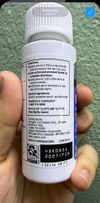
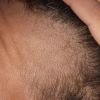
The conversation is about a user who tried dissolving a metformin pill in water for hair treatment but faced issues with hair sticking together. The user is seeking advice on preparing a non-irritating, non-sticky lotion at home, possibly experimenting with metformin and Alpha Keto glutarate.
The user shared progress pictures showing hair improvement since July 2025 using a combo pill containing oral minoxidil 5mg, finasteride 1.1mg, and biotin 1mg, with no noticeable side effects. The user feels more confident and has not experienced any shedding.
A hair loss product containing ingredients like saw palmetto, biotin, vitamin D, and others, which claims to promote healthy hair growth and support men's health. However, user reviews are mixed, with some experiencing side effects like mood swings and nausea, and others questioning its effectiveness compared to a simple multivitamin.
A new hair loss treatment, KX-826, is being discussed as a stronger and safer alternative to RU58841 and finasteride. Opinions are mixed, with some users skeptical about its effectiveness and others considering it as part of their regimen.
The conversation discusses hair regrowth using oral minoxidil, oral finasteride, topical minoxidil, red light therapy, massage, and a keto diet. The user reports positive results and no negative effects on libido, attributing this to a healthy lifestyle and additional supplements.
Oral minoxidil boosted vertex hair but not the hairline, with a stack including 5mg minoxidil, 2mg dutasteride, topical foam minoxidil, fluridil, and Nizoral. Users discuss dosing strategies, with some suggesting 2.5mg twice daily for sustained levels, while others recommend 5mg once daily based on clinical trials.
A user shared their experience with a dermatologist's special minoxidil formula containing vitamin E, pantenol, rosemary, and finasteride, which improved their hair loss better than commercial minoxidil. Another user confirmed that the presence of finasteride in the formula is a significant difference.
A user is quitting ketoconazole shampoo, believing it worsened their hair condition, and plans to use clarifying, keratin, and pH balanced moisturizing shampoos instead. Another user suggests using conditioner after ketoconazole to prevent dryness.
The conversation discusses a successful hair regrowth treatment involving topical Minoxidil (5%), 1 mg Finasteride, Microneedling, and Biotin + Vitamin D supplements. The user shares their routine and receives positive feedback on the significant progress made in just three months.
The user visited a trichologist due to ineffective topical finasteride treatment for hair loss. The trichologist recommended a new regimen including a two-month course of locoidon (cortisone 0.1%), followed by a solution containing minoxidil, hydrocortisone butirrate, estrone, progesterone, tocopherol acetate, trichosol, and transcutol.
Vat-R-U-Talkin-About: I'm not sure that wearing a hat would have an effect on either Minoxidil or Finasteride. It may be worth experimenting with not wearing one for a few weeks to see if it makes any difference.
This conversation is about a user's progress pictures four months into taking minoxidil, finasteride, and nizoral twice weekly to treat hair loss; others shared their experiences and offered advice on how to improve the treatment.
A 30-year-old male is considering switching from topical to oral minoxidil after two months of use on his temples, while also using dutasteride every other day. A user suggests oral minoxidil might be more effective but warns of potential side effects like fluid retention and lower blood pressure.
The user is inquiring about alternating daily doses of Minoxidil, taking 5mg one day and 2.5mg the next. They are seeking advice on whether this dosing schedule is acceptable.
Minoxidil can be effectively delivered through nanoemulsions containing eucalyptol or oleic acid, enhancing its diffusivity and targeting hair follicles. This contradicts the advice against mixing minoxidil with oils in topical formulations.
The user is stressed about hair loss and is using a HIMS topical treatment containing finasteride, ketoconazole, minoxidil, and biotin, but is concerned about the oily appearance it causes. They are considering switching to Rogaine (minoxidil) due to budget constraints and side effect concerns with oral finasteride.
A 12-year-old diagnosed with alopecia shares their experience and current treatments, including Dermovate, an unnamed cream, and liquid iron. The community offers support and encouragement.
The conversation is about a person starting a hair loss treatment regimen including 1mg finasteride, 2ml minoxidil twice daily, dermarolling with a 1mm needle, and taking vitamin C, biotin, and vitamin D3. They plan to share their results in 6 months to a year.
Minoxidil may age skin by slowing collagen synthesis, but using collagen peptides and a basic skincare routine might counteract this. Foam minoxidil could reduce systemic absorption and avoid alcohol-related side effects.
The user experienced significant hair regrowth using minoxidil, dutasteride, ketoconazole shampoo, dermarolling, vitamins, and a healthy diet. They reported no side effects and emphasized the importance of consistency.
A user had a bad experience with MV Supplements when their Pyril powder and ethanol order leaked during shipping, making the products unusable. Despite contacting support and providing evidence, the company's return policy did not allow for a refund or replacement.
A user is experiencing hair regrowth after treating vitamin D, B12, and B9 deficiencies, noticing some improvement after 9 months. They are unsure if further improvement will occur or if they have reached the end of progress, with a possibility of androgenetic alopecia (AGA) being suggested.
KX-826 is being considered as a potential alternative to finasteride for hair loss, but it is not expected to be more effective. Combining KX-826 with finasteride and minoxidil may provide better results than using it alone.
PP405 is a new hair growth stimulant different from Minoxidil, currently in phase 2 trials. Users discuss its potential, safety concerns, and the long wait before it might be available.
Choosing between KB and PG solutions for applying RU58841, considering factors like scalp oiliness and absorption. Some users prefer KB for being gentler, while others use PG and recommend washing hair before application for better results.
The user is considering stopping topical minoxidil due to health risks and inconvenience, while continuing oral minoxidil, dutasteride, and vitamins. Others suggest that oral minoxidil carries more risk, and results from treatments may take 3-6 months to appear.
The user shared progress pictures showing hair improvement after using topical minoxidil 5%, finasteride 1%, caffeine 1%, biotin 1% for three months, and dutasteride 2.5 mg for two months. The user is happy with the results and has not mentioned any side effects.
The conversation is about making oral minoxidil pills for personal use, including inquiries about ingredients and binders. The user mentions taking 2.5mg of oral minoxidil daily.