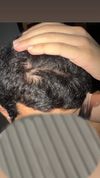
Users discuss switching from finasteride to dutasteride for hair loss treatment. Some report better results with dutasteride, including hair regrowth and stabilization.
The conversation discusses using 0.5mg Dutasteride once a week for hair loss, with suggestions to increase frequency for better results. The user plans to reassess the need for a hair transplant in six months and is concerned about potential side effects like gynecomastia.
The user experienced increased hair thinning after switching from finasteride and minoxidil to dutasteride, despite some users suggesting it might be a temporary shedding phase. The user is considering using RU58841 but is unsure about its safety.
Hair loss discussion mentions treatments like Finasteride, Dutasteride, and Minoxidil. Users share experiences, side effects, and advice on using these treatments.
The user has been using finasteride and minoxidil, then switched to dutasteride and minoxidil for six months without significant results, noticing thinning after increasing creatine dosage. They plan to consult a dermatologist to explore potential causes beyond androgenetic alopecia.
The user has been using a hair loss treatment regimen including RU58841, minoxidil, and dutasteride, but still experiences hairline recession and fatigue despite high testosterone levels. They are considering adjusting their dutasteride dosage due to concerns about libido and energy levels.
User discusses 4.5 months of using 0.5 DUT & 5 mg Oral Min for hair loss. They share progress pictures and discuss styling options and shedding experiences.
The user is experiencing hair loss and is considering increasing their dutasteride dosage or trying RU58841, but is concerned about the effectiveness and side effects. Other users suggest sticking with dutasteride 0.5 mg daily and adding oral minoxidil for better results.
Pyrilutamide/KX-826 is being discussed for its effectiveness in hair regrowth, with some users reporting positive results, especially in early hair loss cases. Users have combined it with treatments like Minoxidil, and some experienced initial shedding before seeing regrowth.
People are discussing obtaining and testing PP405 for hair loss treatment, with concerns about its purity and effectiveness. Some are considering delaying hair transplants, while others suggest using existing treatments like finasteride and minoxidil.
The Phase 2 trial for Pyrilutamide in the US, which started a year after the China trials, and inquiring about any available information on when it will finish. Treatments discussed include Minoxidil, Finasteride, and RU58841.
People on finasteride or dutasteride cannot donate blood due to the risk of birth defects if the blood is given to a pregnant woman. It's advised to stop finasteride for a month and dutasteride for six months before donating.
Low-dose dutasteride (0.1 mg) is effective for hair growth, potentially more so than finasteride, with fewer side effects. East Asians may respond well to these treatments due to hair characteristics.
A user shared their experience with a Long Hair DHI Hair Transplant, receiving 2,750 grafts. They plan to continue using Dutasteride and Topical Minoxidil post-surgery.
The conversation discusses GT20029, a new topical drug for hair loss and acne without notable side effects, which has been accepted for investigational use in China. Some users express skepticism about the legitimacy of the company and the potential for other drugs like RU58841 to be developed due to patent expiration and lack of profitability.
Dutasteride may have fewer side effects than finasteride, with some users experiencing better hair maintenance. Experiences vary, with some preferring dutasteride for fewer side effects, while others see no significant hair improvement.
AMP-303 and AMP-601 are new hair loss treatments targeting dermal papilla cells, with AMP-303 showing early efficacy in transitioning vellus hairs to terminal hairs after one injection. Further clinical trials are planned, and these treatments are seen as promising due to their biologic approach and less frequent application compared to daily treatments.
The conversation discusses Kevin's accurate information on hair loss treatments and highlights Dr. Bloxham's ongoing work with Verteporfin on FUT scars, suggesting people follow Dr. Bloxham's YouTube for updates. It also thanks Haicafe and Melvin from the hair restoration network forum for their contributions.
Finasteride users cannot donate blood due to potential risks to pregnant women, requiring a one-month cessation before donating. Dutasteride requires a six-month deferral, and topical applications are not restricted.
HMI-115, a newly discovered hair loss treatment that could potentially be effective for those with diffuse thinning and telogen effluvium. It is based on prolactin receptor antagonist signaling and has already undergone Phase I trials in women, with potential commercialization by 2027.
Kintor Pharma completed a successful Phase II clinical trial for KX-826, a treatment for androgenetic alopecia. KX-826 is similar to finasteride with minor side effects and is more backed than Cosmerna.
The FDA will now require only one clinical trial for drug approval, potentially speeding up the release of hair loss treatments like PP405. Pelage is expected to present full results of PP405 Phase 2a trials and move to Phase III in mid-2026.
Kintor Pharma announced successful Phase II trial results for KX-826 in treating hair loss, showing it's comparable to finasteride and can be used with it. Some participants saw a 10 hair/cm^2 increase, which is considered a good outcome at the low dose used.
A dutasteride simulator predicts that daily 0.5 mg dosing results in higher DHT suppression compared to less frequent dosing. Twice-weekly dutasteride may be as effective as finasteride 5 mg, providing a balance between efficacy and ease of use.
PP405 is progressing to Phase 2b trials, with results expected in late 2025 or early 2026, and potential Phase 3 trials in 2026. Some users experienced side effects from finasteride and are hopeful for PP405 as an alternative treatment.
User maintained hair with finasteride for 6 months, then switched to dutasteride for 7 months, using DHT blocking shampoo, keto 2% shampoo, and microneedling. Significant hair growth observed, especially on right temple.
The user is concerned about low DHT levels due to using saw palmetto in Foligain supplements and is considering trying finasteride. They seek advice on whether finasteride will also lower DHT and how to manage DHT levels.
The conversation discusses using very low dose topical finasteride to achieve specific serum DHT reduction percentages. It concludes that finasteride dosage increases linearly between 5-30% DHT reduction but requires exponential increases for reductions up to 70%.
Magnesium L-Threonate may help treat balding by reducing DKK-1 expression without affecting DHT. Users discuss its potential effectiveness and application methods, with some considering trying it topically.