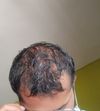
The user added microneedling to their routine of minoxidil and finasteride, resulting in noticeable hair regrowth after three months. They shared photos showing significant improvement.
The user has been using minoxidil and dermarolling for 9 months and saw palmetto for 2 weeks to address female pattern baldness with vertex balding. They are seeking feedback on any progress in hair regrowth.
The post discusses a hair loss treatment regimen including oral finasteride, topical minoxidil, a rejuvenating scalp serum with caffeine, rosemary, and ginger, topical ketoconazole, saw palmetto, and derma rolling. The user seeks advice for scalp pimples and irritation.
A user claims to have reversed baldness, possibly due to telogen effluvium recovery after weight loss. Others discuss the potential success of using GHK-Cu for hair regrowth.
User noticed receding temples, used minoxidil and microneedling with positive results. Added saw palmetto and eucapil, experienced shedding and thinner hairline, but no side effects.
A user, 42 M, NW 5-6, used oral Dutasteride, Minoxidil, RU58841 topical, micro needling, Nizoral shampoo, saw palmetto gummies, vitamin D gummies, and scalp massages for 2 months. They noticed many small light hairs on previously bald areas and are questioning if these will darken or remain vellus hairs.
The user is experiencing slow but solid hair regrowth using topical finasteride, oral minoxidil, keto shampoo, microneedling, RU58841, and rosemary oil. Another user suggests being grateful for the dense coverage.
The conversation is about hair regrowth using topical minoxidil, microneedling, and vitamin supplements. The user is hesitant to use DHT blockers like finasteride due to concerns about hormonal side effects.
User deciding between oral and topical minoxidil, concerned about hypertrichosis and myocarditis interaction. They're using topical finasteride, LLLT, natural oils, dermastamping, and scalp massage, and considering adding oral minoxidil.
A user's 2.5 months of finasteride, oral minoxidil, and dermarolling treatments for hair loss, with various users giving their opinion on the progress made.
The user plans to use 1% Koshine826, 0.1% Alfatradiol, Minoxidil with Tretinoin, microneedling, and Stemoxydine for hair loss treatment. They expect significant recovery with this regimen.
Gut microbiome imbalances can cause scalp inflammation and affect hair follicles, potentially leading to hair loss. Treatments include finasteride, peptides like BPC-157, TB-500, KPV, and lifestyle changes such as diet and exercise.
A 30-year-old shared their successful hair restoration journey using liposomal topical finasteride and minoxidil, vitamins, and a second hair transplant in Greece, which significantly improved their hair density without side effects. The transplant cost $7500 and involved filling an old scar, with the user expressing gratitude for the life-changing results.
Exploring the idea of using facial hair properties for scalp regeneration in male pattern baldness, considering the potential of transferring androgen-resistant characteristics from facial hair to the scalp. Challenges include complexity, scalability, aesthetics, and safety, but the concept encourages innovative thinking beyond current treatments like Minoxidil, Finasteride, and hair transplants.
Minoxidil and dermarolling have shown significant hair regrowth in four months, especially at the crown and hairline. Users agree the progress is impressive for the short duration.
The conversation is about hair regrowth treatments, including ketoconazole, vitamins, fish oil, collagen, pumpkin seed oil, rosemary, and dermal rolling. Users suggest trying finasteride and intense weight training to enhance results.
A user with seborrheic dermatitis is experiencing bald spots and hair thinning despite changing their diet and taking oral minoxidil. Another user suggests using ketoconazole shampoo properly, using a scalp massager, applying rosemary/peppermint oil, keeping hair short, and taking fish oil to improve scalp health.
The user has been using a topical solution of minoxidil 5% and finasteride 0.025% daily, along with dermastamping every two weeks and ketoconazole shampoo twice a week for four months. The treatment is for hair loss.
The user has been managing hair loss with microneedling, Nutrafol, topical finasteride/minoxidil foam, LLLT, and Nizoral, and plans to add oral minoxidil. They are seeing improvement and are cautious about using oral finasteride due to past gynecomastia concerns.
The conversation is about using valproic acid, an anti-seizure medication, as a topical treatment to promote hair growth. The original poster is seeking personal experiences from those who have tried this method.
A user is starting a topical finasteride treatment for diffuse patterned alopecia, having previously used minoxidil without success. They are cautious about side effects and have chosen topical over oral finasteride, while also using Nizoral and biotin in their routine.
A user shared their 6-month progress using finasteride, minoxidil, and dermarolling for hair loss. They reported positive results but noted ongoing shedding.
The user experienced significant hair regrowth after 3.5 months using a topical 2-in-1 from Hims, ketoconazole, and weekly microneedling. The user is 37 years old.
Kintor Pyrilutamide treatment, a potential hair loss treatment that may become available to the public soon. People have been experimenting with using it in topical form, with mixed results and no reported side effects.
The conversation discusses hair loss concerns, specifically traction alopecia and hair loss from acne. It mentions that sleeping on one side is unlikely to cause traction alopecia.
The post discusses a user's 6-month progress using topical finasteride (0.08%) and minoxidil (5%) once a day, combined with scalp micropigmentation (SMP). The user hopes for improved hair growth as they let their hair grow out.