Search
for
Sort by
Community Join
390-420 / 1000+ resultscommunity Rhamnose-Mediated Modulation of Hair Follicle Growth: Insights from Chemical Genomics
Rhamnose may promote hair growth and pigmentation, suggesting it as a potential hair loss treatment. The conversation discusses its potential alongside known treatments like Minoxidil, finasteride, and RU58841.
community The non-linear nature of hair regrowth on Fin/Min
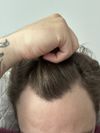
community Norwood scale ? 28m
A 28-year-old is assessing their hair loss on the Norwood scale, considering adding topical minoxidil and dermastamping to their current regimen of oral finasteride and minoxidil. They feel their hair loss is worsening and seek opinions on their condition.
community "14" peptides will be able to be legally compounded by US pharmacies soon, according to RFK Jr. podcast comments.
Peptides are being discussed for potential hair loss treatments, but most are not proven effective for this purpose. Minoxidil and finasteride are mentioned as more reliable options for hair growth.
community Hair shed is driving me crazy/coping with stress
A 25-year-old female is experiencing hair loss and has tried PRP, Minoxidil 5% with Biotin, and weekly needling sessions. Her doctor suggested switching to GFC treatment and stopping the needling sessions due to increased shedding, which may be caused by Minoxidil.
community Stemson Therapeutics and hair cloning pipeline
The conversation discusses the progress and potential of hair cloning by Stemson Therapeutics, questioning if it will be realized in the next 5-10 years or if it's just false hope. Specific treatments mentioned include Minoxidil, finasteride, and RU58841.
community Looking for ~10 product testers - USA based, 25+, willing to try a topical, 12 weeks
A new brand is seeking 10 U.S.-based individuals aged 25+ experiencing hair loss to test a topical product containing GHK-Cu and Acetyl Tetrapeptide-3. Participants must not be using other treatments like finasteride or minoxidil and will provide feedback and photos.
community Scalp Skin Barrier Health and Hair Follicle Cycling: A Potential Overlooked Connection
The conversation discusses the importance of scalp skin barrier health in hair follicle cycling, suggesting treatments like ceramides or niacinamide to support hair growth. It also mentions the use of finasteride for hair loss.
community Kintor Pharma Announced Successful Dosing of the First Patient for Acne Vulgaris Phase II Clinical Trial of KX-826
Kintor Pharma successfully dosed the first patient in a Phase II trial for KX-826 for acne vulgaris. Users are more interested in results for male pattern baldness (MPB).
community GH peptides + KLOW blend saved my hair. before and after pics.
Using finasteride and peptides, including GHK-Cu, improved hair thickness and regrowth. The user also used a KLOW blend and CJC/IPA for better sleep and recovery.
community Almost 4 months on GHK-Cu hair growth progress
OP noticed fuller and thicker hair after almost 4 months of using GHK-Cu, a copper-binding peptide, through subcutaneous injections. Some users were skeptical, questioning the authenticity and potential commercial intent behind the post.
community What’s a good carrier for GHK-Cu or AHK-Cu peptides to penetrate skin?
Copper peptides for hair loss, discussing carriers for skin penetration and recommending a product from Amazon.
community M28 104 days on dut+min and cafune shampoo
A 28-year-old has been using oral dutasteride 0.5 mg, topical minoxidil 5%, and Cafune shampoo for 104 days with positive results and is considering adding microneedling. No side effects from dutasteride have been reported.
community My 12-step program for hair-regrowth
A 28-year-old male shares his 12-step hair regrowth routine, including finasteride, minoxidil, RU58841, LLLT, dermarolling, various shampoos, supplements, and a healthy diet. He seeks advice on microneedling frequency and mentions experiencing lowered libido and occasional scalp inflammation.
community 30M – 8 months progress on min + fin + microneedling + scalp massage + ketoconazole
A 30 year-old male's 8 month progress with hair loss treatments, including minoxidil, finasteride, microneedling, scalp massage, and ketoconazole. Another user mentioned the shed being significant.
community GT20029 Big Phase 2 Update Results!
GT20029 showed promising results for hair growth in a Phase II trial, with the 1.0% twice-weekly regimen being the most effective. Some users expressed skepticism and humor about the product's effects and market availability.
community First update - Minox - LL RLT - micro needling
A 33-year-old male is documenting his hair regrowth progress using minoxidil, red light therapy, copper peptides, and micro-needling, with noticeable improvement in hair thickness and coverage. He plans to add a topical finasteride/minoxidil spray and aims for a shadow on his scalp rather than a full head of hair.
community 28 y/o. Oral Dutasteride/ top minoxidil. Results in 3 months
community Worth a go: Collagen, Chondrotin Sulfate, Hyaluronic Acid, and MSM
Collagen, chondroitin sulfate, hyaluronic acid, and MSM are used to improve hair appearance, making it fuller, thicker, and shinier. The user noticed significant hair improvement after resuming these supplements.
community Reminder: NURTURE those dormant hair follicles for as long as you can until PP405 comes out in 2028-2030
PP405 is anticipated as a future treatment for dormant hair follicles, but its effectiveness and safety are uncertain. Current treatments include oral minoxidil and microneedling, with some avoiding finasteride due to side effects.
community NW7 Progress so far Min+Fin+Derma Roller + Vitamins + Zinc
The user is seeing slow hair regrowth using Minoxidil, Finasteride, a derma roller, vitamins, and zinc. Some suggest switching to dutasteride or adding other treatments, but others doubt significant cosmetic improvement due to advanced hair loss.
community 10 weeks on 0.25mg fin daily + collagen + biotin supps
User experienced hair regrowth and no side effects after 10 weeks on 0.25mg finasteride daily, along with biotin, collagen, micro-needling, and hair oil. They stopped minoxidil due to inconvenience and noticed initial shedding but now see more fullness.
community 2.3 month surprising hair Regrowth with natural remedies and 1mm dermaroller
A person experienced hair regrowth over 2.3 months using natural remedies like onion and garlic juice, rosemary and lavender oil, and a 1mm dermaroller twice a week, avoiding pharmaceuticals due to side effects and personal health principles. They reported improved hairline, density, and thickness.
community 2ddr thread, I'll try to add to it monthly
The user is using a hair loss regimen involving 2ddr applied twice daily, tretinoin weekly, and occasionally micro-needling. They report feeling increased scalp thickness and seeing some hair growth progress.
community What do you think of Dermmatch & Hair Fibers few months after HT?
Hair loss discussion includes treatments like hinoki tree oil and procyanidin b2. Experiences and effectiveness of these treatments are shared.
community My Vitamin D (25-0H) levels came <4.20 ng/ml (<20 implies deficiency)and B12 came 184 pg/ml (Should be between 211-911). I have a lot of dandruff. The derm has prescribed me with 60k vitamin d tablet once a week and multivitamins for a month. Vitamin deficiency implies TE no? or is it MPB?
The conversation discusses hair loss treatments, focusing on vitamin D and B12 deficiencies, and mentions using finasteride. It also suggests getting a biopsy to differentiate between MPB and other conditions.
community only microneedling and supplements
The user used microneedling, zinc, vitamin D3, biotin, magnesium, saw palmetto, pumpkin seed oil, and a DHT-blocker shampoo with biotin for hair loss. They are considering adding minoxidil due to stagnation in progress.
community Shiseido filed for this patent in May 2019. Let's get some big brain discussion on this.
The conversation discusses a patent filed by Shiseido for cloning Dermal Papilla (DP) cells to treat hair loss. The method involves using viral vectors to maintain the cells' growth-inducing properties, differing from Replicel's approach with Dermal Sheath Cup (DSC) cells.
community Baby hairs on hairline! 11 months on 1mg eod fin and microneedling 1x a week, age 31.
A user reported significant hair thickening and new baby hairs on the hairline after 11 months of using 1mg finasteride every other day and microneedling once a week. They experienced no shedding, and finasteride stopped all hair loss within 24 hours of the first pill.