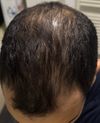
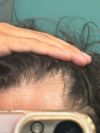
Considering a hair transplant, using Pyrilutamide, the potential availability of CosmeRNA, and the significance of taking Minoxidil and Finasteride for long-term results.
GHK-Cu is discussed as a potential hair loss treatment, with claims of promoting hair growth and possibly reversing gray hair, though strong clinical evidence is limited. The user also mentions using Minoxidil, red light therapy, and microneedling.
The conversation is about using microneedling for hair loss treatment, including questions on disinfection and post-treatment care. The user mentions using oral minoxidil and finasteride, and considering dutasteride.
Pelage PP405 is a new hair loss treatment in trials, potentially reactivating dormant hair follicles without affecting hormones. Results are expected in February 2025, offering an alternative to minoxidil and finasteride.
KX826 shows promise as a hair loss treatment with a 10% increase in hair count, but concerns about Kintor's marketing practices and the systemic effects of treatments like GT20029 and RU58841 remain. Users express skepticism and hope, with some preferring traditional treatments like finasteride and minoxidil.
The conversation discusses Peptonix microneedling, a copper peptide serum, as a potential hair loss treatment. Users compare it to finasteride and minoxidil, noting side effects and personal experiences with these treatments.
Microneedling for hair regrowth, using a 1.0 dermastamp, is discussed with a focus on achieving slight redness without bleeding. Minoxidil is mentioned as an effective treatment when used after dermastamping.
The conversation discusses whether baby hairs observed after using finasteride and minoxidil will grow into terminal hairs, with mixed experiences and opinions shared on the effectiveness of these treatments for hair regrowth. Some users report positive results, while others are skeptical about the potential for significant change.
The user is undergoing Mesotherapy and Low-Level Laser Therapy for hair loss, with plans for multiple sessions. They are also using oral finasteride, topical minoxidil, dutasteride, and hair fibers.
MSM is discussed as a potential treatment for hair regrowth, with mixed opinions on its effectiveness. Some users report faster hair and nail growth, while others question its credibility due to lack of scientific evidence.
PP405 is seen as a potential breakthrough for converting vellus hairs to terminal hairs, with users expressing both hope and skepticism. It is compared to treatments like minoxidil and finasteride, with discussions on side effects and marketing concerns.
The conversation discusses the importance of scalp skin barrier health in hair follicle cycling, suggesting treatments like ceramides or niacinamide to support hair growth. It also mentions the use of finasteride for hair loss.
The user experienced hair regrowth and improved hair density using oral finasteride and topical minoxidil, with microneedling as an additional treatment. They are considering a hair transplant for low-density areas but are uncertain due to existing follicles.
People are discussing the use of the peptide GHK-Cu for hair and skin, with mixed results. Some users have tried it alongside other treatments like adenosine and melatonin, but have not seen significant improvements, and one user stopped due to cost.
A user is considering starting treatments like Finasteride, Minoxidil, and Microneedling for hair thinning, despite stable hair loss for over 8 years. They are unsure if the presence of miniaturized hairs indicates potential for regrowth or if they should accept the current state.
A 22-year-old male is using minoxidil, finasteride, and microneedling for hair regrowth, and users are optimistic about the progress, suggesting continued consistency for better results. Some users mention personal experiences with similar treatments, noting varying levels of success.
The conversation is about whether treatments like finasteride, dutasteride, and minoxidil can make single hair follicles produce multiple hairs again. The user is curious if these medications can thicken hair and prolong the growth phase.
The user experienced hair loss after chikungunya and started PRF (platelet-rich fibrin) injections with injectable Dutasteride, noticing new hair growth. They are hopeful for continued improvement.
Pelage Pharmaceuticals raised $120M for their hair loss treatment, PP405, showing strong investor confidence despite limited data. There is skepticism about its efficacy and long-term effects compared to treatments like GT20029.
The user's hair regrowth plan includes topical treatments (RU58841, azelaic acid, ketoconazole), oral supplements (Gia Herbs, castor oil), microneedling, PTD-DBM peptide with valproic acid, red light therapy, inversion table with scalp massage, and platelet-rich fibrin injections. Commenters suggest that finasteride and minoxidil are essential treatments for male pattern hair loss, which are missing from the plan.
Age-linked hair loss is linked to disappearing collagen. Treatments discussed include minoxidil, finasteride, RU58841, tretinoin, microneedling, and collagen supplements.
User xEternex tries hair regrowth with daily broccoli sprouts, apple extract containing procyanidin b2, and microneedling. Others discuss potential issues with the experiment and share their experiences with vegetable consumption and hair growth.
A user is experiencing uneven hair thinning and has tried topical minoxidil without success and finasteride with adverse effects. They are considering microneedling and PRP treatments while avoiding finasteride, and another user suggests trying dutasteride as an alternative.
The conversation discusses natural, chemical-free methods for scalp health and hair regrowth, such as using oils like rosemary, ginger, castor, and peppermint. It seeks personal experiences and effective routines for hair regrowth, especially after chemo or stress-related hair thinning.
The potential of using Verteporfin to prevent hair loss scars and possible regrowth, with two doctors currently testing it, although the price of a 15mg bottle is expensive.
A non-binary individual experienced hair loss after stopping hormone replacement therapy and is using oral Dutasteride, oral Minoxidil, and ketoconazole shampoo. They are hopeful for regrowth but may use wigs due to the high cost and uncertain effectiveness of additional treatments like mesotherapy and PRP.
Placebo hair regrowth might be influenced by propylene glycol in lotions or participants lying about using other treatments like minoxidil, finasteride, or microneedling. Being part of a study can also improve hair health due to lifestyle changes.
A user is concerned about hair thinning at 23 and is considering Minoxidil and finasteride for treatment, asking about long-term use and side effects. They also mention using collagen and exploring acupuncture for hair regrowth.