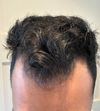
The user is starting a new hair loss treatment routine with Minoxidil, Redensyl, Ketoconazole shampoo, and microneedling. They are avoiding finasteride due to potential side effects and are considering future treatments like pyrilutamide.
The user has seen positive results after over six months using 0.05% topical finasteride, 5% minoxidil, 50mg/ml RU58841, weekly needling, and twice-weekly ketoconazole shampoo for hair loss. They express gratitude for the support from an online community and are open to questions about their treatment.
The conversation discusses a 3-month update on using topical minoxidil, finasteride, microneedling, and ketoconazole shampoo for hair loss. Users express amazement at the progress and congratulate the original poster.
The conversation discusses using NAC and quercetin as supplements for hair loss, with some users also mentioning finasteride. NAC is highlighted for its potential benefits, but concerns about its safety and absorption are also raised.
A user's hair regrowth journey using biotin and minoxidil after initial treatments with Nizoral shampoo and Ketoconazole serum didn't work. The comments suggest the hair loss might not be male pattern baldness (MPB), but possibly Alopecia Areata, an autoimmune disorder, and recommend getting a second opinion and considering other treatments like corticosteroids.
The user has been using topical minoxidil 8% and finasteride 0.3% for six months, along with 2% ketoconazole shampoo and microneedling. They are experiencing some hair regrowth and hope for thicker hair by next year.
PP405 is a potential hair loss treatment undergoing trials, with discussions on its effectiveness and comparison to existing treatments like finasteride and minoxidil. There is skepticism about its status as a cure, with hopes for future advancements in genetic treatments like CRISPR.
The conversation is about a person considering participating in a study for Clascoterone, a topical cream for hair loss, and seeking advice on potential side effects. They have mild hair loss and are not currently using other treatments like finasteride.
The user is concerned about hair regrowth after 6 weeks on 5mg Minoxidil, 1mg Finasteride, 50mg levothyroxine, Keto, and dermarolling every 10 days. They notice baby hairs but are worried about increased shedding and seek reassurance.
A Swiss product called Redensyl, which is supposed to target hair follicle stem cells and has recently been marketed in Europe. The post inquires if anyone has had any experience with the product.
A new topical treatment, PP405, shows promising results for hair regrowth, potentially outperforming existing treatments like finasteride and minoxidil. However, it may still need to be combined with DHT blockers for optimal results, and its long-term effectiveness remains uncertain.
Hair cloning is being developed by companies like Kangstem Biotech and Stemson, with potential availability in a few years. Initial costs are expected to be high, but prices may decrease over time.
A video suggests 0.6mm microneedling is more effective for hair regrowth than 1.2mm, as it causes less trauma to stem cells. People commonly believe 1.5mm is best, but this may vary based on individual factors.
The conversation discusses a user's 6-month progress in treating hair loss using finasteride, minoxidil spray, DHT shampoo (Spartan), and dermarolling. The user shares their experience and others inquire about the DHT shampoo's function.
Microneedling once a week at 1mm caused bumps, possibly scars, in the treated area. The user is considering cleaning the skin before microneedling to prevent this issue.
A female user in her mid-20s with androgenetic alopecia and suspected telogene effluvium who has been taking Dutasteride, Spironolactone, Minoxidil, Dermarolling, Ketoconazol shampoo, and Yaz contraception for her hair loss for the past 6 months. She had a small shed during this time that she believes to be stress related.
Rotenone, a natural plant extract, may promote hair growth by increasing LDH activity and blocking MPC in the scalp, but it carries risks due to its toxicity. The suggested formulation includes Barbasco extract, DMSO, propylene glycol or PEG-400, ethanol, and a carrier oil.
The user is using oral Minoxidil, oral Dutasteride, microneedling, and RU58841 for hair loss, noticing slow progress with small hairs appearing. They are inconsistent with microneedling frequency, sometimes doing it weekly or skipping weeks.
OP shared 9-month hair regrowth progress using 1mg finasteride, 5% minoxidil, 2% ketoconazole, and a dermapen. Users discussed side effects, application methods, and additional treatment suggestions.
Significant hair regrowth was achieved using Minoxidil, Dutasteride, and derma stamping. The user noted improved hair quality and thickness with no side effects.
A user shared a 7-month hair loss treatment progress using finasteride 1.25 mg, oral minoxidil 2.5 mg, ketoconazole shampoo, and monthly micro-needling, noting denser hair and improved quality but no significant regrowth. They experienced mild testicular discomfort and heart palpitations, considering switching to topical minoxidil to avoid side effects.
Latanoprost/bimatoprost's effectiveness in hair loss treatment is discussed, with its potential to convert vellus hairs to terminal hairs. It works differently from minoxidil and finasteride, and may be best for hairline application, but is not a replacement for them due to price and mechanism.
A 26-year-old is starting a hair loss treatment using 1mg oral finasteride daily, 5% topical minoxidil foam twice daily, 2% ketoconazole shampoo weekly, and microneedling once a week. They noticed worsening hair loss over the past year and are seeking advice.
PP405 shows promise for hair regrowth, with new hairs observed in 66% of patients in just 27 days. The discussion also mentions Minoxidil, finasteride, and RU58841 as potential treatments.
The conversation discusses a hair loss treatment formulation containing cyclosporin, minoxidil, and tacrolimus, and mentions ongoing research on hair color reversal. The treatment showed high efficacy in restoring hair color in trials with 40 to 50 people.
The user has been managing hair loss with microneedling, Nutrafol, topical finasteride/minoxidil foam, LLLT, and Nizoral, and plans to add oral minoxidil. They are seeing improvement and are cautious about using oral finasteride due to past gynecomastia concerns.
User "hemantch" shares 5 months progress using topical Fin, Min, topical Dut, and a laser cap for hair loss. Significant regrowth was noticed after 1 month, and the treatments worked well despite being bald for 10 years.
Chinese company gets green light for Pyrilutamide Phase II trial for androgenetic alopecia. Androgen receptors downregulate in androgen deficient environments.