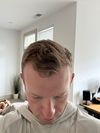
The user started using a hair loss treatment regimen including 5% minoxidil spray twice daily, 1% finasteride spray once daily, microneedling weekly, and ketoconazole shampoo twice a week, experiencing significant hair shedding. The shedding is seen as a positive sign, indicating hair follicles are entering a new growth phase.
The user reduced serum DHT by 60% using Advanced Trichology's natural DHT blocker but saw no improvement in hair loss. They are considering switching to finasteride due to its proven effectiveness in inhibiting scalp DHT.
A user experienced increased testosterone and estradiol levels after starting finasteride/dutasteride and is asking if these levels will return to normal over time. The conversation focuses on whether these changes are temporary.
A 21-year-old male managed to control his hair loss using Nizoral, RU58841, and finasteride, but experienced increased scalp itchiness after starting creatine, which subsided upon stopping creatine. Users shared mixed experiences on whether creatine affects hair loss, with some reporting negative effects and others seeing no change or defending its benefits.
User achieved hair regrowth using 1 mg oral finasteride, topical minoxidil twice daily, and occasional microneedling. They are happy with the progress despite still having thin hair on top.
The conversation is about a user's two-year progress using oral minoxidil, dutasteride, and ketoconazole shampoo for hair loss. The user noticed hair thickening within a few months and significant improvement after a year, despite initial doubts.
The user experienced positive hair regrowth using topical minoxidil, along with other factors like shorter hair, castor oil, and hair masks. The user is optimistic about further progress and wants to avoid baldness.
The conversation is about the effectiveness of Maneup GHK-Cu hair growth serum, a topical treatment for hair loss. The user is considering trying it but is skeptical due to issues others have had with DIY injections of a similar substance.
The conversation is about a person struggling with inconsistent hair styling due to thinning hair, despite being on hair loss medications. They find that ketoconazole 2% shampoo helps, but conditioning makes their hair look worse; others suggest staying consistent with treatment and using hair fibers for events.
A user's personal hair loss progress with treatments, including finasteride (1.25mg), minoxidil, needling, and Nizoral; and advice from other users on how to perform the needling correctly.
The conversation discusses hair loss treatments, specifically using topical minoxidil, oral finasteride, ketoconazole, and derma stamping. Users share their experiences, with one noting improved scalp health and slight regrowth, while another considers switching treatments due to lack of progress.
Stopping finasteride due to side effects and family planning can lead to temporary increased hair shedding, which may stabilize over time. Consider topical treatments or a lower dose after addressing current concerns.
A 31-year-old experiencing male pattern hair loss is considering options to manage it before their wedding, including continuing oral finasteride despite dizziness, switching to topical finasteride, adding minoxidil, or getting a hair transplant. They are advised that switching to topical treatments might reduce dizziness and that a hair transplant should be considered once hair loss stabilizes.
A 19-year-old is using 5% topical minoxidil, 1.25 mg finasteride, ketoconazole, and a dermaroller for hair regrowth, noticing improvement in the frontal area. Another user suggests adding oral minoxidil and maintaining a consistent routine, emphasizing the importance of stress management and a healthy diet for better results.
The user is using minoxidil, finasteride, ketoconazole shampoo, biotin, and omega-3 for hair loss treatment. They are concerned about progress, but responses suggest patience and addressing dandruff for better results.
Stemson Therapeutics announced a breakthrough in hair growth technology using stem cells. Users discussed the potential high cost and skepticism about the treatment's accessibility.
The user is using oral dutasteride, oral minoxidil, derma stamping, 1% Nizoral shampoo, and an oil blend for hair regrowth and is seeing some progress. Feedback suggests improvements are visible, but some recommend removing the oils and focusing on dutasteride and minoxidil.
Creatine use is linked to increased hair shedding for some, especially those with DHT sensitivity, but experiences vary. Some users manage hair loss with treatments like finasteride, minoxidil, or dutasteride, while others stop creatine to reduce shedding.
Minoxidil and microneedling are causing new hair growth, particularly in the center of the hairline, creating a more prominent M shape. Users discuss the progress and potential benefits of the treatment.
The user is considering switching from finasteride and minoxidil to dutasteride for better hair regrowth results, as they are experiencing thinning and shedding despite current treatments. They have also tried microneedling, Clobetasol, and salicylic acid to manage scalp issues and inflammation.
The user has been using topical minoxidil for 1.5 years and dutasteride for 6 months. Opinions on progress vary, with some seeing stabilization and thickening, while others see no significant change.
Creatine use with finasteride has mixed effects on hair, with some experiencing shedding and others noticing no impact. Many attribute concerns to individual sensitivity or unrelated factors.
The conversation is about hair regrowth treatments, including ketoconazole, vitamins, fish oil, collagen, pumpkin seed oil, rosemary, and dermal rolling. Users suggest trying finasteride and intense weight training to enhance results.
Avoid home-compounding topical minoxidil due to potential risks and complications. Use proper equipment and techniques to prevent aerosolization and ensure effective dissolution.
The user has been using finasteride for four years and topical minoxidil with microneedling for a year but has not seen significant results in slowing hair loss. They are considering trying dutasteride despite concerns about its intensity, and others suggest trying oral minoxidil or combining treatments for better results.
The user switched from finasteride to dutasteride for hair loss treatment, also using topical minoxidil, micro needling, keto shampoo, and PRP sessions. They've seen improvements, with reduced hair shedding and new hair growth, especially at the hairline.
A user shared their hair loss journey, detailing their use of Kirkland Minoxidil 5%, finasteride, dutasteride, and weekly dermarolling. They experienced initial success with minoxidil but faced setbacks with oral minoxidil and are now back on topical treatments.
Some actors are believed to use treatments like finasteride, minoxidil, or hair transplants to maintain their hair, while others are thought to have naturally good genetics. Opinions vary on whether celebrities like Brad Pitt have natural hair or use enhancements.