Search
forProducts matching "kintors kx-826"
Tracking 3 products like 791 KINTOR 0.5% KX-826 DHT Blocker Hair Regrowth Spray for Men & Women 60ml, 792 KINTOR 0.9% KX-826 DHT Blocker for Men & Women Hair Growth,Hair Growth Products Spray 60ml Pro and 793 KX-826 DHT Blocker Hair Thickening Growth Products,Plant-Based Extract Essence Anti-Hair Loss Solution from by companies like Amazon. View all 3 products »
Sort by
Community Join
660-690 / 1000+ resultscommunity Replicel, worthy of hype or probable disappointment? Questions thread
The conversation discusses the potential of Replicel/Shiseido treatment for hair loss, questioning its effectiveness, whether it grows new follicles, and its market release timeline. It also compares Replicel to other competitors like Kyocera/RIKEN/Tsuji.
community 3 months of min/fin + ketoconazol 2% and derma stamp 0.75mm.
The conversation discusses hair loss treatments, specifically using topical minoxidil, oral finasteride, ketoconazole, and derma stamping. Users share their experiences, with one noting improved scalp health and slight regrowth, while another considers switching treatments due to lack of progress.
community Anyone tried Thicair? thoughts?
Thicair is a product combining microneedling and subdural vitamins for hair loss, containing ingredients like Panax Ginseng Root Extract and Copper Tripeptide-1. Users are skeptical, with one calling it "quackery."
community Genuine Minoxidil Sanity Check-Tiktok Shops
A user bought Kirkland Minoxidil from a TikTok shop and sought confirmation of its authenticity through a bleach test, which some users warned could be dangerous. Many participants advised against buying from TikTok due to the risk of fakes, suggesting alternatives like buying from Costco or reputable online pharmacies.
community Triple Hair TH-16 released. Thoughts and opinions?
Triple Hair's TH-16, a product claimed to be more effective than Minoxidil 5%, has been released; it contains melatonin and resveratrol. One user reported success with topical melatonin and dermarolling.
community dut/min /copper peptides VS PP405 results
Minoxidil, dutasteride, and copper peptides are used in a tattooing method for hair regrowth, with some users noting better results compared to oral treatments. Copper peptides are considered to have minimal impact, but the method may reduce side effects.
community CB-03-01 / Breezula Personal Results
The user shared their experience with CB-03-01 (Breezula/Clascoterone) for hair loss, noting reduced shedding and improved hair appearance but experiencing significant sleep disturbances and low energy due to HPA axis suppression. They decided to stop using it due to these side effects and are waiting for GT20029 as an alternative.
community PP405 (Everychem 3HP) users - assemble and share your updates!!
Users discussed experiences with Everychem's solution similar to PP405 for hair loss, noting some positive results like increased hair thickness and new growth. There was skepticism about the product's legitimacy and safety, with some users reporting early signs of effectiveness and others expressing concerns about the lack of evidence and safety profiles.
community The BEST Toppik Water Test - How to WATERPROOF Hair Fibers!
Hair loss discussion includes treatments like hinoki tree oil and procyanidin b2. Experiences and effectiveness of these treatments are shared.
community How to mix ru58841 powder into minox??
Mixing RU58841 powder into minoxidil can result in undissolved particles. Shaking the bottle and breaking up the grains may help dissolve it better.
community gt20029 any u-lab order possible?
The user is seeking alternative hair loss treatments due to side effects from finasteride and minoxidil. They are inquiring about the availability of gt20029 from u-lab.
community Why there are no updates from Amplifica about SCUBE3 & AMP-303?
Amplifica has not provided updates on SCUBE3 and AMP-303, raising concerns about their trial outcomes. Users also mention other treatments like Minoxidil, finasteride, RU58841, PP405, and ET-03.
community Minokem-N cotains hydrocortisone?
Minokem-N's composition is unclear, with concerns about unlisted hydrocortisone. Users discuss alternatives like AloATM, which lacks soothing agents, and the challenges of verifying ingredients.
community Anyone ever use amazons RU58841?
The conversation warns against buying RU58841 from Amazon due to concerns about product authenticity and recommends purchasing from trusted sources like Minoxidilmax and Anageninc.
community Let the journey begin!!!! Koshine, Avodart (year supply 1.5-2.5mg daily), 5mg OM daily
The user plans to improve hair density using Koshine, Avodart (1.5-2.5mg daily), and 5mg OM daily. They previously used finasteride, minoxidil, dutasteride, and fluridil with some improvement.
community Thoughts on this topical? Has a combination going on but are they really heavy hitters
Follicium XR™ is a topical treatment for hair loss containing RU58841, AHK-Cu, GHK-Cu Peptide, caffeine, D-Biotin, methylene blue, keratin, and spermidine. RU58841 is considered the most effective ingredient, but concerns exist about its stability in water.
community Is this regrowth? ketoconazole
The conversation is about hair regrowth treatments, including ketoconazole, vitamins, fish oil, collagen, pumpkin seed oil, rosemary, and dermal rolling. Users suggest trying finasteride and intense weight training to enhance results.
community Progress since March 2023-MINOX 10%/FINA 0.1%/BIOTIN 0.2%/ LATANO 0.005% SOLN COMPO
User shared progress pictures showing significant hair regrowth using a compounded solution of Minoxidil 10%, Finasteride 0.1%, Biotin 0.2%, and Latanoprost 0.005%. They reported no side effects and are satisfied with the results.
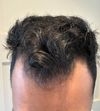
community M26 - Day 1 Fin + Min Hairloss Journey - Updating weekly for 6 months
A 26-year-old is starting a hair loss treatment using 1mg oral finasteride daily, 5% topical minoxidil foam twice daily, 2% ketoconazole shampoo weekly, and microneedling once a week. They noticed worsening hair loss over the past year and are seeking advice.
community What type of microneedling device should I use?
Use a stamp or roller for microneedling; stamps are preferred to avoid hair pulling. Clean tools with alcohol to prevent infection, and replace stamps every 4-6 uses.
community 7 month progress Min/Fin/Microneedle/Ketoconazole
The user has been treating hair loss for 7 months using a combination of pyrilutamide, a topical mix of finasteride and minoxidil, microneedling, a topical mix of GHK-Cu and minoxidil, ketoconazole shampoo, fish collagen peptides, zinc, and vitamin D3. Another user suggests that continuous small improvements could lead to significant hair regrowth over time.
community Rexagain Mixprocapil + Finasteride
The conversation discusses a product called Rexagain Mixprocapil, which includes topical finasteride. Users express skepticism about the product's legitimacy and caution about its use.
community Hy-tissue PRP 50 Experience ??
PRP treatments have been effective for the user, with a new recommendation of using a high-quality plasma kit once a year. The user seeks experiences with this specific PRP approach.
community Anyone know a supplier for 3in1 (Min+Fin+Biotin) medication in Europe?
A user is seeking a European supplier for a 3-in-1 hair loss medication containing Minoxidil, Finasteride, and Biotin. Suggestions include using forwarding services and a UK-based provider, with discussions on potential import taxes.
community My First Hair System Experience (photos enclosed)
A user shared their positive experience with a non-surgical hair replacement system, detailing the purchase and maintenance process, including using Walker Lace Front Support Tape and various adhesives. They found the system secure and undetectable, allowing them to engage in active pursuits without issues.
community Mixing stemoxydine and pre mixed ru58841
User asks if mixing RU58841 solution with Serioxyl is okay for better scalp coverage and worries about reduced effects.
community Hair Multiplication company Trichoscience purchased by RepliCel, check out their video.
RepliCel has purchased Trichoscience, and they have a video about hair multiplication. The conversation also mentions treatments like Minoxidil, finasteride, and RU58841.
community Thoughts and Experiences with Thickening Tonics?
OP is seeking recommendations for thickening tonics and decides to try Aveda thickening tonic after a suggestion. Another user recommends hair powder as an alternative.
community 25 M – progress from July 21 to April 23 [1.25 mg oral fin per day, top min 2x per day]
Low-Butterscotch-608's progress in treating their hair loss with finasteride and minoxidil over the course of two years, as well as opinions on whether they should consider a hair transplant to address further receding. Replies included advice about adding microneedling to the protocol.