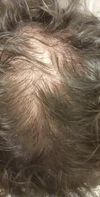
Minoxidil can cause scalp flaking and dryness, often due to its alcohol content. Switching to foam minoxidil or using antifungal shampoos like Ketoconazole may help reduce these side effects.
Hair loss discussion includes topical spironolactone treatment, used 1-2 times daily for 2 weeks with no changes yet. Minoxidil and Propecia caused nasty side effects for the user.
User experienced telogen effluvium and diffuse thinning, started using 5% minoxidil two months ago, and resolved several deficiencies. They report noticeable improvement in hair health and plan to update progress in a month.
Unwanted hair growth from minoxidil use, with suggestions to reduce dosage or switch to finasteride. Users recommend hair removal methods like shaving, waxing, or electrolysis to manage excess facial hair.
A 39-year-old has been using topical 5% minoxidil for 11 years, added microneedling, and recently started using a topical combination of minoxidil and 0.3% finasteride, noticing some hair regrowth after three months. They experienced minor side effects when switching finasteride concentrations and plan to continue the treatment, possibly adding oral finasteride or dutasteride if significant progress is seen after a year.
The user experienced scalp inflammation and rapid hair loss after using minoxidil, despite initial success. Suggestions included switching to minoxidil foam, using oils, trying aspirin, and considering RU58841 for inflammation and hair loss management.
The user is trying a new hair loss treatment combining 1.25 mg oral minoxidil with a daily topical solution containing hydrocortisone, tretinoin, 8% minoxidil, and 0.025% finasteride. They aim to maintain their current hair before considering a hair transplant in Istanbul.
The regimen includes using a diluted 5.5% Minoxidil / 0.025% Finasteride solution daily, microneedling weekly, and ketoconazole shampoo twice a week to minimize systemic exposure while maximizing scalp DHT reduction. The goal is to achieve hair regrowth with minimal side effects.
Using minoxidil 5% once a day for hair loss, with suggestions to add finasteride for better results. It also discusses the effectiveness and side effects of finasteride and the importance of consistent application.
The user is using Minoxidil, RU58841, CB-03-01, WAY-316606, Ketoconazole, MK-677, and derma stamping to treat hair loss and has noticed new hair growth, especially around the temples and hairline. They apply different treatments at various times of the day and have seen improvements in skin condition and body hair texture.
A 21-year-old was diagnosed with early-stage androgenetic alopecia and prescribed only minoxidil 5% and ketoconazole shampoo by a dermatologist, who advised against finasteride for now. The user is skeptical about starting minoxidil due to concerns about increased hair loss.
The conversation is about a user's progress with hair regrowth after using minoxidil for three months. Many suggest adding finasteride to maintain results, and the user also uses ketoconazole shampoo for dandruff.
The user, Albertgejmr, is happy with their progress in treating hair loss using 15mg oral minoxidil and 0.5mg Dutasteride. Some users express concern about the high dosage and potential side effects.
The user experienced significant hair regrowth over 8 months using a topical combination of 0.3% finasteride and 6% minoxidil, applied nightly, along with weekly microneedling and ketoconazole shampoo. They reported no side effects and attributed the improvement mainly to minoxidil, while maintaining consistent use of supplements and a healthy lifestyle.
The user has been using minoxidil for four months and believes they see positive changes in hair thickness and coverage. Another user confirms the improvements and advises continued use for optimal results.
The user started using minoxidil and a dermastamp after only using finasteride, experiencing initial hair shedding but noticing new hair growth. They are considering adding ketoconazole shampoo to their routine.
The user applied topical 0.1% finasteride and 5% minoxidil, along with weekly microneedling, resulting in significant hair regrowth. The user also lost 10kg through diet and exercise.
Minoxidil helped with temple regrowth, and finasteride improved overall hair appearance and stopped further hair loss. Minoxidil was also applied to eyebrows and eyelids, with noticeable gains, but was stopped on the beard due to bloating.
A 24-year-old reported new hair growth on temples after 3.5 months of using topical minoxidil without shedding. They plan to add finasteride to maintain progress, as minoxidil alone may not be enough long-term.
A 19-year-old is using keto shampoo, topical Minoxidil 5% for 3 months, and topical finasteride 0.1% for 1.5 months to address hair loss. They are noticing baby hairs and shedding, questioning if the hairs will thicken and if more time is needed for finasteride to work.
A 21-year-old male used ketoconazole shampoo, 1mg finasteride, 5% topical minoxidil, and 5mg oral minoxidil for hair loss, with no side effects reported. He applied topical minoxidil only to thinning areas to promote hair and beard growth.
The user has been using 5% topical minoxidil for a year, but hair loss has worsened recently. They are considering adding finasteride to their treatment.
The user is using a hair loss treatment with finasteride 0.1%, minoxidil 5%, and tretinoin 0.01%, applied once daily at 1ml. They are questioning if a 60ml bottle used twice daily implies a higher recommended dose despite the same 5% minoxidil concentration.
An 18-year-old woman experiencing hair loss due to stress, possible PCOS, and low vitamin D is concerned about starting 5% minoxidil foam, prescribed by her doctor, due to potential facial hair growth. She is also using a topical steroid for scalp sensitivity and pain.
The user experienced hair regrowth using a topical solution containing 5% minoxidil and 0.1% finasteride, despite an initial shedding phase. They reported no side effects and noted significant improvement in hair density, particularly around the crown area.
The conversation discusses hair loss treatments, specifically the use of 5% topical minoxidil, with considerations for adding finasteride or dutasteride. Concerns about side effects, such as unwanted body hair growth from oral minoxidil, are also mentioned.
A 20-year-old male experienced mental fog after resuming topical minoxidil for hair loss, questioning if it's due to interactions with antidepressants. Suggestions included trying a lower concentration of minoxidil or alternatives like copper peptides.
A 35-year-old man shares his positive progress in hair regrowth using a daily routine of 5mg oral minoxidil and 0.5mg dutasteride, along with a low light cap, weekly dermarolling, and biweekly ketoconazole shampoo. He reports noticeable improvements without side effects and aims to inspire others considering similar treatments.