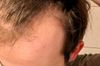
A 30-year-old woman shared her 4-month hair loss progress using minoxidil, rosemary oil, and Nizoral shampoo. She posted before and after pictures taken three months apart.
Impressive hair regrowth was achieved in 4 months using 1.2mg finasteride, 3mg minoxidil, and Thick Fix shampoo. No side effects were reported, and the user encouraged others to try these treatments.
The user is experiencing hair thinning and bald spots, using Nizoral, rosemary oil, fluocinolone, and receiving PRP treatments. They are considering oral minoxidil and finasteride but are hesitant due to age and financial constraints.
A 25-year-old is experiencing mild hair loss and is using a regimen including scalp brushing, dermarolling, topical minoxidil, caffeine, melatonin, and a DHT-blocking shampoo. Another person shares their struggle with hair loss due to drug use and plans to start finasteride while trying to quit drugs.
The user received a Fagron TrichoTest indicating that Finasteride, Dutasteride, and Minoxidil are not effective for them, recommending Latanoprost, Spironolactone, IGrantine-F1 TM, and Trichoxidil instead. Other users expressed skepticism about the test's validity and suggested sticking with proven treatments like Finasteride and Dutasteride.
GHK-Cu serums for hair growth have mixed results, with some users not seeing significant benefits. Users have tried various brands like Tricomin and Actifolic without success.
A user is experiencing significant hair loss and stress, seeking advice on treatments. They are using Pura d'or shampoo and conditioner, biotin, and considering other options but are hesitant about treatments like Minoxidil due to the need for continuous use.
PP405 shows promise for hair growth with significant results after 4 weeks, but skepticism exists due to its unavailability. Some users are hopeful for its potential, while others express concerns about side effects and market release delays.
The user is concerned about the interaction between dutasteride and ketoconazole, leading them to stop using ketoconazole shampoo, which has resulted in an oily and painful scalp. They are unsure whether ketoconazole increases or decreases the potency of dutasteride.
The user experiences an itchy scalp and finds relief using shampoo and Zyrtec, which helps with inflammation. They are unsure if the issue is related to histamines or seborrheic dermatitis.
People discuss using various shampoos and conditioners to make hair look thicker, mentioning products like Nizoral, Redken, Nioxin, hims thick fix, and purador. Some users highlight ingredients like Redensyl and Baicapil, while others note that shampoos and conditioners aid in hair care but not in hair growth.
Quitting RU58841 after over two years reduced scalp itching and inflammation, despite concerns about losing hair gains. The user continues using finasteride and oral minoxidil.
The conversation discusses a topical formula for hair loss including Finasteride (0.025%), Minoxidil (0.5%), Tretinoin (0.01%), Caffeine (0.005%), Melatonin (0.003%), Tea Tree Oil (0.05%), Aloe (0.05%), Biotin (0.05%), and Fagron TrichoXidil (2.5%). The user considers removing Minoxidil and Tretinoin to test TrichoXidil's effectiveness.
The conversation discusses using topical cetirizine for hair loss and questions its effectiveness and preparation. A user expresses interest in trying it if it can be dissolved in minoxidil.
Grape seeds can cause an itchy scalp among other side effects. Users discussed their experiences and treatments like Minoxidil, finasteride, and RU58841.
The user has been taking 0.5 mg of dutasteride daily and using ketoconazole shampoo twice a week for four months, but sees no significant hair loss improvement. Others in the conversation believe the user is not experiencing hair loss and suggest the user might be overly concerned about their hairline.
User reports 12 months of using Mexican finasteride (Novaride), minoxidil spray, and ketoconazole shampoo with significant crown improvement and slight frontal hairline improvement. No current side effects; plans to continue treatment for further gains.
Dr. Muñoz's discovery suggests that targeting potassium channels in fibroblasts could reactivate hair growth, offering new treatment possibilities for alopecia. Potential strategies include using minoxidil, diazoxide, and other potassium channel openers, as well as bioelectric devices and direct growth factor applications.
The post discusses hair loss treatments, specifically using minoxidil, finasteride, nizoral, and sulfur-including shampoo. The author shares personal experiences and tips for application, frequency, and managing side effects, noting significant regrowth with both minoxidil and finasteride.
A new drug, PP405, is being discussed as a potential cure for baldness, with hopes it could be more effective than Minoxidil and Finasteride. Users are skeptical about its effectiveness and the need for lifelong use.
The conversation discusses using GHK-Cu, C60, and saw palmetto oil as treatments for hair loss. Specific treatments mentioned include Minoxidil (Min), Finasteride (Fin), and RU58841 (RU).
A 23-year-old experiencing diffuse hair thinning has chosen a treatment stack including topical finasteride, a blend of rosemary, peppermint, and pumpkin seed oils, procyanidine B2 spray, ketoconazole shampoo, and scalp massages. They avoid minoxidil due to family history of side effects and oral finasteride due to high estrogen levels.
Kintor's KX826 (pyrilutamide) is ineffective at 0.5% and overpriced at 1%, leading to user frustration and calls for fair pricing. Users suggest sticking with proven treatments like Minoxidil and Finasteride.
The user used finasteride, minoxidil, and ketoconazole for hair loss prevention. After one year, there was no noticeable hair regrowth, but no further hair loss occurred.
A pharmacy student proposed a hair loss treatment using minoxidil, finasteride, clascoterone, and tretinoin, aiming for high effectiveness with minimal side effects. Reactions were mixed, with some questioning its feasibility and others showing interest.
A 28-year-old has been using oral dutasteride 0.5 mg, topical minoxidil 5%, and Cafune shampoo for 104 days with positive results and is considering adding microneedling. No side effects from dutasteride have been reported.
Kintor KX-826, a hair loss treatment, is being discussed for its pricing and effectiveness, with a focus on whether the 0.9% concentration is more effective than the 0.5%. Users are seeking cheaper purchasing options.
There is no imminent cure for hair loss, but treatments like Minoxidil, Finasteride, and new drugs such as KX-826, GT-20029, and PP405 are being explored. Current solutions focus on slowing hair loss and stimulating growth, with hopes for better options in the future.
A user shared their progress in combating hair loss using dutasteride, topical minoxidil, and keto shampoo, expressing increased confidence and happiness with the results. They received feedback to provide clearer photos to better showcase their hair improvement.