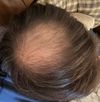
Hair loss treatments discussed include promising Pyr available online and Verteporfin dosing after FUE for follicle regeneration, but no updates on SCUBE3.
Microneedling can be effective for hair regrowth, especially when used with oils like castor, emu, and rosemary, but should be done with caution regarding needle size and frequency. Some users avoid minoxidil due to its side effects and cost, opting for alternatives like rosemary oil.
A user sharing their progress after using Fin, Minoxidil, keto diet, and microneedling for two months to attempt to regrow hair on bald temples. Other users replied with advice and support.
The user is starting a hair loss treatment using a mix of coconut oil and rosemary oil, combined with microneedling. They plan to post results in 6 months.
The user is using oral Minoxidil, oral Dutasteride, microneedling, and RU58841 for hair loss, noticing slow progress with small hairs appearing. They are inconsistent with microneedling frequency, sometimes doing it weekly or skipping weeks.
User shared 9-month progress with finasteride and microneedling, and 2-year progress with minoxidil for hair loss. Others asked about microneedling tools, routine, and suggested micro fibers for improvement.
User has been using minoxidil 6%, finasteride 0.3%, tretinoin 0.025%, and microneedling twice a week for 2.5 months. They are considering switching to oral treatments.
Applying minoxidil immediately after microneedling at 0.5mm can cause stinging and potential systemic absorption, so some users prefer to wait 12-24 hours. Others report no issues with immediate application, but caution is advised to avoid irritation and side effects.
The conversation discusses a user's two-year hair regrowth progress using finasteride, minoxidil, and microneedling. One user asks for a timeline of progress, another comments on hair length, and the original poster mentions using microneedling sporadically.
Microneedling for hair loss and its potential long-term effects. Some users believe it can cause fibrosis and scar tissue if done too frequently or deeply, while others claim it has improved their hair loss when done correctly. There is limited scientific research on the topic.
The conversation is about someone using finasteride and minoxidil along with microneedling as a treatment for hair loss, and there's a mention of scalp tattooing as an alternative or additional approach. Some responses mock the approach, while others inquire about the specifics of the treatment and its effectiveness.
Microneedling is debated for hair loss treatment, with some users finding it beneficial for minoxidil absorption and others skeptical of its effectiveness. Alternatives like finasteride and minoxidil are recommended, while tools like dermarollers, dermapens, and dermastamps are discussed for their pros and cons.
The user is starting a new hair loss treatment routine with Minoxidil, Redensyl, Ketoconazole shampoo, and microneedling. They are avoiding finasteride due to potential side effects and are considering future treatments like pyrilutamide.
A user shared their 3-month hair growth progress using 1mg oral finasteride, 5% topical minoxidil, and microneedling with a 1.5 mm dermaroller twice weekly. The user received positive feedback and expressed a desire for thicker hair in the future.
Using a combination of micro-needling and exosome injections as a potential treatment for male pattern baldness, which could result in 50% or more regrowth.
The user is currently using oral finasteride for hair loss and considering adding Eucapil, dutasteride mesotherapy, and microneedling to their treatment regimen. They are seeking alternatives to minoxidil, such as Stemoxydine, due to concerns about minoxidil's side effects.
The user is using oral and topical minoxidil, finasteride, dutasteride, and considering adding rosemary and pumpkin saw palmetto to their regimen. They report significant hair growth, especially with dutasteride, and are considering increasing their dose and adding RU58841.
The user started on Finasteride, switched to Dutasteride, and is considering microneedling but was advised against it by their hair surgeon due to potential scalp issues affecting a planned hair transplant. Other users suggest alternatives like Minoxidil, PRP, and avoiding microneedling due to the risk of scar tissue impacting transplant results.
User asks where to purchase exosomes/AAPE for microneedling hair loss treatment. Links to research on hair regeneration therapy, stem cell therapy, exosome therapy, and dermal exosomes provided.
Microneedling, when combined with finasteride and topical minoxidil, can enhance hair regrowth for male pattern baldness, especially at the temples. Users report varying success with needle depths between 0.5mm and 1.5mm, with stamps preferred over rollers to minimize scalp damage.
A user discusses using a 1.5mm dermaroller daily in the shower for hair loss, noting redness but no bleeding, and applying coconut oil afterward. They are concerned about a receding hairline and slight hair loss near the temple.
Combining microneedling with Low Level Laser Therapy (LLLT) for hair growth, with discussions on device legitimacy and effectiveness. Alternatives like PEMF and the use of oral and topical treatments such as dutasteride, minoxidil, and finasteride are also considered.
The conversation provides advice on using derma rollers, stamps, and pens for hair loss, detailing types, usage, cleaning, depth, frequency, and caution with topicals like minoxidil. The user plans to replace a roller with a pen for better accuracy and safety, and uses a castor oil/rosemary oil mix post-needling.
A user experienced significant hair loss after starting microneedling, despite using dutasteride and topical minoxidil. They are advised to consult a doctor as the shedding pattern is unusual and may indicate alopecia areata or other scalp conditions.
The conversation is about managing a hair loss routine using Minoxidil twice daily, Tretinoin cream once daily at night, and microneedling once daily at night. The user is seeking advice on how to incorporate these treatments effectively without overlapping too much at night.
The conversation is about hair regrowth progress using a combination of treatments: dutasteride, minoxidil, RU58841, ketoconazole, and monthly microneedling. The user reports that microneedling and topical minoxidil had the most impact on their hairline.
Microneedling combined with minoxidil is helping users see hair growth progress. One user reported significant results after two months of using oral minoxidil and microneedling.
A 35 year old male who has seen good results from Finasteride and microneedling, with minimal side effects. Replies to the post ask about the device used for microneedling, discuss the progress made, and offer encouragement.