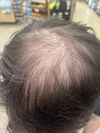
The conversation discusses alternatives to 5AR inhibitors for hair loss treatment, suggesting options like minoxidil, KX-826, pyrilutimide, microneedling, and topical bicalutamide. Concerns about side effects and the effectiveness of these treatments are also highlighted.
The conversation discusses a 5-month hair loss treatment regimen including finasteride, minoxidil, RU58841, dermapen (1.7mm), and ketoconazole shampoo, with noticeable hair regrowth. One user notes the hair appears thicker, while another mentions RU58841 is not doctor-recommended.
A 17-year-old is looking for alternatives to finasteride for DHT control to preserve hair, considering ketoconazole shampoo for its potential to inhibit 5AR and also thinking about using caffeine-containing shampoos like alpecin or watermans.
The user reported significant hair improvement over 15 months using dutasteride, minoxidil (oral and topical), RU58841, ketoconazole, and microneedling. They are considering a hair transplant in 4-6 months.
Kintor's Pyrilutamide (KX-826) showed hair growth in Chinese Phase III trials but did not significantly outperform placebo. The treatment was safe with no major adverse reactions reported.
A 15-year-old is experiencing uneven hair loss, with one temple receding significantly. They are considering using finasteride, minoxidil, or dutasteride to slow hair loss before visiting a dermatologist, and may consider a hair transplant in the future.
Pyrilutamide/KX-826 is being considered as a potential treatment for female androgenetic alopecia (AGA), but its high cost and limited data on effectiveness are concerns. Kintor markets it for both men and women.
Kintor is producing a cosmetic with KX826, starting at 0.5% concentration and moving to 1%. The 0.5% concentration wasn't as effective as minoxidil and finasteride, but the 1% concentration shows promise.
A 16-year-old is experiencing hair loss and is using minoxidil, finasteride, and plans to add RU58841, while considering other treatments like MK-677 and microneedling. Concerns are raised about the potential impact of these treatments on puberty and development.
KX-826 is a potential hair loss treatment, with users discussing its effectiveness compared to finasteride and concerns about its trial results. Some users express skepticism about new treatments, while others discuss the potential of androgen receptor degraders and the need to manage drug resistance.
User discusses a topical hair solution containing Tretinoin, Dutasteride, and Ketoconazole, and asks if it's safe to combine and leave in hair. Concerns include Ketoconazole being left in hair and Tretinoin's effects with Dutasteride and Ketoconazole.
Users discuss aggressive promotion of Koshine 826, suspecting Kintor employees are behind it. Concerns are raised about its effectiveness, with some preferring alternatives like finasteride and minoxidil.
The conversation is about comparing hair loss treatments Pyrilutamide (KX-826) and CB-03-01, discussing their cost, side effects, and effectiveness. The user questions whether to try CB-03-01, which is more expensive and potentially less effective, or switch to the cheaper and possibly better Pyrilutamide.
GHK-RU58841 is used for hair loss, with positive results when combined with finasteride, stemoxydine, redensyl, and alfatradiol. Users report effectiveness after adding finasteride.
A Phase 1 update for the HMI 115 clinical trial, which involves 16 participants and is expected to end in July 2023; as well as changes to the recruitment process, including treatment protocols with Minoxidil, Finasteride, and RU58841.
The conversation discusses organizing group buys and tracking progress for Kx-826 Pyrilutamide, a hair loss treatment. Participants express optimism about upcoming results and concerns about self-reporting bias.
The user is generally happy with their hair transplant results but has concerns about graft density and placement, particularly on the left temple and hairline. They are using finasteride and minoxidil inconsistently, plan to add Priorin, and are considering microneedling and PRP sessions for future care.
RU58841 was ineffective for OP, who is considering adding KX-826 with finasteride. User8 suggests KX-826 may help when combined with minoxidil and dutasteride.
Kintor Pharma completed a successful Phase II clinical trial for KX-826, a treatment for androgenetic alopecia. KX-826 is similar to finasteride with minor side effects and is more backed than Cosmerna.
Be cautious when sourcing PP405 or its analogs from third-party suppliers due to potential safety risks and lack of regulatory approval. The conversation highlights concerns about counterfeit products and the absence of reliable testing, making it risky to use such treatments.
KX-826 Phase II results show that a 0.5% concentration performs better than 1% for treating male pattern baldness. Concerns about receptor upregulation from long-term DHT antagonism were mentioned.
The conversation discusses the application of RU58841 for hair loss, with the user applying 1.75 mg at 5% concentration for half an hour daily. The user mentions managing seborrheic dermatitis while using this treatment.
The conversation discusses Pyrilutamide for hair loss, with skepticism about its legitimacy and mentions of an upcoming press release from Kintor. It also references ongoing trials and includes links for further information.
The conversation discusses how to mix pyrilutamide for hair loss treatment, suggesting a mixture of 500mg pyrilutamide with 70% ethanol and 30% propylene glycol, and a potential application dose of 1mL. The user has not personally used pyrilutamide but has researched its preparation and application based on others' experiences.
A user shared progress pictures after 15 months on 0.5 mg finasteride, reporting significant hair regrowth starting around 9 months. They no longer see the need for a hair transplant.
A 25-year-old male shared his one-year hair loss progress using oral finasteride, oral minoxidil, and weekly ketoconazole, noting stabilized hair loss but no recent improvement. He is considering a hair transplant and possibly PRP sessions, while planning to continue medication.
The conversation discusses hair loss treatments, specifically seeking a 15% glycyrrhizic acid formula without additional ingredients. It also mentions the potential opposite effects of glycyrrhizic acid on humans compared to rats.
The conversation discusses concerns about the effectiveness of RU58841 due to high temperatures during delivery. A user reassures that the heat will not affect its efficacy.