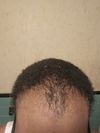
User shared their four-month hair regrowth journey using minoxidil twice daily and low-dose finasteride. They reported noticeable improvement, mild scalp itchiness, and advised caution with hair bleaching.
A 47-year-old male started using Minoxidil, Finasteride, Nizoral, Dermapen, and vitamins after his hair transplant was postponed due to COVID-19. He reported positive progress in hair growth over eight weeks with this routine.
PP405 updates are seen as vague and lacking substance, causing frustration among users. Some users report positive effects from using minoxidil and dutasteride, while others remain skeptical about new treatments.
RU58841 is more effective when mixed with isopropyl alcohol instead of minoxidil, as water in minoxidil degrades RU58841. Applying RU58841 separately from minoxidil, with an hour gap, enhances hair growth results.
The conversation confirms that to make a 5% RU58841 solution, 1.5 grams should be added to 30 mL of KB Solution. The discussion involves calculating the correct dosage for hair loss treatment.
A 113 year old man who has more hair than most people, and the conversation is discussing potential genetic factors that may be responsible for this. Possible treatments such as dermarolling and minoxidil, finasteride, and RU58841 are mentioned.
User tried topical finasteride mixed with minoxidil, Nizoral shampoo, oral minoxidil, and FUE hair transplant for hair loss. User asks when it's safe to trim hair after transplant and considers trying RU58841 or pyrilutamide.
The user reported gradual hair regrowth after 4 months using oral finasteride, topical minoxidil, dermastamping, and vitamins C and D3. They noted the use of a 1.25mm dermastamp and discussed sourcing finasteride in Canada.
Low-Level Laser Therapy (LLLT) is seen as a safe and effective method for maintaining hair and promoting regrowth in androgenetic alopecia (AGA) and male pattern baldness (MPB), with devices like the HairMax LaserComb® and iRestore helmet being popular. Some users and professionals are skeptical about its long-term effectiveness and cost.
Prolactin and cortisol are identified as key factors in hair loss, with stress hormones impacting hair shedding. Finasteride and minoxidil are effective treatments, while DHT's role and individual sensitivity are significant factors.
A healthy scalp barrier is crucial for hair growth, and ceramides may play a key role in maintaining it. The conversation suggests that focusing on scalp health, alongside treatments like Minoxidil, Finasteride, and RU58841, could improve hair follicle health.
RU58841, a hair loss treatment, is available on Amazon, but its legitimacy is questioned due to sketchy reviews and lack of lab reports. Some users report seeing results, while others experience negative side effects.
PP405 shows promise in activating dormant hair follicles and increasing hair counts but lacks detailed efficacy data compared to minoxidil and finasteride. Opinions are mixed, with some optimism and skepticism about its effectiveness.
A user who didn't respond well to minoxidil and finasteride is considering the role of IGF-1 in hair loss treatment effectiveness. They discuss the potential of using HGH to improve hair growth and other health issues, referencing several sources that suggest IGF-1 levels may influence hair loss and treatment response.
A user is asking about the effectiveness and dosage of RU58841 for hair loss, comparing it to Minoxidil and discussing its long-term use alongside Finasteride. They plan to use RU58841 and Finasteride for several years before potentially switching to GT20029.
The user regrew their hairline using mechanical stimulation, including a 1.5mm derma roller weekly, daily scalp massages, and other treatments like Nizoral, zinc pyrithione, fish oil, and Lipogaine The Big 5. They did not use Minoxidil or finasteride.
A user shared their 9-month progress using RU58841 at 2% daily for hair regrowth, initially starting at 5% but reducing the dose due to early signs of gynecomastia, which has since mostly resolved. They achieved their goal of regrowing hair at the temples and hairline.
The user reported progress in hair growth after 4 months using 0.5 mg finasteride and 2.5 mg minoxidil daily, and is considering adding RU58841 to block DHT on the scalp. They experienced side effects like reduced libido and mild erectile dysfunction, and take supplements like zinc, iron, fish oil, vitamin D, magnesium, and vitamin E.
A 57-year-old man with male pattern hair loss and insulin resistance experienced hair regrowth and weight loss after using tirzepatide, without other hair treatments. Dysregulated glucose metabolism is linked to hair loss, with tirzepatide potentially improving hair density by normalizing insulin resistance.
A 24-year-old noticed hair thinning over 4-6 years and is seeking advice on whether it can be salvaged. Treatments mentioned include Minoxidil, finasteride, and RU58841.
Discussion on hair loss treatments, focusing on pp405, with skepticism about its effectiveness and concerns about its association with the cosmetic industry. Users also mention treatments like Minoxidil and Finasteride.
The user experienced significant hair improvement after 4 months of using 1.25mg finasteride daily and 5% Minoxidil foam. They reported no side effects and no noticeable shedding phase.
A user's progress with using Minoxidil, Finasteride and Dermarolling to treat hair loss; some of the replies included reports of side effects, encouragement and advice on lighting.
A user proposed genetically engineering scalp stem cells to stop androgen receptors from causing hair loss. Others discussed the feasibility, existing research, and potential issues with this approach, including targeting the correct cells and unintended effects.
The conversation discusses severe hair shedding and thinning, with the original poster using finasteride, oral minoxidil, and other supplements without improvement. The discussion highlights the possibility of telogen effluvium and the importance of addressing potential underlying health issues, such as stress and gut health, rather than assuming diffuse unpatterned alopecia (DUPA).
Choosing between KB and PG solutions for applying RU58841, considering factors like scalp oiliness and absorption. Some users prefer KB for being gentler, while others use PG and recommend washing hair before application for better results.
The user has been experiencing diffuse hair thinning despite using finasteride, minoxidil, dermarolling, clobetasol cream, and PRP sessions. They seek advice on additional treatments and are advised to check vitamin D, iron, and thyroid levels.
PRP treatments have been effective for the user, with a new recommendation of using a high-quality plasma kit once a year. The user seeks experiences with this specific PRP approach.
Finasteride is effective for DHT/AR-driven hair loss but not for chromosome 20-driven cases, where treatments like minoxidil, prostaglandin analogs, and low-level laser therapy may be more beneficial. Genetic testing can help determine the underlying cause of hair loss to tailor treatment effectively.