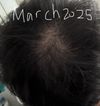
The conversation is about choosing a minoxidil product for hair regrowth. Users recommend cheaper options like Kirkland or Target brand, with a preference for foam versions.
A user is considering using RU58841 for female pattern baldness and is also planning to use Minoxidil. They are hesitant to ask their doctor for spironolactone due to its cosmetic nature and are experiencing significant hair loss possibly due to stress and hormonal issues.
RepliCel has purchased Trichoscience, and they have a video about hair multiplication. The conversation also mentions treatments like Minoxidil, finasteride, and RU58841.
A 30-year-old female with telogen effluvium and androgenetic alopecia is using spironolactone, oral minoxidil, vitamin D, iron sulfate, and a hairmax laser band. She seeks recommendations for a dermastamp or derma roller, advised to use no higher than 0.5 mm.
A user is creating a custom topical hair regrowth serum using minoxidil, bimatoprost, tretinoin, castor oil, and hyaluronic acid. They are also using dutasteride, oral minoxidil, and castor oil in their current regimen.
The conversation is about the effectiveness of a hair loss treatment product containing 0.01% Latanoprost, with the user considering trying it as a vehicle for RU58841. The user questions whether the dosage is too low to be effective.
PP405 shows promise for reactivating hair follicles, with potential maintenance using 5AR inhibitors. Current treatments like Minoxidil and finasteride are effective but have limitations, and there is hope for more effective solutions in the future.
Increasing the sult1a1 enzyme on the scalp may improve response to topical minoxidil. The user suggests using a baking soda solution, DMSO, and tretinoin to enhance enzyme activity and minoxidil effectiveness.
PP405 is moving to late-stage trials, showing potential for hair regrowth, with 31% of male patients experiencing a 20% increase in hair density. Veradermics is developing an oral minoxidil version, and there is interest in combining treatments for better results.
A sugar gel containing 2-deoxy-D-ribose has shown promising hair regrowth results in mice, comparable to Minoxidil. Users are discussing the potential to buy and try this compound themselves.
The user started treating hair loss with minoxidil, Nizoral shampoo, dermarolling, and castor oil, and noticed small hairs growing at the temples. They plan to add biotin and azelaic acid to their routine but are avoiding finasteride due to potential side effects.
The user used Kirkland brand minoxidil foam twice daily for a year and noticed initial progress, but feels they might be losing progress or experiencing shedding. They are considering starting finasteride but prefer to avoid it and are seeking hair styling advice.
A user is seeking advice on choosing the right topical finasteride for hair loss, considering different formats (spray, gel, aqueous solution) and brands (Xyon, Ro, Keeps, Hims Rx Hair Loss Serum, Happy Head Topical Rx Serum). They are also concerned about the optimal strength to minimize side effects while using it with topical minoxidil.
The user reports positive results using a multi-peptide serum for hair density, combined with finasteride and melatonin, after stopping minoxidil. They experienced hair regrowth after previously losing hair despite using finasteride and minoxidil.
The conversation is about finding a foam product that combines minoxidil and tretinoin for hair loss treatment. The user is seeking purchasing options for this specific combination.
Using tretinoin, minoxidil, and The Ordinary Multi-Peptide Serum together for hair loss is discussed, with suggestions to skip the serum as it is ineffective for regrowth. Tretinoin is recommended for temple regrowth, and combining it with derma stamping is advised.
RU58841, oral and topical minoxidil, finasteride, and ketoconazole shampoo led to significant hair regrowth, though some suspect a hair transplant. Concerns about RU58841's side effects, like anxiety and heart issues, were discussed.
The conversation discusses the application of RU58841 for hair loss, with the user applying 1.75 mg at 5% concentration for half an hour daily. The user mentions managing seborrheic dermatitis while using this treatment.
The conversation concludes that the serum for hair regrowth is likely ineffective and possibly a scam. Effective treatments mentioned include minoxidil, finasteride, and dutasteride, with rosemary as a natural option.
The post is about using different solutions for RU58841, a treatment for hair loss. The user is asking for opinions on the effectiveness of different vehicles and dosages.
A user shared their positive experience with Laq herbal shampoo and Sevich Batana oil for hair loss due to PCOS and an unbalanced diet. They noticed significant improvement after three weeks of using these products.
A dermatologist advised stopping minoxidil and trying redensyl serum, while also starting finasteride. Concerns were raised about increased hair loss after stopping minoxidil.
The user experienced better hair thickening results with a combination pill of oral minoxidil (3mg) and finasteride (1mg) compared to previous treatments with topical minoxidil and finasteride alone. They reported no significant side effects and expressed regret for not starting this treatment earlier.
Retinoids, like Retin-A and retinol, can be beneficial when used with minoxidil for hair loss. Retin-A is the strongest and requires a prescription, while retinol is over-the-counter.
The conversation is about a user inquiring about a hair loss treatment product that contains minoxidil, azelaic acid, retinol, and caffeine, and whether it is more effective than Regaine foam. No specific treatments or outcomes are discussed.
Rosemary Oil may inhibit the activity of 5α-Reductase, potentially promoting hair growth. Specific treatments discussed include Minoxidil, Finasteride, and RU58841.
User started minoxidil, noticed forehead lines and dark circles, and asked for non-invasive skin aging prevention methods. Another user suggested using tretinoin and hyaluronic acid for long-term benefits.