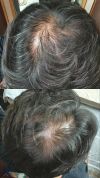
User added RU58841 to their hair loss treatment and experienced quick results. Others also reported positive effects, but one user experienced chest pains as a side effect.
The conversation is about the effectiveness and trustworthiness of Pyrilutamide hair loss treatment sold by Hairlisciously, with concerns about product purity and a request for alternative suppliers. No specific treatments were confirmed to be used by participants.
The conversation is about making a 20mg/ml RU58841 solution for hair loss treatment using ethanol and propylene glycol. The user receives advice on calculating the correct amount of RU58841 powder needed.
Actifolic RU-58841 powder and GhK-Cu peptide were tested and found to be accurate. The user is satisfied with the product's authenticity for hair loss treatment.
The conversation is about purchasing RU58841 for hair loss treatment from Xian Lyphar BioTech. Users confirm the company is legitimate and the price is reasonable.
RU58841, a potential hair loss treatment, was not commercialized due to marketability issues and lack of long-term safety data. Concerns about its formulation and delivery methods further complicate its use.
A user is seeking a trusted supplier for RU58841 in the UK, expressing doubts about their current source, rudirect, and considering Anagenic and receptorchem. They are asking for recommendations for other suppliers.
The conversation discusses RU58841, a compound for hair loss treatment, which was found to be effective in a 6-month trial but was not pursued due to financial issues or marketability concerns, not safety. Some users are considering crowdfunding to release the research data, while others discuss personal experiences and safety concerns with RU58841.
A 28 year old using a hair loss prevention protocol to restore thinning hair, which includes finasteride, dutasteride, minoxidil, stemoxydine, alopecin, nizoral shampoo and microneedling; the user is now adding pyrilutamide solution to the regimen with the hope of improving their results. RU58841 was also ordered but not yet used.
A user shared their experience with hair regrowth using supplements like NAC and DIM, and briefly using minoxidil with microneedling. They reported some improvement in hair density, but the community questioned the effectiveness compared to traditional treatments like finasteride.
A 29-year-old male experienced significant hair regrowth over 8 months using a protocol of oral Minoxidil, Dutasteride, Pyrithione Zinc Shampoo, and peptides GHK-CU, BPC-157, and TB-500. The treatment led to improved scalp coverage, reduced hair loss, and thicker hair, although results may vary for others.
OP experienced significant hair growth after switching from topical treatments to oral Dutasteride, alongside using CJC/Ipamorelin and Cialis. They stopped using topical Minoxidil and Finasteride, attributing the hair growth to the new regimen.
The user experienced significant hair regrowth using a nightly topical spray with 0.3% finasteride and 6% minoxidil, without side effects. Noticeable improvements were seen within three months, with continued progress over time.
The user experienced severe side effects from finasteride, including hormonal imbalances and cognitive issues, leading to a recommendation to stop its use. They plan to follow up with tests to rule out a pituitary tumor and are considering topical treatments as alternatives.
Switching from finasteride to dutasteride improved erections, sex drive, and mood for one user, though experiences vary widely. Some users report fewer side effects with dutasteride, while others experience more severe issues or hair loss.
The user experienced significant hair regrowth over 8 months using finasteride, minoxidil, and a custom topical mix including progesterone, cortisone, and alpha 5 estradiol. They reported no side effects and noticed improvement around the third month.
Hair loss treatments include topical and oral minoxidil, low-level laser light therapy, and peptide serums. Bryan Johnson avoids finasteride and dutasteride due to potential side effects, focusing instead on his own protocol with these treatments.
A 31-year-old man feels depressed due to hair loss, using topical finasteride and previously tried minoxidil. Others suggest treatments like finasteride, minoxidil, hair transplants, or embracing baldness, highlighting the importance of mental health and self-acceptance.
The user shared their hair loss treatment progress using Finasteride, Dutasteride, and Minoxidil, noting initial irritation with topical Minoxidil and experiencing shedding phases. They reported no side effects and encouraged others to try this regimen for alopecia.
A 26-year-old is experiencing hair thinning and has received conflicting diagnoses of androgenetic alopecia and telogen effluvium. They are considering treatments like dutasteride, oral and topical minoxidil, and are unsure whether to start treatment or pursue further diagnosis like a scalp biopsy.
A 24-year-old male with crown thinning and an oily scalp is seeking advice on shampoo recommendations and whether to restart minoxidil or try a hair growth serum. He is concerned about daily shampooing and managing greasy hair.
People are discussing the anticipated release of PP405 phase 2a results, expected by the end of March, with some skepticism about its effectiveness. There is cautious optimism due to past experiences with similar treatments like Breezula, despite concerns about the lack of presentation at the AAD 2026 conference.
A 21-year-old experienced severe hair loss after stress and tried PRP, mesotherapy, and a topical finasteride + minoxidil solution, which was costly and inconvenient. They switched to dutasteride, experienced heavy shedding, and are considering switching to finasteride, with advice to consult a qualified doctor for further guidance.
A user shared a DIY recipe for a NutraKos-style amino acid mix as a cost-effective alternative to the expensive product, suggesting it as a complementary supplement for hair loss. Another user argued that proven treatments like finasteride and minoxidil are more reliable, questioning the efficacy of the amino acid mix.
The user is experiencing continued hair thinning despite taking Finasteride 1 mg daily for over a year and is hesitant to try Minoxidil due to potential side effects and inconsistency. Suggestions include trying topical Minoxidil once a day, considering oral Minoxidil, and possibly getting a skin biopsy to determine the type of hair loss.
The conversation discusses treatments for androgenetic alopecia, focusing on evidence-based supplements to complement finasteride. Suggestions include oral minoxidil, saw palmetto, pumpkin seed oil, tocotrienols, and various other supplements, while emphasizing the importance of scientific backing and cautioning against saw palmetto if already using finasteride.
A user is treating hair loss with 0.5mg Dutasteride three times a week, 5mg oral Minoxidil daily, and topical finasteride and minoxidil, seeing some improvement but insufficient density. They are considering increasing Dutasteride dosage and addressing high estradiol levels, while also trying to quit vaping.
Low-Level Laser Therapy (LLLT) for hair loss is effective but requires consistent use and device replacement every 1-2 years. The treatment is costly, and results may not be permanent without continued use.
The user has been experiencing hair thinning despite taking finasteride and minoxidil for six months. Bloodwork suggests a vitamin D deficiency, and users recommend consulting a doctor and possibly supplementing vitamin D.