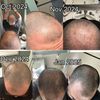
KY19382, a promising compound for hair loss, is not widely discussed or used. One user is currently testing it and plans to share results in a few weeks.
A satirical post where someone claims to have developed a radioactive isotope scalp serum using Polonium-210 that outperforms Minoxidil and finasteride for hair regrowth. The serum reportedly stimulates DNA repair in hair follicles, leading to significant hair density increase, but the post is met with skepticism and concerns about safety.
The conversation discusses a hair loss treatment formulation containing cyclosporin, minoxidil, and tacrolimus, and mentions ongoing research on hair color reversal. The treatment showed high efficacy in restoring hair color in trials with 40 to 50 people.
A user with Androgenetic Alopecia is seeking advice on hair growth treatments while planning for pregnancy. Current routine includes LaserCap, Nizoral Shampoo, scalp massage, The Ordinary Multi Peptide Serum, vitamin D, prenatal vitamins, and SEEN shampoo.
KX-826 users report increased shedding, with some experiencing more shedding at higher concentrations. Users are discussing where to purchase the product.
Carnosic acid in rosemary extract may enhance skin repair and promote hair follicle regeneration. It could be used alone or with verteporfin for scarless healing after dermal wounding.
The conversation is about someone using minoxidil, biotin, a laser cap, and a derma roller for hair loss, and considering finasteride. Some users are skeptical about the treatments, while others advise patience for results.
A user experienced hair thinning after taking Accutane and having a B12 deficiency. They are currently using minoxidil and beclomethasone dipropionate lotion for treatment.
The conversation discusses a patent filed by Shiseido for cloning Dermal Papilla (DP) cells to treat hair loss. The method involves using viral vectors to maintain the cells' growth-inducing properties, differing from Replicel's approach with Dermal Sheath Cup (DSC) cells.
The conversation discusses using a liposomal gel with Adenosine and caffeine for hair loss, questioning if caffeine's role as an adenosine receptor antagonist might counteract the benefits of Adenosine or worsen hair loss.
A 29-year-old male experiencing hair loss due to TRT is using minoxidil and dermarolling but is hesitant to use finasteride or dutasteride due to potential side effects. He is considering low level laser therapy (LLLT), PRP, ketoconazole shampoo, and oral minoxidil as additional treatments. A reply suggests that without a DHT blocker like finasteride or dutasteride, other treatments may not be effective long-term.
Pelage plans to conduct two Phase 3 trials for PP405, a new hair loss treatment, which may take about a year to complete. Users discuss various hair loss treatments, including pyrilutamide, minoxidil, finasteride, and clascoterone, with some expressing impatience over the lengthy trial process compared to faster drug approvals like the COVID vaccine.
The user started using EssenGen 6-Plus, containing 6% minoxidil and 0.05% finasteride, along with 1% Nizoral shampoo, and reported noticeable hair growth in 7 weeks. They experienced some chest tightness but are monitoring it, and they are satisfied with the progress despite using a silicone-containing shampoo.
A user is organizing a group buy for various compounds aimed at reversing hair loss and gray hair, and improving brain health and fat loss. The user has developed a treatment plan based on extensive research and is inviting others to participate, with the option to choose only the compounds they need.
The conversation discusses using T3 (triiodothyronine) as a topical treatment for hair growth, with some users noting it showed promising results in studies but lacked follow-up. Users express interest in trying T3 due to its potential effectiveness compared to Minoxidil.
The conversation is about a user seeking advice on adding GHK-Cu to RU58841 for hair loss treatment, while already using oral minoxidil, dutasteride, ketoconazole shampoo, and considering LLLT. They are unsure about the concentration and carrier solution for GHK-Cu.
Tressless GPT is now free and accessible for hair loss advice. Treatments discussed include Minoxidil, finasteride, RU58841, dutasteride mesotherapy, topical melatonin, microneedling, and rapamycin.
A user shared their experience with hair loss treatments, including finasteride, topical finasteride, derma rolling, melaleuca oil, caffeine powder, topical vitamin D, keto shampoo, and revive shampoo. They also changed their diet to address psoriasis and leaky gut.
Concerns about the long-term safety of VDPHL01, an extended-release minoxidil, due to potential risks similar to Cantu syndrome, were raised, highlighting the lack of monitoring for chronic connective tissue changes. The conversation suggests that while the treatment may improve hair growth, it could lead to issues not detected in short-term trials.
The user shared their hair loss treatment progress using minoxidil, ketoconazole shampoo, a dermaroller, biotin, Pura d'or shampoo, and Propidren. They apply minoxidil daily, take Propidren and biotin pills, use two types of shampoo, and use a dermaroller weekly, avoiding finasteride due to concerns about side effects.
A user is starting a microneedling regimen for hair loss, using Derminator 2, ketoconazole shampoo, castor oil, and multivitamins. They plan to provide monthly updates on their progress.
User DeadRay9 reports good progress on finasteride and ketoconazole, with irregular microneedling. They take 1.25mg finasteride, experienced increased libido, and saw improvements at 3-5 months.
Winlevi (clascoterone 1%) is being discussed as a potential hair loss treatment. Users are considering its use despite concerns about its delivery method.
The method combines finasteride, minoxidil, intense leg exercises, and cold exposure to treat androgenetic alopecia. It aims to boost metabolism and reduce androgenic effects, enhancing hair growth.
PRP therapy cannot make oral minoxidil's effects permanent, as minoxidil does not stay permanently in the system. Dosage of oral minoxidil is typically increased gradually, but there is a limit, and it should not be increased indefinitely.
The user mixes their own RU58841 solution and found that increasing the ethanol content improved absorption and reduced scalp itching. A study on minoxidil showed that penetration increased with higher ethanol concentrations, reaching maximum penetration at 90% ethanol.
The user had lab work done to check for thyroid issues and other factors related to hair loss. They are seeking advice on which lab results are important for understanding hair loss and what the optimal levels should be.
The conversation discusses potential causes of pigmentation around hair follicles, suggesting sebum buildup, autoimmune conditions, or dermatitis. Treatments mentioned include finasteride, dutasteride, and an anti-inflammatory diet, with a recommendation to consult a doctor for a proper diagnosis.
The conversation is about a user's hair loss treatment regimen, which includes Dutasteride, oral Minoxidil, topical Dutasteride, Minoxidil sulfate, antioxidants, and various supplements. The user is also using a derma stamp and has paused Tretinoin due to a TCA peel recovery.