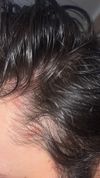
Unusual hair growth can occur in unexpected areas, possibly due to topical treatments like Minoxidil. Such hair may appear suddenly and is often unrelated to typical hairline patterns.
An individual is seeking options for topical finasteride and minoxidil in Australia, considering products from Medicii Labs and exploring other suppliers. They plan to use a derma roller and caffeine + yerba mate hair wash alongside these treatments.
CBD in an emu and lanolin oil preparation showed a 100% increase in hair growth, but the effectiveness may partly come from the oils. Users discussed proper CBD dosage, preparation methods, and skepticism about the study's quality.
A user added sandalore to minoxidil for hair loss, observing some vellus hair growth and less scalp inflammation. Others tried sandalore with mixed results, discussing dosage and effectiveness compared to minoxidil and finasteride.
Hair loss treatments Fin and Minoxidil failed for user. Suggested alternatives are 75mg oral spiro and RU58841, but concerns about low testosterone and self-esteem were raised.
The conversation discusses making a RU58841 solution for hair loss prevention and includes personal experiences with using RU58841 and minoxidil for hair regrowth, with a mention of monitoring health effects.
OP is considering Bicalutamide for female AGA and TE but is concerned about its side effects and effectiveness compared to Finasteride. OP is also using Minoxidil and Spironolactone but is experiencing significant shedding and is unsure if it's androgen-driven or due to Minoxidil changes.
User "missbloombastic" has been experiencing hair loss since 2016 and tried min, fin, multivitamins, and spiro with mixed results. Another user shares their struggle with hair loss and its impact on self-esteem, while a third user suggests checking blood tests and confirming the cause of hair loss.
A user is seeking advice on the efficacy and side effects of homemade topical solutions for hair loss, specifically bicalutamide, estradiol, cyproterone acetate, and spironolactone, as they cannot access RU58841 or pyrilutamide.
A 27-year-old male experienced significant hair regrowth in two months using a daily oral 3-in-1 pill containing 1.1mg finasteride, 5mg minoxidil, and 1mg biotin from LockLab, with no side effects reported. The user also uses a derma-stamp twice a week to promote blood flow and stimulate growth.
A user found that taking Zyrtec (Cetirizine) and Advil helped reduce their scalp inflammation and pain, potentially creating a better environment for hair growth. They have not used any other medication for hair loss or scalp issues.
The user is seeking advice on effectively applying a liposomal solution of Minoxidil and Finasteride for hair loss, specifically targeting the roots without wasting the product. They find it challenging to use only 1 ml to cover thinning areas on the front and crown.
A user shared their 4-month experience using minoxidil twice daily for hair loss, noting significant but slow progress in hair growth, especially around the temples and hairline. They also mentioned side effects like facial hair growth and dryness, and recommended minoxidil over other treatments like castor and coconut oil.
The user claims to have successfully treated hair loss using natural supplements like collagen, L-lysine, zinc, B12, and bamboo shoot extract, without using the "Big 3" treatments (Minoxidil, finasteride, RU58841). The community is skeptical, demanding proof and emphasizing that the "Big 3" are proven effective, while natural remedies are often not.
OP is considering making a 5% topical Clascoterone (Breezula) for hair loss, as they use Minoxidil but can't use Finasteride due to side effects. They seek advice on creating the topical safely, possibly with help from a trained chemist.
Follicum discovered that their drug FOL-005 increased hair count by 12 hairs per cm2 in patients with less than 255 hairs per cm2 and is planning a phase 2b trial. They are currently fundraising for the trial, and the drug may also be effective for women.
User gained hair with topical minoxidil and finasteride, then experienced shedding after starting pyrilutamide. After 12 weeks, new hairs grew and existing hairs thickened, hoping for more improvement in a year.
A user is seeking a recipe to create a topical solution using Minoxidil tablets, rosemary, peppermint, and possibly coconut oil. They are asking for specific amounts and mixing instructions.
The conversation discusses hair loss treatments, including finasteride, minoxidil, estradiol, and spironolactone, with a focus on their effects on hair regrowth and gender transition. The original poster shares their personal experience with these treatments, emphasizing that estradiol and spironolactone should not be used by those who want to maintain a masculine appearance.
Using a blunt tip syringe is an effective method for applying liquid topicals like minoxidil and RU58841, especially for those with thick or long hair experiencing diffuse thinning. The user found significant hair regrowth and increased density after using these topicals for less than three months.
The conversation is about considering pyrilutamide 1% as an alternative treatment for hair loss due to intolerance to 5-alpha reductase inhibitors. Some users suggest it might be effective, while others view it as a temporary solution.
The conversation discusses a hair loss and scalp care routine involving ciclopirox shampoo, benzoyl peroxide, clindamycin gel, clobetasol propionate, and calcipotriol to manage seborrheic dermatitis, folliculitis, and inflammation. It also touches on the role of diet and other treatments like oral minoxidil and pioglitazone for scalp health.
The conversation is about hair loss treatment using topical minoxidil, finasteride, and arginine, showing noticeable progress in one month. The user suggests adding arginine serum for better results.
Spironolactone is more potent and lowers testosterone and DHT, while dutasteride only impacts DHT. For female hair loss, checking hormones and considering treatments like oral minoxidil, spironolactone, or topical minoxidil is recommended.
The conversation is about the order of applying minoxidil in a skincare routine, specifically whether to apply it before or after witch hazel and moisturizer. The user is concerned about the lotion interfering with minoxidil absorption.
The conversation discusses the potential effects of spearmint on acne and male pattern baldness (MPB). Concerns are raised about spearmint's androgen-suppressing effects and its suitability for men.
The conversation discusses the effectiveness of Spironolactone and Finasteride for hair regrowth in females. Specific treatments mentioned are Spironolactone and Finasteride.