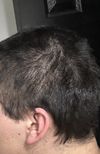
A 22-year-old is struggling with worsening hair loss despite using finasteride, minoxidil, and microneedling. They are seeking advice on whether to continue microneedling, feeling hopeless as their treatments have not stabilized or improved their condition.
A user lost 60% hair density in 4 months, started finasteride and microneedling, and has greasy, flaky, yellowish scalp. They are awaiting biopsy results, and another user suggested trying ketoconazole shampoo.
A male in his early 20s with CCCA (scarring alopecia) started treatment with Finasteride, Fluocinolone, and Doxycycline. Steroid injections were suggested but not yet done.
A user's hair loss treatment regimen, which includes minoxidil, ketoconazole shampoo and microneedling; some participants questioned the results due to previous posts about hair transplants, but others agreed that quick results are possible with certain treatments.
Selenium sulfide shampoo helped with a sore scalp but may cause hair root damage. Users experienced hair loss with selenium sulfide and ketoconazole, suggesting reducing use if hair loss occurs.
A user from China is participating in a clinical trial for Pyrilutamid, a potential hair loss treatment originally developed for prostate cancer. They've experienced no side effects except initial scalp itchiness, and will share results after the year-long trial.
A user applied pyrilutamide for 6 months without hair regrowth and is considering stopping due to cost and lack of results. Another user suggests switching to finasteride, which is cheaper and has shown regrowth for them.
The user has been treating hair loss for two months using 5% minoxidil, 0.25% topical finasteride, ketoconazole 1% shampoo, and microneedling. They report visible progress and plan to continue the treatment.
The user started using a hair loss treatment called pyrilutamide and experienced mild chest discomfort and tightness, similar to previous side effects from RU58841. They plan to reduce the dosage due to these side effects and will provide an update on the results in 1-2 months.
Homelessness is humorously proposed as a solution to hair loss due to less grooming and stress. Treatments like Minoxidil and Finasteride are discussed, with genetics and lifestyle also considered important factors.
The user is experiencing severe hair loss after starting Minoxidil 5% and is seeking advice, as their hair loss worsened following a second COVID infection. Despite normal hormone and vitamin levels, the user is considering additional treatments like Ketoconazole shampoo, massages, and low-level laser therapy.
The user used 0.5 mL of 0.5 mg of Pyrilutamide for 60 days for hair loss, but didn't notice any hair growth. They shared their hormone panel results and are seeking advice on next steps.
Low testosterone and estradiol may contribute to hair loss, and blocking DHT without sufficient hormone levels might hinder regrowth. The discussion highlights the importance of hormone balance, with some considering supplements and lifestyle changes to support hair health.
A 27-year-old Asian male is treating hair loss with 1mg oral finasteride, topical minoxidil twice daily, and 1.5mm microneedling weekly. The discussion is about his progress with these treatments.
Woman with AGA uses microneedling, minoxidil, spiro, and laser for hair loss. Experiences redness and tenderness for three days after microneedling with Dermapen M8, asks if it's normal and the correct speed setting.
User discusses topical liposomal finasteride for hair loss, hoping to avoid breast growth side effect. Conversation includes using minoxidil, fluridil, and dermarolling, and mentions minimal systemic absorption of liposomal finasteride.
The conversation is about using liposomal finasteride for hair loss treatment, highlighting its cost-effectiveness and ease of preparation. It suggests using lecithin and crushed finasteride pills to make the solution, which has shown to be significantly more effective than other topical formulations.
Hair loss treatment involves gland treatment with iodine, liver extract, wild American ginseng, and black cohosh, along with crude oil scalp massage. The approach aims to stimulate hormones and improve blood circulation to promote hair growth.
The conversation discusses hair loss treatments, specifically mentioning pyrilutamide, minoxidil, and finasteride. The consensus suggests starting treatment early, with finasteride being a preferred option.
The user is using minoxidil and finasteride to treat hair loss and is concerned about shedding and potential aggressive hair loss. They noticed some regrowth in trichoscopy pictures but are unsure about real-life changes.
The conversation discusses a 3-month update on using topical minoxidil, finasteride, microneedling, and ketoconazole shampoo for hair loss. Users express amazement at the progress and congratulate the original poster.
Pyrilutamide's 0.5% solution showed minimal improvement, while the 1% solution appears more promising but costly. The user is currently using finasteride and oral minoxidil and considering adding Pyrilutamide if effective and affordable.
User gained hair with topical minoxidil and finasteride, then experienced shedding after starting pyrilutamide. After 12 weeks, new hairs grew and existing hairs thickened, hoping for more improvement in a year.
The user is treating hair loss with dermarolling, a laser helmet, scalp massages, and Nizoral. They stopped using minoxidil and finasteride and are considering pumpkin seed oil and sulforaphane.
Hair loss possibly caused by a fungal infection might be treated with antifungal shampoos or oral medications. If not fungal, treatments like minoxidil or finasteride may be necessary.
Shiseido's S-DSC Hair Multiplication Treatment in Japan is available to foreigners but is expensive and not very effective. Despite past disappointments, there is hope for future treatments with more options in development beyond Minoxidil and Finasteride.
A 16-year-old diagnosed with male pattern baldness (MPB) was prescribed hair vitamins, vitamin D, a non-ketoconazole shampoo, and redenysl + serum, with a suggestion for GFC or IHRF treatments. Some users recommended minoxidil, ketoconazole, and derma stamping, while others advised against certain treatments until the age of 18.