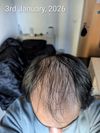
Blocking the Mitochondrial pyruvate carrier and using aldose reductase inhibitors like Indian gooseberry and berberine may help with hair growth. Magnesium can also be added to increase NADPH.
A user shared progress pictures after 5 months of using 1mg finasteride daily, 1ml minoxidil topically every night, and 1.5mm microneedling weekly. Responses included skepticism and congratulations.
A user reported seeing hair regrowth in less than two months after starting a Hims hybrid chewable containing 1.2mg finasteride, 3mg minoxidil, and 2.5mg biotin. They experienced initial shedding but no other side effects and were prescribed the treatment through Hims.
Low-Level Laser Therapy (LLLT) is considered expensive and may not provide significant benefits, with some users suggesting alternatives like finasteride, minoxidil, and microneedling. Many users report limited success with LLLT and similar treatments, recommending more proven options instead.
The user is treating alopecia areata with 1.25mg oral minoxidil daily and topical mometasone furoate, considering increasing the dose or adding finasteride, though finasteride is not typically used for this condition. A gluten-free diet is suggested, and alternatives like Olumiant are mentioned.
A 24-year-old started using 1 mg oral finasteride, 5% topical minoxidil, and 1 mm microneedling every other week for hair loss, reporting no side effects and noticeable improvement after four months. The user clarified a typo in the title, initially suggesting meditation instead of medication.
A user shared their 2-month progress using 1mg finasteride daily, 5% minoxidil with 0.1% finasteride topically twice a day, and Vitamin D3 weekly. They experienced initial side effects like weaker erections and mood swings, which resolved after one month.
The user has been using 1mg of Finasteride daily and vitamins for a month, noticing hair growth, especially at the temples. They plan to share their two-month progress in the future.
The user plans to take oral minoxidil 5mg, topical minoxidil, finasteride, dutasteride 0.5mg, and various vitamins for hair loss. A caution was given about the high daily dosage of vitamin D3.
The conversation provides a six-step guide on how to get a prescription for oral minoxidil (OM) for hair loss by finding a supportive dermatologist, even if they are not local, and preparing a case for its use during a virtual consultation. The guide emphasizes the importance of research, insurance considerations, and the potential for initial hair shedding with OM treatment.
Minoxidil and finasteride are being considered for hair loss due to seborrheic dermatitis and male pattern baldness. The user is also using ketoconazole and zinc pyrithione shampoo.
The user is happy with their 2-month progress using a 3-in-1 oral tablet containing finasteride, minoxidil, and biotin, with minor side effects like slightly lower libido. They report no significant issues like breakouts and note that oral treatments are more effective than topical ones.
User shared a 3-month update on using finasteride and vitamins (Zinc, D3, B12, Magnesium) for hair loss. Progress pictures show improvement, and other users commented on their experiences and asked about specific vitamins.
The conversation is about a user who tried dissolving a metformin pill in water for hair treatment but faced issues with hair sticking together. The user is seeking advice on preparing a non-irritating, non-sticky lotion at home, possibly experimenting with metformin and Alpha Keto glutarate.
The conversation discusses a shared PDF about hair loss treatments, which might help those not seeing results with Minoxidil, Finasteride, and RU58841. Some users are skeptical about the content's value and the price charged for it.
A user shared a homemade hair loss treatment combining Minoxidil with caffeine, melatonin, biotin, and olive oil, claiming improved hair regrowth compared to Minoxidil alone. They provided their recipe and cautioned users to try it at their own risk.
A user's 10 month progress report of using finasteride, minoxidil foam and keto shampoo to treat their hair loss, with some discussion on the best frequency of application of minoxidil.
User applied Hims topical finasteride/minoxidil cocktail nightly, with weekly oil massages and ketoconazole shampoo. They also use vitamin D and biotin occasionally.
A 23 year old's 9 month progress with hair regrowth using finasteride, minoxidil and keto shampoo, and others sharing their experiences and results with similar treatments.
The user experienced hair regrowth using a chewable combination of oral minoxidil and finasteride without side effects, unlike when taken separately. The treatment is from Hims, and the user is satisfied with the progress, especially on the crown.
Yunce Medical, a Chinese company, is developing hair multiplication technology similar to Stemson Therapeutics, with potential for quicker availability due to favorable regulations. Users express skepticism and hope for future advancements in hair loss treatments.
Ketoconazole shampoo helps with dandruff and may support hair health, but users report mixed results for hair regrowth. Some users find better results with separate prescriptions of minoxidil and finasteride rather than using Hims' combined chews.
The user has been using minoxidil 5% at night, finasteride 1mg daily, dutasteride 0.5mg weekly, microneedling weekly, Nizoral 1% shampoo, and apple cider vinegar hair wash. They recently started taking oral minoxidil 2.5-5mg and report no side effects.
Analyzing data on pyrilutamide, a potential hair loss treatment, as well as the effectiveness of other treatments such as Minoxidil, Finasteride, and RU58841.
A hair loss product containing ingredients like saw palmetto, biotin, vitamin D, and others, which claims to promote healthy hair growth and support men's health. However, user reviews are mixed, with some experiencing side effects like mood swings and nausea, and others questioning its effectiveness compared to a simple multivitamin.
A 34-year-old man is using natural methods like rosemary and peppermint oil, micro-needling, and low-level laser therapy to manage hair thinning, avoiding medications like minoxidil and finasteride. Despite minimal visible progress, he values the non-medicated approach and remains consistent with his routine.
The conversation humorously discusses hair loss treatments, including minoxidil, finasteride, and dutasteride, with mixed results and experiences. Some users express concerns about side effects, while others share their regrowth stories or consider alternative solutions like hair transplants or shaving.
A 55-year-old user shared progress pictures after 5 months of using dutasteride 6 times a week and minoxidil 2.5 mg daily, reporting hair regrowth and some side effects like mild erectile dysfunction and foot swelling. The user attributes recent hair loss to creatine and notes improvement after adjusting the treatment regimen.