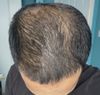
Potential treatments for hair loss, specifically the combination of liquid minoxidil and pyrilutamide, with some suggesting that adding finasteride may be beneficial.
Microneedling for hair loss, with concerns about cost and conflicting information on protocols. The user is unsure about purchasing and reusing microneedling stampers.
KX-826 is a potential hair loss treatment, with users discussing its effectiveness compared to finasteride and concerns about its trial results. Some users express skepticism about new treatments, while others discuss the potential of androgen receptor degraders and the need to manage drug resistance.
The user has tried topical Minoxidil and oral Minoxidil for beard and scalp hair growth with minimal results, and has been on Finasteride for 7 months with stabilized scalp hair but no facial hair improvement. They are considering using a SULT1A1 enzyme booster to enhance results and are questioning its effectiveness without concurrent topical Minoxidil application.
Avoid clinics that push for more grafts than necessary, as it can lead to unnecessary costs and damage to the donor area. Trust reputable clinics and be cautious of those using celebrity endorsements or offering suspiciously low prices.
Pelage Pharmaceuticals is developing PP405, a topical treatment for hair growth, currently in Phase 2a trials. There is skepticism about the company's claims, and no fast-tracking approval timeline has been detailed.
The conversation discusses the storage and use of pyrilutamide for hair loss, where one user advises against keeping it in the freezer as it may crystallize the active compounds.
A user who was part of an ongoing trial for a prolactin blocker and had regrowth, but the progress photos were not shared due to negative reactions from other users. Treatments mentioned include HMI-115, Minoxidil, Finasteride, and RU58841.
User gained hair with topical minoxidil and finasteride, then experienced shedding after starting pyrilutamide. After 12 weeks, new hairs grew and existing hairs thickened, hoping for more improvement in a year.
Replicel's results were delayed, but Shiseido might share data at BioJapan on October 11. Users are hopeful for new treatments like RCH-01, potentially eliminating the need for finasteride or minoxidil.
The user is experiencing one-sided diffuse thinning and has been using finasteride and liquid minoxidil for 4-5 years with minimal results. They are considering whether to save for a hair transplant or address scalp sensitivity and irritation first.
The conversation is about using topical valproic acid (VPA) for hair loss, focusing on its application method, usage frequency, and combination with other treatments like micro-needling. No specific experiences with VPA were shared.
A user shared their progress after a 4,000-graft hair transplant, using finasteride (1.25 mg daily) and oral minoxidil (2.5 mg daily) for six months. They reported no side effects from the medication and noted significant improvement in hair density.
The user is experiencing hair loss and is using oral finasteride, considering adding RU58841 and microneedling, and planning a hair transplant. They are seeking advice on whether to wait for treatment results or proceed with the transplant.
A compound called MTP3 from the Monoterpene family was found to be safe and highly effective at treating hair loss by inhibiting the FGF5 gene, but its identity is undisclosed for commercial reasons. No specific treatments like Minoxidil, finasteride, or RU58841 were discussed.
The user is starting a new hair loss treatment routine with Minoxidil, Redensyl, Ketoconazole shampoo, and microneedling. They are avoiding finasteride due to potential side effects and are considering future treatments like pyrilutamide.
Breezula (clascoterone) is expected to be available by late 2026, showing good long-term results with minimal side effects. KX-826 (pyrilutamide) acts faster but is still in earlier development stages.
The user has been using finasteride 1mg and minoxidil 5% spray for 19 months but continues to experience hair shedding and has not seen improvement with ketoconazole or tretinoin. They are considering a hair transplant in the future while maintaining current treatments.
PP405, a potential hair loss treatment, is facing delays in releasing Phase 2 results, causing frustration among users who compare it to past failed treatments. Despite skepticism, some remain hopeful about PP405's future, while others discuss alternative treatments like Clascoterone and its expected market release.
Taurine shows potential in combating hair loss caused by chemical stress, especially when combined with other treatments like finasteride. Finasteride demonstrated better stress-reducing effects in the study.
A user's personal hair loss progress with treatments, including finasteride (1.25mg), minoxidil, needling, and Nizoral; and advice from other users on how to perform the needling correctly.
Tazarotene's potential to enhance Minoxidil conversion, similar to Tretinoin, is questioned. Users discuss the lack of information and seek further details.
The conversation discusses the effectiveness of RU58841 and pyrilutamide for hair loss treatment. It seeks personal success or failure stories and scientific data on these treatments.
The conversation discusses the approval of Kintor Pharmaceutical's AR-PROTAC (GT20029) for clinical trials in China for acne and androgenic alopecia. One user expresses optimism about new treatments being developed and seeks clarification on how the new drug works, specifically if it temporarily degrades the AR protein to reduce DHT sensitivity in hair follicles.
Hair regrowth was achieved using minoxidil, nizoral, alfatrodial, and pyrilutamide after finasteride caused side effects. The user recommends this combination for those who can't tolerate 5AR inhibitors, stressing consistent use.
Pelage is delaying the start of phase 3 trials for PP405 to 2026 due to necessary regulatory processes, despite having $120 million in funding. Users discuss the potential of PP405 for hair regrowth, with some expressing skepticism and others hopeful for new treatments like Breezula.
The user had a hair transplant 5 years ago and is currently using 1 mg finasteride and topical minoxidil but is not seeing an increase in hair volume. They are considering another transplant to improve hair volume.
The conversation discusses a live stream presentation on Pelage PP405 for hair regrowth, with skepticism about its effectiveness compared to minoxidil. Some users express doubt and suggest sticking to proven treatments like minoxidil, finasteride, and RU58841.
A 24-year-old male is considering a hair transplant after unsuccessful attempts with oral minoxidil, topical finasteride, ketoconazole shampoo, and lifestyle changes. He believes smoking and caffeine may worsen his hair loss and is looking into hair fibers for temporary coverage.