Search
for
Sort by
Community Join
330-360 / 1000+ resultscommunity 35% regrowth brothers and sisters! More effective than Minox and Fin?
A double-blind clinical study that found ingestion of tocotrienols resulted in a 34.5% increase in hair regrowth compared to the placebo group, and discussion about potential side effects and cost of supplementation with vitamin E pills. The conversation noted that it may be more effective than commonly used treatments like minoxidil and finasteride.
community Goodbye y'all, it's been a journey but have accepted where I'm at
The conclusion of this conversation about hair loss is that the user, y00sh420, tried various treatments including a $700 lllt helmet, topical minoxidil and finasteride, spectraDNC, and micro needling, but did not achieve the desired results. They have decided to stop trying until a cure for male pattern baldness is found. Other users expressed different opinions on hair loss treatments.
community Regimen proposal (incl. dut meso) (event industry)
A user in their early 20s is concerned about minor hair thinning and is considering a hair loss regimen involving PRP sessions, mesotherapy with dutasteride injections, and low-dose finasteride. They dislike minoxidil due to its greasiness and prefer a routine that is easy to maintain.
community Switched to DUT from Fin after 30 months of no progress
community Min/Fin topical prescription also contains Latanoprost?
A user discusses a topical prescription for hair regrowth containing Minoxidil, Finasteride, and Latanoprost, noting Latanoprost's side effect of promoting eyelash and eyebrow growth. Others share experiences and information about Latanoprost, highlighting its origins as a glaucoma drug and potential side effects.
community 3 months - Fin&Min Topical Spray, Tretinoin, Derminator 1.25 every 5-6 days
The conversation discusses a hair loss treatment regimen that includes a topical spray with finasteride and minoxidil, tretinoin, and using a Derminator (microneedling device) at 1.25mm depth every 5-6 days. The user reports positive results after 90 days and plans to continue the treatment, with others commenting on the process and potential outcomes.
community Fuck GT20029 or HMI grapefruit is the cure
The conversation is about hair loss and the use of specific treatments like minoxidil, finasteride, and RU58841.
community Stopped Fin and Min for 3 months.
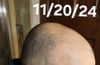
community Oral Min 2.5mg, oral fin 1mg, 2mm derma roller, discouraged by results after a month
The user is using oral Minoxidil 2.5 mg, oral Finasteride 1 mg, and a 2mm derma roller for hair loss but feels discouraged by the lack of results after a month. They are seeking advice and considering additional methods like antiandrogens, exercise, and dietary changes.
community 6 months fin, min, dermastamp, RLT
The user has been using finasteride, minoxidil, a dermastamp, and red light therapy for six months with no visible improvement since the three-month mark. Other users noted improvement, particularly in the left temple area, and encouraged the user to continue.
community M30 6M hair growth journey (Min & Fin Combo)
community When is PP405 trial results medical meeting scheduled?
community I will do something special on my head --- tripollar stop
community Temple regrowth, what worked for you?
Minoxidil, finasteride, dutasteride, and microneedling are commonly used for temple regrowth, with varying results and timelines. Consistency and patience are emphasized, with some users seeing progress after several years.
community Topical Dut Compound Journal (Strut Pharmacy) - Starting next week. Need YOUR feedback!
The user, on testosterone replacement therapy, found finasteride and minoxidil ineffective for hair loss. They are trying a new topical gel with dutasteride, tretinoin, and a higher concentration of minoxidil, and plan to document the results.
community ORAL MIN ,DERMAROLLING AND RU58841 PROGRESS 3 months (18,M)
The conversation is about an 18-year-old's progress with hair regrowth using oral Minoxidil, dermarolling, and RU58841 over three months, starting treatment after beginning to lose hair at 16. Participants are impressed with the improvement and encourage continued treatment.
community Dear tressless, i have a question for you.
Minoxidil and finasteride are discussed for hair loss, with concerns about minoxidil's heart-related side effects. New treatments like PP405 are met with skepticism, often humorously noted as always being "five years away."
community 0.025% tretinoin strong enough to enhance minoxidils effects?
Using 0.025% tretinoin may enhance minoxidil's effects for hair loss. Users suggest starting with 0.025% and gradually increasing the concentration, and discuss combining treatments like microneedling.

community About to start minoxdil, dermanpen, tret is this a valid routine?
The routine involves using minoxidil, dermapen, and tretinoin for hair loss, with minoxidil applied daily and tretinoin used on alternate days. It is suggested to avoid using tretinoin and dermapen on the same day to prevent irritation.
community Tretinoin buffering before minoxidil
community I just came across an ad for a product that I'd never seen called HairMDL.
A product called HairMDL includes Minoxidil, Dutasteride, Latanoprost, caffeine, Tretinoin, and Triamcinolone. Users are curious about its effectiveness and safety, particularly regarding the topical steroid Triamcinolone.
community Tried Fin/Min..Gave me bad sides..what options do I have now?
The user experienced heart palpitations from using Fin (0.1%) and Min (10%) and is seeking alternatives. Options suggested include PRP or Mesotherapy, with a recommendation to try topical Fin without Min.
community 26M, grade 3, 2.5 Oral Mg minoxidil 1MG finasteride , kLM d3 , Minoxidil 5%, ketocinazole shampoo.I will post the pics after every 6 weeks.
A 26-year-old male with grade 3 hair loss is using 2.5 mg oral minoxidil, 1 mg finasteride, 5% minoxidil, ketoconazole shampoo, and kLM d3. He plans to post progress pictures every 6 weeks and is seeking suggestions.
community Fuck it. Drinking minoxidil solution
community 24yo 3 month 2.5mg oral fin + 0.5mg dut + capilar mesotherapy
A 24-year-old shares progress on hair regrowth after 3 months using 2.5mg oral minoxidil, 0.5mg dutasteride, and scalp injections of dutasteride, minoxidil, and vitamins every two weeks. They are uncertain if the improvement is due to actual regrowth or just longer hair.
community Topical finasteride in liposomal formulation
Topical finasteride in a liposomal formulation reduces systemic absorption compared to ethanol solutions. The user is seeking sources for such products, noting that popular options like morr-f are not liposomal.
community Anyone interested in a $50 gift card from Musely?
The conversation discusses hair loss treatments, specifically mentioning Exosomes, Minoxidil, Finasteride, and RU58841. The user offers $50 gift cards for new Musely customers.
community A little thing to cheer you up for the New Year... (2024)
The conversation is about coping with hair loss and using treatments like finasteride, minoxidil, derma-rolling, RU58841, and hair transplants or systems. The main message is to do your best with available treatments and not let hair loss prevent you from enjoying life.
community HMI 115 Phase 1 update: Changes to clinicaltrials.gov page
A Phase 1 update for the HMI 115 clinical trial, which involves 16 participants and is expected to end in July 2023; as well as changes to the recruitment process, including treatment protocols with Minoxidil, Finasteride, and RU58841.