Hair loss treatment should target dermal white adipose tissue (DWAT) to restore hair follicles. Potential remedies include tocopherol (vitamin E), botox, rosiglitazone, niacin, kojyl cinnamate esters, and ADP355.
The conversation is about using alfatradiol as a hair loss treatment. The user is considering adding it to their regimen because it is safe, mild, and easily available in Europe.
Pyrilutamide, a potential hair loss treatment that is currently in development and may be available soon; an androgen receptor degrader which is also being developed as a potential treatment for hair loss; and the comparison between Pyrilutamide, finasteride, minoxidil, and RU58841.
PP405 shows promise in hair regrowth, potentially outperforming existing treatments like finasteride and minoxidil, with significant results in just four weeks. The treatment is still in early stages, with further trials needed to determine its long-term effectiveness and optimal dosage.
RU58841 is discussed as a topical anti-androgen for hair loss, but its effectiveness and safety are not well-documented, leading to mixed opinions and experiences among users. Some combine it with finasteride, but concerns about side effects and lack of FDA approval limit its popularity.
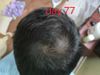
The user shared progress pictures after approximately one year of using finasteride 1 mg for hair loss. They requested opinions on the results shown in the photos.
PP405 is a new hair loss treatment showing early promise with a 20% hair density increase, but skepticism exists due to past failures of similar treatments like Pyrilutamide, RU58841, and Bimatoprost. Users debate its potential effectiveness, with some hopeful due to Google's involvement, while others urge caution without more evidence.
Exploring potential treatments for hair loss, with the focus being on comparing RU58841 and Pyrilutamide. Finasteride, Dutasteride, oral Minoxidil, microneedling, topical Minoxidil, Biotin, Zinc, Vitamin D and Nizoral are also discussed as part of a treatment stack.
A user with diffuse hair loss for a decade tried various treatments, including LLLT Helmet, supplements, topicals, and hair transplants. They found relief from scalp inflammation and itching using a topical solution made from crushed Xeljanz pills mixed with ethyl alcohol.
Minoxidil 5%, finasteride 1 mg, and L-arginine are discussed for male pattern baldness. L-arginine may help with blood flow but its effectiveness for hair loss is uncertain.
KX-826 Pyrilutamide 1% is launching soon, and users are discussing its potential benefits and drawbacks compared to other treatments like Minoxidil and finasteride. Some users are skeptical about its effectiveness, while others are hopeful it will be a safer alternative.
PP405 shows promise in activating dormant hair follicles and increasing hair counts but lacks detailed efficacy data compared to minoxidil and finasteride. Opinions are mixed, with some optimism and skepticism about its effectiveness.
The conversation discusses the potential of long-chain unsaturated fatty acids, like oleic and linoleic acid, as an additional treatment for hair loss, which may inhibit the enzyme responsible for converting testosterone to DHT and promote hair growth. Users humorously suggest using oils topically and discuss other hair loss treatments, but the main focus is on the science behind fatty acids and their role in hair health.
The user has been using Pyrilutamide (Pyril) for hair loss for a month alongside finasteride/dutasteride since 2021 but hasn't seen results. They are considering switching to RU58841 due to its many success stories, despite being skeptical about the legitimacy and testing of Pyrilutamide.
PP405 and GT20029 are new hair loss treatments with different mechanisms from traditional options like Minoxidil and Finasteride. PP405 targets hair follicle stem cells to reactivate growth, while GT20029 works as an androgen receptor deleter, both requiring ongoing use for effectiveness.
RU58841, combined with 5% minoxidil, helped reduce acne and hair loss. Users discussed using RU58841 cream for acne and shared experiences with other treatments like finasteride and dutasteride.
An experiment to determine the effectiveness of Pyrilutamide in reducing hair loss, using a regimen of Minoxidil and Finasteride, with promising results. The conversation also suggests comparing this to RU58841 as an alternative.
Pelage is developing a topical hair follicle stem cell therapy, PP405, for non-scarring alopecias like androgenetic alopecia, with Phase III trials planned and a potential market launch by 2027. The treatment may not require continuous use after initial regrowth.
PP405, a topical treatment, shows promise for hair growth by activating inactive follicles, with 66% of participants experiencing positive results. The treatment is well-tolerated and may proceed directly to Phase 3 trials, offering a potential alternative to minoxidil and finasteride.
The GT20029 tincture, a topical androgen receptor degrader, showed significant hair growth and good safety in a China Phase II trial for male androgenetic alopecia (AGA), with the 1% dose twice weekly identified as optimal. The company plans to initiate Phase III trials in China and Phase II in the U.S., and the treatment also shows promise for acne.
Ursolic acid, found in apple peels, lemongrass, rosemary, and lavender, may have anti-androgen effects similar to finasteride. It might be beneficial for hair health when used with other treatments like Minoxidil, Finasteride, and RU58841.
PP405 is a potential hair loss treatment that may reactivate dormant hair follicles, with Phase 3 trials expected. Some users are cautious, suggesting using finasteride in the meantime, while others are skeptical about PP405's effectiveness.
A user is seeing good results with RU58841 for hair loss, noting reduced shedding and thicker hair. They plan to use pumpkin seed oil as a solvent to avoid water content, which they believe reduces the effectiveness of anti-androgens.
The user is considering adding Pyrilutamide or Alfatradiol as a topical treatment for hair loss after oral Finasteride and Dutasteride became less effective. Other users suggest Pyrilutamide for its safety profile, while one user shares positive experiences with RU58841 for reducing scalp itch and improving hairline.
The user has been using 1MG finasteride, 5% minoxidil, LLLT, and derma stamping for a year to improve hair density for a potential transplant. They are considering switching to dutasteride and are unsure whether to proceed with a transplant now or wait for more growth.
GT20029 shows promise as a topical treatment for hair loss, potentially replacing finasteride for some due to its low systemic exposure and ability to degrade androgen receptors. However, skepticism remains about its long-term efficacy and availability, with some users expressing doubt about new treatments consistently failing to reach the market.
RU-58642 is a powerful anti-androgen that was not developed further, possibly due to safety concerns or financial reasons. RU58841 is a topical alternative, but it is less effective than finasteride and dutasteride, and its long-term effects are not well-studied.
The conversation is about the effectiveness of a hair loss treatment product containing 0.01% Latanoprost, with the user considering trying it as a vehicle for RU58841. The user questions whether the dosage is too low to be effective.
The relative strength of Pyrilutamide compared to RU58841 in terms of androgen receptor binding affinity. It has been noted that Pyrilutamide is 4x stronger than RU58841, with a higher binding affinity than DHT itself.