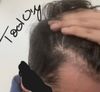
Successful hair regrowth after six months using finasteride and topical minoxidil, with minimal side effects like anxiety. Finasteride was the main treatment, and minoxidil supported regrowth.
A 30-year-old man shares his positive experience with a topical solution containing 0.1% finasteride, 7.5% minoxidil, tretinoin, caffeine, and fluocinolone acetonide after experiencing side effects from oral finasteride and no results from 5% minoxidil. He reports noticeable hair growth in two months with minimal side effects, attributing success to the new topical combination.
The user has been taking finasteride and biotin for 80 days and is considering starting minoxidil after six months. Opinions vary, with some suggesting starting minoxidil immediately for better results, while others advise patience with finasteride.
The user experienced significant hair shedding initially but saw progress after 8 months using 1.25 mg of oral finasteride and minoxidil. They noticed increased hair growth on their eyelashes, eyebrows, and body, and considered increasing the dosage but decided to maintain the current regimen.
The user experienced significant hair regrowth using oral finasteride 1.25mg daily and a Capillus RX laser cap, with no side effects. Improvement was noticed after 9 months, and shedding stopped after the initial 4-5 months.
Clascoterone 5% solution shows strong potential for hair growth, offering a new treatment for alopecia with minimal side effects. It blocks androgen receptors locally and may be available by late 2026 or early 2027.
A 22-year-old male with a family history of baldness has been using finasteride for 3 months and previously used minoxidil. He is concerned about hair loss progression and seeks advice on whether to restart minoxidil and improve his lifestyle, while being advised to be patient with the treatment.
The user reported significant hair improvement after 5 months using 0.5mg finasteride/dutasteride and 2.5mg minoxidil, with plans to grow out their hair. They switched to dutasteride 3 weeks ago and noticed no shedding, with their hairline blending better into their scalp.
Users discuss alternatives to DHT blockers for hair loss, suggesting minoxidil, microneedling, natural DHT blockers, and scalp massages. Some explore RU58841, ketoconazole, hair transplants, and hair systems due to side effects from finasteride and dutasteride.
Mixing RU58841 with minoxidil compounded with tretinoin is discussed, with concerns about systemic absorption. Topical dutasteride and finasteride are also mentioned as treatments, with varying personal experiences and concerns about side effects.
A user shared their 3-month progress using topical Minoxidil 5% and oral Finasteride 1mg daily, along with ketoconazole shampoo and derma stamping, reporting significant hair growth without side effects. Some users doubted the results, while others discussed potential side effects of Finasteride and alternative treatments.
A 29-year-old is using 1mg oral finasteride and 50mg/g topical minoxidil daily for hair loss, with plans to reduce minoxidil use due to greasiness and considering a hair transplant for receding temples. No side effects from finasteride were reported, and many users suggest a transplant may not be necessary due to good hair density.
A 44-year-old man has been using finasteride for a year with noticeable hair improvement and no significant side effects. He is considering adding minoxidil but prefers minimal medication use.
The conversation is about a user's hair restoration journey using topical finasteride/minoxidil, switching to dutasteride due to shedding, and experiencing regrowth. The user reports no side effects from dutasteride and applies it topically twice daily.
The user shared their hair growth journey using minoxidil, finasteride, and ketoconazole shampoo, along with vitamins and serums, reporting significant progress in five months. They emphasized the importance of stress management and plan to add a derma roller, castor oil, and a high-protein diet.
A 24-year-old male experienced significant hair regrowth after 10 months of using oral minoxidil and finasteride chewables from Hims, with no side effects. He noticed increased hair volume, especially at the front, and recommends trying the medication for hair loss.
The user has been using finasteride for 7 months and is experiencing some regrowth but struggles with an oily scalp despite trying ketoconazole and salicylic acid. They are seeking advice on managing the oily scalp and are reassured by others that regrowth is visible.
A user shared their hair regrowth progress using Dutasteride and topical Minoxidil over three years, noting significant improvements around 4-5 months and continued gains after a year. They reported no major side effects, only an itchy scalp, and emphasized the importance of patience and consistency.
Significant hair regrowth was achieved using EssenGen 6-Plus with 6% minoxidil and 0.05% finasteride, along with Nizoral shampoo, over 12 weeks. No side effects were experienced, highlighting the benefits of a low dose.
A 23-year-old male has been using dutasteride (0.5mg daily) and minoxidil with tretinoin for 107 days to address crown hair loss, noticing slight thickening but uncertain progress. He reports no shedding or side effects, experiencing positive effects like improved skin texture and increased energy.
The user shared positive results after one year of using topical minoxidil and finasteride for hair loss, reporting no side effects and fuller hair. They recommend trying topical treatments over oral due to fewer side effects.
An 18-year-old male is experiencing hair loss and is using topical minoxidil and oral finasteride. He is concerned about continued shedding, mild sexual side effects, and whether to adjust his finasteride dosage.
The user experienced significant hair regrowth using Finasteride for over five years, later adding oral Minoxidil without noticeable additional benefits. They reported no side effects from the treatments.
Dutasteride is effective for hair loss but may cause side effects like decreased sperm count, which might not fully recover after stopping. Users discuss balancing dosages to minimize side effects while maintaining benefits.
Concerns about finasteride affecting sperm quality and embryo abnormalities during IVF. The user plans to stop finasteride for 6 months and use minoxidil, microneedling, a red light cap, and saw palmetto shampoo to manage hair loss.
The user experienced increased hair density after starting 1mg finasteride in February and 2.5mg oral minoxidil two months ago, along with 10mg biotin daily. They initially used topical minoxidil but switched to oral due to application difficulties and have seen improvements without significant side effects.
A person is microdosing estrogen for hair loss after finasteride and dutasteride failed, risking feminizing effects. Alternatives like minoxidil, RU58841, or hair transplants are suggested.
The conversation is about managing side effects of finasteride for hair loss, with users discussing splitting 1mg pills into 0.5mg doses to reduce fatigue and other side effects. Some users experienced initial side effects like fatigue and heart palpitations, which improved over time or with dose adjustments.
Minoxidil can effectively promote hair regrowth with consistent use, but results differ among individuals. Some recommend combining it with finasteride for better long-term results, though OP chooses to use only minoxidil and accepts the possibility of going bald.
Minoxidil and finasteride have not improved the user's hairline after a year. Suggestions include trying dutasteride, microneedling, or considering a hair transplant for better results.