Search
for
Sort by
Community Join
690-720 / 1000+ resultscommunity The (many) benefits of buzzing during treatment
Buzzing hair can improve mental health and make applying treatments like Minoxidil and microneedling easier. It helps with self-acceptance and reduces the impact of hair loss on appearance.
community 3 years of treatment Dut, topical Min, 1 year of RU
community Wake up babe,the Lego microneedling set just dropped
The conversation is a humorous discussion about a Lego microneedling set for hair loss, comparing it to a wax pen. No specific treatments are mentioned.
community Topical finasteride carrier/vehicle
The user is considering making a homemade topical finasteride solution using an ethanol-based carrier. They are inquiring if a solution containing partially denatured ethyl alcohol and benzalkonium chloride is suitable.
community microneedling and sun exposure
Avoid sun exposure for 7-14 days after microneedling the scalp, using a hat for protection. Sunscreen on the scalp can be messy and irritating.
community Applying Tertinoin + Moisturiser on scalp.
A user is treating hair loss with oral finasteride, topical minoxidil, and tretinoin mixed with moisturizer for easier scalp application. They also plan to use a derma pen weekly.
community started RU58841 today and am panicing
A user started using RU58841 for hair loss and experienced anxiety and physical discomfort. Other users suggested avoiding the treatment due to similar side effects and recommended alternative treatments like pyri.
community Pumpkin Seed Oil Orally: Safer than Fin with promising results?
community Itchy scalp from power shampoo with biotin ?
A user is experiencing an itchy scalp after using a shampoo containing biotin, saw palmetto, and caffeine, and is questioning if it's due to the shampoo or balding. They are seeking feedback on others' experiences with similar shampoos.
community IGF-1 and Peptides? Miracle molecule waiting to be found
The conversation discusses potential hair loss treatments focusing on stimulating IGF-1 at the follicle level using growth-factor cocktails and engineered peptides, such as Acetyl Tetrapeptide-3, Copper Tripeptide-1, Oligopeptide-20, Thymosin-β4, and Palmitoyl Tetrapeptide-7. It suggests that device-assisted delivery methods like microneedling may enhance effectiveness.
community Experiencing Panic Attacks After Adding Topical Minoxidil and Microneedling
The user experienced a panic attack after adding 5% topical minoxidil to their routine, which already included oral finasteride and minoxidil, and microneedling. They are seeking advice on whether microneedling increased absorption and if the anxiety attacks will subside.
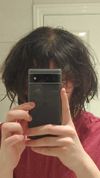
community Finasteride, Minoxidil, and Needling since march, still losing hair?
The user is experiencing hair loss despite using finasteride, minoxidil, and needling since March. They suspect needling too deeply might be an issue and have adjusted the depth recently.
community 2 months of minoxidil with 1 and a half months of microneedling, 1 month of ru58 and 10 days of topical minoxidil and finasteride.
The user shared progress pictures after 2 months of minoxidil, 1.5 months of microneedling, 1 month of RU58841, and 10 days of topical minoxidil and finasteride. They discussed their hair loss treatment regimen and results.
community The final nail in the coffin. PP405 is confirmed JXL069.
community Currently Trending Twitter Post: Clascoterone Hailed as New Cure
Clascoterone is being discussed as a promising new hair loss treatment, showing significant improvement in trials. Despite this, skepticism persists about its effectiveness, cost, and side effects, with some users preferring minoxidil and finasteride.
community Making Topical Zyrtec for Hair Loss: Comparing to Minoxidil
The post discusses making topical Zyrtec for hair loss and compares it to Minoxidil. The conversation includes treatments like Minoxidil, finasteride, and RU58841.
community Positive Hair Result in Patient using Tirzepatide
A 57-year-old man with male pattern hair loss and insulin resistance experienced hair regrowth and weight loss after using tirzepatide, without other hair treatments. Dysregulated glucose metabolism is linked to hair loss, with tirzepatide potentially improving hair density by normalizing insulin resistance.
community Finasteride induced acne!? ANY suggestions pls! Zinc?
community (Topical) Quercetin might be a good add on to the hair loss stack
Quercetin might help with hair loss by inhibiting HSP-70, which increases androgen receptors. Concerns include its staining properties and unclear topical absorption.
community Results dissappearing after 9 months, curious if anyone else has experienced the same.
community Looks like I’m allergic to propylene glycol..
The user is experiencing an allergic reaction to propylene glycol in Kirkland minoxidil and is considering switching to a foam version or a low-PG minoxidil solution. They are also contemplating oral minoxidil but are concerned about its long-term safety.
community Zix pre-made - zinc topical on scalp
The user is experimenting with a zinc sulfate and B6 topical solution called "Zix" for hair loss, alongside using a zinc oxide scalp mask and low-level laser therapy (LLLT). They report minimal hair loss after three months of use and are seeking feedback from others who have tried similar treatments.
community KX-826 0.5% BID ~2 months monotherapy(?) results
The user reported positive results using KX-826 0.5% twice daily for hair loss, noting progress in the temple area with no systemic side effects. They avoided finasteride and minoxidil due to concerns about side effects and inconvenience, respectively, and used ketoconazole shampoo for seborrheic dermatitis.
community Injectable and biofunctionalized fibrin hydrogels co-embedded with stem cells induce hair follicle genesis.
community Still losing ground after 10 months dut + minox
community Best Treatment In The Pipeline?
New treatments for AGA are emerging, including pyrilutumide, gt0029, scube3, kx-826, and pp405. Verteporfin is mentioned as a promising option.
community Injectable and biofunctionalized fibrin hydrogels co-embedded with stem cells induce hair follicle genesis.
community Injectable and biofunctionalized fibrin hydrogels co-embedded with stem cells induce hair follicle genesis.
community topical finasteride: dissolving finasteride in "alpacin cafeine liquid"?
A user discusses using Alpecin Caffeine Liquid for scalp health and considers dissolving finasteride tablets into it for a DIY topical treatment. They inquire about potential absorption issues with this method.