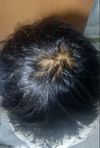
The user experienced side effects with both oral and topical finasteride and is considering making their own hair loss treatment using CB-03-01 (Breezula) mixed with minoxidil due to fewer reported side effects. They plan to use a lower concentration than what was used in trials.
Mixing 1ml of topical Minoxidil and Pyrilutamide (2ml total) together in a container and applying immediately is being discussed. The concern is whether this method degrades or compromises the efficacy of either compound.
Silicone-based shampoos and conditioners may leave a layer on the scalp that could affect the absorption of topical hair loss treatments like Fluridil. The user is considering switching to silicone products to manage frizzy hair but is concerned about this potential issue.
People who experience diffuse thinning of their hair and how they cope with going swimming. People discussed wearing a swimming cap, making jokes out of it and accepting that it's genetics.
A user is comparing Capillus Ultra and Capillus ONE for hair loss treatment, questioning if the number of diodes matters. Another user suggests the OMG helmet as the only worthwhile option.
KX-826 is being discussed for hair loss treatment, with users debating between 0.5% and 0.9% solutions and foam. Some report side effects like headaches, while others see no changes; it blocks androgen receptors without reducing DHT levels.
A user shared a guide for mixing a topical spironolactone solution for hair loss, using ingredients like spironolactone tablets, ethyl alcohol, and propylene glycol. They compared it to the S5 cream, finding their homemade solution more practical and cost-effective.
The conversation is about choosing a topical antiandrogen for hair loss, with options including RU58841, CB0301, Pyrolutamide, Alfatradiol, and Fluridil. Users discuss their preferences and reasons for selecting specific treatments.
The conversation discusses an extensive hair loss treatment regimen including dutasteride, GT20029, RU58841, pyrilutamide, minoxidil, microneedling, ketoconazole shampoo, and experimental compounds. The user humorously describes their approach as a comprehensive strategy to combat hair loss while maintaining hair growth.
The conversation discusses hair loss treatments, focusing on reducing scalp itching and dandruff using natural shampoos, witch hazel, and apple cider vinegar. The user also mentions using finasteride and observing potential regrowth, though it's difficult to confirm.
Actifollic selling Pyrilutamide as a treatment for hair loss, with people debating its efficacy compared to Minoxidil and Finasteride in combination with RU58841.
The conversation discusses maintaining hair regrowth using minoxidil and finasteride and whether using gt20029, which degrades androgen receptors, would affect this. Fluridil, a similar treatment, can disable over 90% of active androgen receptors.
The regimen for hair loss includes topical finasteride, clascoterone, tretinoin, minoxidil, oral saw palmetto, beta-sitosterol, vitamin D, microneedling, and anti-fungal shampoo. Expected benefits are increased hair growth and density, with considerations for potential skin irritation and interactions between treatments.
The user tried Minoxidil without success, and Finasteride worked but caused sexual side effects even at a very low dose. They are seeking alternative treatments for hair loss as they cannot tolerate anti-androgens and are also in therapy for mental health.
The conversation discusses using isotretinoin (Accutane) to reduce scalp oiliness and manage scalp issues like seborrheic dermatitis, inflammation, and chronic itch. A user shares that taking 20mg of Accutane every other day effectively reduces oily hair and skin.
User started oral finasteride 0.33mg daily and later made a topical solution with cetirizine and stemoxydine. They experienced hair growth progress after 8-9 months and discussed factors affecting their results.
An 18-year-old experienced severe side effects, including heart palpitations and high blood pressure, after using RU58841 once, leading to a referral to cardiology for suspected left ventricular hypertrophy. The user regrets using RU58841 and seeks advice on recovery, while others suggest preexisting conditions or genetic predispositions may be factors.
The conversation discusses using azelaic acid to reduce scalp inflammation while using RU58841 for hair loss. It suggests applying azelaic acid in the morning and RU58841 at night to avoid degradation, while also using dutasteride and minoxidil.
The user is seeking advice on a hair loss treatment called Ell Cranell, which contains Alfatradiol. Another user shared information from a study stating that Alfatradiol only slows down or stabilizes hair loss, but does not increase hair density or thickness.
A user with androgenetic alopecia is using 8 ml of 1.4% topical spironolactone solution daily but is unsure if this amount is excessive, as 2 ml is more typical. They seek advice on the appropriate amount to apply.
The conversation is about someone seeking a doctor in the EU who prescribes spironolactone or bicalutamide for female pattern hair loss, as they are having difficulty finding treatment options beyond Minoxidil in Austria. They are asking for recommendations and are open to direct messages for assistance.
GHK-Cu is discussed for its potential anti-aging and healing properties, with some users considering its effects on hair growth. One user mentions using Folligen Spray and topical finasteride, noting improved healing but uncertain hair growth results.
Kintor KX-826, a hair loss treatment, is being discussed for its pricing and effectiveness, with a focus on whether the 0.9% concentration is more effective than the 0.5%. Users are seeking cheaper purchasing options.
Breezula's phase 3 results are expected in July or August, with commercialization possibly in two years. There are concerns about delays and effectiveness, and the cost may be high.
A user plans to create a custom topical solution by adding finasteride, caffeine, cetirizine, and melatonin to a minoxidil bottle, questioning the stability and effectiveness of this mix. Concerns include potential crystallization and solution muddiness with added ingredients.
The user shared progress pictures and discussed using oral and topical Minoxidil, microneedling, recently starting finasteride, multivitamins, vitamin D3, vitamin K, tretinoin, and ketoconazole for hair loss. The conversation focuses on the effectiveness of these treatments.
Avoid layering thin or thinning hair, as it can make hair appear thinner and uneven. Proper framing and minimal layering can help maintain a fuller look, especially when using treatments like Minoxidil and Finasteride.