Search
for
Sort by
Community Join
210-240 / 1000+ resultscommunity 27yo male, with dandruff and losing hair all over
A 27-year-old male is experiencing hair loss and dandruff, despite trying various treatments like cortisone, diflucan, and natural remedies. He is considering shaving his head and is seeking advice on the "Big 3" treatment, which includes Minoxidil, finasteride, and RU58841.
community Need advice with finishing off my hair loss :)
User is a Norwood 2-2.5, using 1.25 mg finasteride and 5% minoxidil lotion daily since June last year, experiencing significant regrowth. They are considering additional treatments like saw palmetto, microneedling, dutasteride, aminexil, stemoxydine, mesotherapy, ketoconazole shampoo, and alfatradiol to improve hair thickness.

community 31M Experiencing Diffuse Thinning Since 2023, Seeking Solutions
The user is experiencing hair thinning at the front of the scalp and is seeking advice on regrowing long curly hair. They are considering treatments like Minoxidil, finasteride, and RU58841 to prioritize hair regrowth.
community C’est terrible - at my wits end
A 29-year-old woman is experiencing gradual hair thinning since age 15, suspects Androgenic Alopecia, and has tried 5% minoxidil with little success. She has purchased various hair loss treatments including minoxidil, dutasteride, finasteride, and spironolactone, but is cautious about starting them due to potential interactions with her ADHD medication.
community Hair fibers work wonders on diffuse thinning!
Hair fibers impressively cover bald spots, boosting confidence. User started big 3 treatment (0.5mg fin, 1 time minoxidil 5% topical, ketoconazole 2%) for regrowth.

community Sudden Triangular Thinning Patch
A 31-year-old has been using finasteride, dutasteride, and oral minoxidil for hair loss. They noticed a sudden triangular thinning patch on their scalp and are seeking advice, questioning if it could be medication-related.
community Diffuse thinning + frontal receding. Caffeine Shampoo 2 month progress. Will continue updating.
The user is trying alternative hair loss treatments like caffeine shampoo and dermarolling before considering minoxidil or other advanced treatments, and has noticed an increase in vellus hairs and some strong terminal hairs after two months of daily caffeine shampoo use. They plan to continue the treatment and document progress.
community [hair transplant] i always wanted long hair.
A user shared their experience with hair loss and a hair transplant at the Scandinavian Hair Institute, using finasteride every other day as part of their regimen. They expressed satisfaction with the transplant results and decided against using minoxidil due to its inconvenience and potential side effects.

community One-sided diffuse thinning - what should I do?
The user is experiencing one-sided diffuse thinning and has been using finasteride and liquid minoxidil for 4-5 years with minimal results. They are considering whether to save for a hair transplant or address scalp sensitivity and irritation first.
community Early Signs - Notes for diffuse thinners
Diffuse thinning is often due to androgenetic alopecia, and DHT blockers like finasteride are recommended. Treatments mentioned include minoxidil, finasteride, dutasteride, and RU58841, with emphasis on starting early and using a holistic approach.
community Why doctors are contradictory when it comes to Androgenetic alopecia?
The conversation discusses androgenetic alopecia (AGA) and questions why treatments focus on lowering DHT levels instead of building resistance to it. It also touches on hair transplantation techniques using body hair.
community M20 - Thick hairline totally demolished during topical Minoxidil shedding (stringy, weak, density loss, see through)
Stefano, a 20-year-old male, experienced significant hairline shedding and thinning after using topical Minoxidil, along with rosemary/jojoba oil, biotin tablets, caffeine shampoo, and a dermaroller. He is uncertain whether to continue the treatment in hopes of regrowth or stop and potentially return to his original hair condition, while a reply suggests using finasteride or dutasteride to address the underlying cause of hair loss.
community Concerned About Asymmetrical Frontal Hair Loss and Recent Finasteride Use, Seeking Experiences
The user is experiencing asymmetrical hair loss at the frontal hairline and is concerned about potential conditions like frontal fibrosing alopecia. They have started using finasteride and pumpkin seed oil to address the issue.

community Eliminate/Confirm AGA based on blood report
A 19-year-old male with no family history of androgenetic alopecia (AGA) is experiencing hair loss and considering using a topical minoxidil and finasteride mixture. Despite low vitamin D levels and normal DHT serum levels, he seeks confirmation of AGA before starting treatment.
community Going bald isnt an option(12 months)
The user experienced significant hair regrowth using a daily oral combination of minoxidil (3mg) and finasteride (1.1mg) without side effects. Others shared their experiences with similar treatments, noting varying results and side effects.
community A Short Recap on PP405 and AAD 2026
PP405 is a promising experimental topical treatment for alopecia that reactivates dormant hair follicles by targeting cellular energy, with large-scale trials planned for 2026. While it shows potential, it cannot regenerate permanently destroyed follicles, making hair transplants the only guaranteed solution for advanced baldness currently.
community Pyrilutamide +Alfatradiol 0.1% , no Hairloss anymore
OP experienced diffuse thinning for 11 years and used Minoxidil and Finasteride previously. They now use Pyrilutamide 0.5% and Alfatradiol 0.1%, resulting in significantly reduced hair loss.
community Shaved it off a couple weeks ago. One of the best things I've ever done [PHOTOS/ANALYSIS]
The user shaved their head and noticed some hair regrowth and thickening due to Minoxidil and finasteride. They are content with their hair loss and have accepted it, while also observing that others don't notice the thinning as much as they do.
community Female diffuse hair loss on spiro with irregular periods (photos) + genetic hair loss
A 34-year-old woman is experiencing diffuse hair loss and irregular periods, possibly due to long-term spironolactone use. She is considering minoxidil and finasteride for treatment and seeking medical advice for androgenic alopecia and hormonal imbalances.
community A new study by Deng and colleagues set out to explore differences between balding and non balding scalps...
Balding scalps have more androgen receptors, leading to increased TGF-beta, which causes blood vessel loss and hair follicle miniaturization. Blocking androgen signaling and TGF-beta may help prevent hair loss.
community Balding while your father has a full head of hair must suck
Unexpected hair loss despite family members having full hair. Treatments include finasteride, minoxidil, and dutasteride.
community (Study) Essential oils are effective for treatment of alopecia areta, could be effective for mbp.
Essential oils like rosemary, thyme, lavender, and cedar wood in a carrier oil may effectively treat alopecia areata and potentially male pattern baldness by stimulating the scalp similarly to minoxidil. The user plans to try this routine and share results.
community Losing hair for 3 years (24 yrs old)
User losing hair for 3 years tried shampoos, minoxidil, derma rolling, finasteride, and Adegen's 15% minoxidil protocol without success. Another user suggests lowering finasteride dosage and trying topical non-steroidal anti-androgens like Fluridil, RU58841, and Breezula.
community Regrowth on hairline doesn’t get longer no matter what treatment I try
Finding treatments for regrowth on the hairline which have not been successful so far, with suggestions of maintaining what they currently have and considering a hair transplant as an option.
community 21M on Finasteride & Topical Minoxidil: Is My Frontal Thinning AGA or TE?
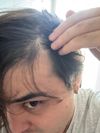
A 21-year-old is experiencing hair thinning and is using oral finasteride and topical minoxidil, considering adding oral minoxidil. They are unsure if the condition is androgenetic alopecia (AGA) or telogen effluvium (TE) and are advised to continue treatments and get a blood test.

community Front Scalp Thinning Despite Using 1mg Fin & 2.5mg Min: AGA or Other Cause?
The user is experiencing significant hair thinning on the front scalp while taking oral finasteride and minoxidil. They are unsure if it's androgenetic alopecia or related to seborrheic dermatitis.
community There are two philosophies here...choose what makes you feel best.
Hair loss approaches: 1) using treatments like Minoxidil, Finasteride, RU58841, vitamins, and transplants, or 2) accepting hair loss, trying minimal treatments, and shaving head. Users share experiences and preferences between options.
community My battle against baldness
A 27-year-old is using finasteride, minoxidil, microneedling, and Pilexil shampoo to combat hair loss, with plans to add Nizoral shampoo and light stimulation. Initial results show reduced hair loss and some hair thickening, despite a period of shedding.
community Us curly/ wavy hair guys have it worse
Curly and wavy hair can make hair loss appear worse due to clumping, but using less product, shorter cuts, and leave-in conditioner can help manage appearance. Minoxidil and finasteride are considered for treatment, and some find that styling can hide thinning areas.