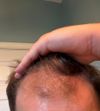
Combining Minoxidil with Peppermint or Rosemary Oil may enhance hair growth. Users discuss the potential benefits of this combination for treating hair loss.
The conversation discusses the best vehicle for topical dutasteride, comparing Trichosol, Transcutol, and a gel version. It also mentions using Transcutol with ethanol to enhance transdermal delivery of Bimatoprost.
Breezula is being sold at Anagen Inc and Universal Labs, and users are discussing their experiences and results with it. There is also interest in the formulation process and inquiries about PP405.
A 30-year-old is using rosemary oil and starting microneedling to address weakening hair, seeking advice on frequency and combination. Another user suggests using finasteride and minoxidil for better results, criticizing the effectiveness of rosemary oil and emphasizing the importance of understanding hair loss causes.
The conversation discusses positive initial trial results for GT20029, a topical compound for hair loss that degrades androgen receptors, potentially requiring only weekly application. Participants express hope for this treatment to be more effective and convenient than current options like Minoxidil, Finasteride, and RU58841.
A user shared progress pictures after 50 days of using a compound with 10% minoxidil, 0.1% finasteride, and biotin, expressing satisfaction with the results. Another user commented positively on the progress.
A user purchased an expensive hair loss treatment called Follicopeptide, which many others in the conversation believe to be a scam, suggesting instead the use of proven treatments like minoxidil and finasteride. Some users report positive effects from Follicopeptide, but skepticism remains high due to lack of transparency about its ingredients and the company's credibility.
The conversation is about a user inquiring about a hair loss treatment product that contains minoxidil, azelaic acid, retinol, and caffeine, and whether it is more effective than Regaine foam. No specific treatments or outcomes are discussed.
The conversation is about making a hair loss treatment combining minoxidil with azelaic acid, retinol, and caffeine, similar to the product Xandrox. The user has tried Xandrox but switched to Kirkland minoxidil for cost reasons and is seeking advice on creating a similar mixture.
The conversation discusses incorporating peppermint oil into a hair loss treatment routine alongside minoxidil and possibly considering other second line options before using peppermint oil. Some people apply peppermint oil after minoxidil's absorption period or use shampoos containing peppermint oil.
RU58841 in glycerin may cause less irritation than in PG form, but its effectiveness might be reduced. Users discuss the potential trade-off between irritation and efficacy.
Chlorine dioxide was discussed as a potential hair growth treatment, with a method involving spraying it on the scalp and covering it with a cap. Concerns were raised about its safety, comparing it to bleach.
PG solvent is considered superior to K&B solvent for RU58841 and Pyralutamide due to cost and effectiveness. The user questions why they should use K&B when PG offers more benefits.
The conversation is about a user concerned about a prescribed 5 mL daily dose of 5% minoxidil for seborrheic dermatitis and hair thinning, which seems excessive compared to the typical 2 mL recommendation. The user is advised to consult their dermatologist and consider additional treatments like ketoconazole and CBD+MCT.
Eating 1g of broccoli seeds five days a week may help with hair regrowth due to their high sulforaphane content. However, caution is advised due to potential health risks from erucic acid in the seeds.
Chronostim is a hair treatment with separate day and night formulas containing ingredients like lauric acid, glycyrrhetinic acid, and piroctone olamine. Users discuss its effectiveness for hair loss.
A 51-year-old woman switched from Minoxidil to Maneup, a copper peptide treatment, experiencing initial hair loss but later regrowth with different hair texture. Users debated Maneup's effectiveness, with some considering it alongside finasteride.
The user has been taking oral minoxidil and finasteride for 10 months with no hair growth but no further hair loss. They are considering adding rosemary oil and possibly returning to a topical solution.
A user is considering adding PRP and mesotherapy to their hair loss treatment and is deciding between two options: Promoitalia, which contains Phosphatidic acid, Riboflavin, and Superoxide dismutase, and the more expensive Melsmon, a human placenta derivative. They seek advice on which option to choose based on effectiveness and scientific backing.
Pelage Pharmaceuticals' PP405 aims to treat hair loss by reactivating dormant hair follicle stem cells, showing promising results in early trials. The company plans to present their findings at the American Academy of Dermatology Annual Meeting in 2026.
A 24-year-old woman with thinning hair is using Minoxidil, saw palmetto, biotin, rosemary oil, and ketoconazole. She seeks advice on whether to try finasteride or dutasteride, the effects of Minoxidil shedding, and the significance of her hair follicle condition.
A user discusses a novel hemp extract for hair regrowth, which showed superior results to finasteride and minoxidil. The formula includes CBD, CBDV, THCV, delta 9 THC, cannabigerol, and cannabinol, combined with menthol, peppermint oil, ethanol, Emu oil, HFA 134A propellant, and dimethicone.
Pelage Pharmaceuticals' PP405, a new hair loss treatment, was recognized by Time Magazine as one of the best inventions of 2025. The conversation expresses optimism about the recognition of this in-development treatment.
A user discusses their struggle with female pattern baldness, mentioning that Minoxidil helped initially but their hair health declined after stopping a specific diet. They seek advice on managing oily, brittle hair and mention using an egg yolk and olive oil mixture as a temporary solution.
RU58841 stopped scalp itching for the user, providing relief from persistent itchiness associated with hair loss. Some users reported side effects like chest pain, while others found relief with different treatments like mometasone.
Mixing Dutasteride with MCT oil may improve absorption due to its fat-soluble nature. Users suggest taking it with whole milk or using oil-based capsules for better effectiveness.
A user shared their experience obtaining a finasteride prescription through Lemonaid, highlighting the ease of the process without needing to provide photos. They chose oral finasteride for preventative hair loss treatment due to a family history of baldness and received a year’s supply at a low cost.
The user is experiencing scalp irritation from using tretinoin and alcohol-based hair loss treatments like stemoxydine. They find that Aquaphor helps with the pain but is difficult to apply in hairy areas.
The conversation discusses using topical Calcipotriol and Valproic Acid for hair loss, focusing on their mechanisms involving the VDR receptor and Wnt/beta-catenin pathway. Specific treatments mentioned are Minoxidil, Finasteride, and RU58841.