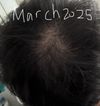
A 43-year-old man shares his slow progress using low-dose topical finasteride and 5% minoxidil for hair growth, along with scalp massages, microneedling, biotin supplements, and pumpkin seed oil. Another user suggests shaving and warns about potential infertility from finasteride, but the original poster remains optimistic, citing others' successful results.
Users discuss using high-strength Minoxidil, topical finasteride, and azelaic acid for hair loss. Some report success with higher Minoxidil percentages, while others express concerns about potential heart risks.
The user is experiencing painful side effects from finasteride and is considering switching to oral minoxidil and biotin to maintain their hair. They are seeking advice on whether this change would help preserve their current hair.
A user is considering creating an all-in-one topical solution for hair loss, combining 0.25mg finasteride, 5% minoxidil, and 5% RU58841. They are seeking advice on its feasibility and absorption.
Using 0.025% tretinoin may enhance minoxidil's effects for hair loss. Users suggest starting with 0.025% and gradually increasing the concentration, and discuss combining treatments like microneedling.
The user experienced significant hair regrowth using finasteride tablets, minoxidil foam, and vitamins since April, alongside previous scalp micropigmentation. They are considering growing their hair out due to improved hair density.
A user shared impressive hair regrowth results after using 5% topical minoxidil twice daily and 1mg oral finasteride daily for five months. The user reported no side effects and did not use additional treatments like PRP or dermarolling.
Minoxidil sulfate is considered for those unresponsive to regular minoxidil, with some trying a 10% formulation from Folligenz. Concerns exist about the product's stability and transparency, but some users report positive initial results.
The conversation is about finding a source for a topical solution combining minoxidil with other ingredients like finasteride, dutasteride, or retinol. The user seeks recommendations for purchasing these enhanced formulations.
A user's progress with hair loss treatments, including minoxidil, microneedling, nizoral 2%, finasteride 0.5mg/day and 0.5mg/ml per day in minoxidil, as well as RU58841 purchased from Anagen Inc., which allowed the user to go outside without a hat or cap for two years.
A user shared a hair growth stack using minoxidil sulfate, valproic acid, bimatoprost, blue copper peptide, and other ingredients, emphasizing a gel-based formula for better skin tolerance. Another user suggested adding a 5-alpha-reductase inhibitor like finasteride or dutasteride for more effective long-term results.
The conversation is about using a blend of coconut oil, peppermint oil, and rosemary oil with minoxidil for hair loss, and whether it's safe to apply this blend after microneedling.
Users discussed their experiences with minoxidil and finasteride for hair loss, sharing application methods and side effects. Concerns included hair texture changes, safety around pets, and the importance of consulting a doctor before using oral minoxidil.
The conversation is about a hair regrowth regimen that includes using minoxidil, peppermint oil, a red light hat, and microneedling. The user is seeking advice on the effectiveness and frequency of these treatments.
The user is seeking an alternative to DualGen 15 that includes Minoxidil and Retinol but is less sticky and more convenient to use. They find the current product inconvenient due to its stickiness and long wait time before washing.
A user with mild psoriasis on the scalp is using finasteride, topical minoxidil, and dermarolling for hair loss but plans to stop minoxidil on the crown due to psoriasis aggravation. Suggestions include switching to a lipid-based minoxidil, using Ketoconazole shampoo, or trying oral minoxidil.
The user discusses using Follics FR5, FR10, and FR15, which combine Minoxidil, Adenosine, Procapil, Azelaic acid, and Procyanidin B2, to address hair loss. They have previously used Minoxidil, Finasteride, and Dutasteride with varying success.
Mixing Pyrilutamide powder with Minoxidil solution is being considered. The Minoxidil solution contains Minoxidil 5%, Azelaic acid 5%, ABN complex 0.8%, Retinol 0.025%, Caffeine 0.001%, and a delivery vehicle.
A dermatologist prescribed a topical solution with 7% minoxidil, 0.1% finasteride, and 0.015% tretinoin from Medrock pharmacy. The user is asking if anyone has tried it and if it contains alcohol.
A 23-year-old male shared his 5.5-month progress using 5% topical minoxidil foam for hair regrowth, considering adding finasteride despite concerns about side effects. Users advised starting finasteride to maintain gains, with some suggesting topical options to minimize side effects.
Enhancing minoxidil effects can involve using penetration enhancers like DMSO, urea, or retinol, and methods like dermarolling and adding substances like biotin and L-carnitine tartrate. Some users suggest trying higher concentrations of minoxidil if lower percentages are ineffective.
This conversation is about a user's progress pictures of 10 month results after using 5% topical minoxidil, which were well-received by other users. Other users suggested that the user add finasteride to their hair loss treatment regimen for longer lasting results.
Liver problems may reduce the effectiveness of oral minoxidil due to impaired SULT1A1 enzyme activity, which is crucial for converting minoxidil to its active form. This reduction in enzyme function can significantly decrease the drug's effectiveness in promoting hair growth.
The conversation discusses creating a customized minoxidil formulation with tretinoin, azelaic acid, and caffeine, but there are concerns about foam stabilization due to acidity. The user seeks advice on the best formulation for effective results.
The conversation is about enhancing the effectiveness of minoxidil for hair loss. Suggestions include using tretinoin alongside minoxidil, though its effectiveness is uncertain.
A user shared a 1.5-year hair loss treatment progress using 1mg Finasteride and 5% Minoxidil, planning to switch to oral Minoxidil and considering adding RU58841. They saw gradual improvement, suspecting Finasteride as the main contributor since they might not respond to topical Minoxidil.
This user uses a combination of finasteride and oral minoxidil to treat hair loss, and reports that the treatment has had an impact on his growth without any major side effects. He also shares advice on how to obtain the necessary medications in certain countries.
User shared progress pictures showing significant hair regrowth using a compounded solution of Minoxidil 10%, Finasteride 0.1%, Biotin 0.2%, and Latanoprost 0.005%. They reported no side effects and are satisfied with the results.
The user experienced hair regrowth over four months using 5% topical minoxidil, oral biotin, and saw palmetto. They also use rosemary and mint conditioner and biotin shampoo.