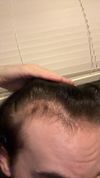
The user is using finasteride for hair loss and is frustrated with shedding but plans to add oral minoxidil for convenience and safety. There are concerns about using topical minoxidil around pets.
Minoxidil can cause dry, stiff hair, making styling difficult. Users suggest applying it hours before styling, using light styling products, and not washing hair daily to manage dryness.
The conversation is about hair loss treatments, specifically Pyrludimide (KX-826) and Breezula (clascoterone), with the user unable to tolerate finasteride and dutasteride. The user plans to use these treatments alongside minoxidil, considering the efficacy and availability of each option.
A 31-year-old male experienced significant hair regrowth after 6 months using daily 0.5 mg dutasteride, 5% topical minoxidil twice a day, occasional dermarolling, and hair supplements. He reported a slight decrease in libido initially but no other side effects, and there's potential for further improvement up to 12–18 months.
A nearly 50-year-old male achieved significant hair regrowth and thickening over three years using daily finasteride, twice-daily topical minoxidil, and bi-weekly microneedling with a dermastamp. He experienced no side effects and found microneedling particularly effective for the crown area.
Oral minoxidil caused changes in hair texture, making it curly, dry, and lifeless, raising concerns about whether this is a temporary phase or permanent. Users discussed potential side effects of oral minoxidil, including heart issues, and suggested consulting a dermatologist and monitoring health markers.
A 23-year-old achieved significant hairline regrowth using minoxidil, saw palmetto, collagen peptides, biotin, omega-3, iron, ketoconazole shampoo, and scalp care techniques, without finasteride or dutasteride. The user attributes success to this combination but is unsure which element is most effective.
Saw palmetto, a 5-alpha reductase inhibitor, caused unexpected side effects like breast changes and altered semen consistency, which resolved after stopping its use. Concerns about similar side effects with finasteride or dutasteride were expressed, and another user reported low libido and depression from saw palmetto.
An 18-year-old with diffuse hair thinning is considering switching from a topical Minoxidil 10% + Finasteride 0.1% solution to Minoxidil 5% foam and oral Finasteride 0.5mg, while also addressing vitamin D deficiency and potential scalp inflammation. Users suggest using Nizoral shampoo for inflammation, considering dutasteride for better results, and maintaining vitamin D levels to protect hair follicles from DHT.
Switching from finasteride to dutasteride can improve hair regrowth with fewer side effects for some users. Concerns about shedding, lack of improvement, and the long-term safety of oral minoxidil remain.
The user has been using minoxidil foam and a dermaroller for three months to combat hair loss, with noticeable progress. They are seeking finasteride but face difficulties obtaining it in Germany.
The conversation discusses various hair growth treatments, including topical and oral minoxidil, microneedling, LLLT, PRP, exosomes, latanoprost, copper peptides, and upcoming treatments like PP405 and Vdphl01. It also covers managing side effects of minoxidil, such as dry scalp, and mentions the use of dutasteride and finasteride for hair loss.
A user experienced increased hair shedding after 2.5 years on finasteride and 5 months on minoxidil, possibly due to recent additions like supplements and microneedling. Others shared similar experiences with minoxidil shedding, suggesting it may be a normal part of the process, with hair often growing back thicker.
A user shared their hair regrowth progress using oral finasteride, biotin, topical minoxidil, and DS thickening shampoo over five months, reporting significant improvements in hair texture and growth. They experienced minor side effects like a slight headache from switching minoxidil forms but noted no issues with finasteride.
A 33-year-old man shares his positive hair regrowth results using 1mg finasteride daily, 5% topical minoxidil twice daily, and a 0.5mm dermaroller weekly. He feels more confident and encourages others to try the routine despite potential side effects.
A user shared impressive hair regrowth results after six months of using 1 mg oral finasteride daily, 2 ml topical minoxidil 5%, ketoconazole shampoo, and vitamin D and iron supplements. The user reported no side effects and attributed the success to a combination of treatments for androgenetic alopecia and iron deficiency.
The user is using dutasteride, finasteride, and RU58841 for hair loss but is allergic to minoxidil. Suggestions include dropping finasteride, increasing dutasteride dosage, and considering alternatives like microneedling, laser treatments, scalp massage, and supplements.
A 21-year-old male experienced negative side effects from oral finasteride and is considering switching to topical finasteride or RU58841 after using oral minoxidil. He seeks advice on a standard hair loss routine, mentioning peptides, RU58841, and dermarolling.
The user experienced noticeable hair regrowth after starting dutasteride and minoxidil in mid-November. Despite mixed opinions, many users encouraged patience and consistency with the treatment.
A 40-year-old user shared their experience using finasteride and minoxidil for hair regrowth over a year, noting initial sexual side effects that improved after reducing the finasteride dosage. They also experienced scalp irritation from Rogaine, leading to reduced usage, and expressed satisfaction with the hair regrowth despite ongoing challenges.
The user is experiencing hair loss despite using dutasteride and minoxidil and is considering adding RU58841 or other treatments like microneedling. Suggestions include stopping smoking, trying dutasteride mesotherapy, using tretinoin, maintaining a healthy lifestyle, and possibly using a red light cap.
Tretinoin can increase hair follicles and is used alongside minoxidil and finasteride for hair growth, though it may cause skin peeling. Users report varying results, with some experiencing regrowth and others questioning its efficacy for hair.
A 23-year-old male shares his 136-day progress using a hair loss treatment regimen of daily Dutasteride 0.5mg, topical Minoxidil 5% with Tretinoin, and Nizoral every other day, reporting no side effects and significant hair regrowth. He notes high energy and libido, with no shedding, and attributes most progress to Dutasteride.
The conversation discusses a hair loss treatment regimen including oral dutasteride, oral minoxidil, tadalafil, and the recent addition of RU58841. The user shares experiences with these treatments, noting significant hair regrowth and stabilization, and discusses the cost and preparation of RU58841.
The conversation discusses using 5% foam minoxidil for hair loss and the timing of moisturizing afterward. Users share experiences, with some suggesting moisturizing before application and others recommending alternatives like Nizoral shampoo for dry skin issues.
Dutasteride tablets from India are significantly cheaper than those from pharmacies, but there are concerns about authenticity and customs issues. The user is also using oral minoxidil, finasteride, and RU58841 for hair loss treatment.
A user shared their experience using capsaicin from chili peppers and occasional topical minoxidil to promote hair growth, noting noticeable improvements without significant side effects. They previously experienced side effects from dutasteride and minoxidil but found the new regimen effective and manageable.
A female user discusses hair loss possibly caused by wearing a hijab, considering treatments like derma stamping, hair serum, Nizoral shampoo, rosemary/castor oil, and possibly a hair transplant. Others suggest traction alopecia from hijab use and recommend consulting a dermatologist, with treatments like spironolactone and minoxidil.
A user with scalp psoriasis and hair loss is hesitant to use topical minoxidil and finasteride due to concerns about psoriasis and potential side effects. They are considering alternatives like pumpkin seed and saw palmetto.
The user applied minoxidil and finasteride topically for hair regrowth, experiencing significant results but stopped finasteride due to side effects. They later added stevia to minoxidil, noticing potential improvement in hair density, particularly at the front.