Search
for
Sort by
Community Join
630-660 / 1000+ resultscommunity Story time! The Great Unbalding (PP405)
PP405 is a promising new hair loss treatment that may reactivate dormant hair follicles without side effects. It could surpass traditional treatments like minoxidil and finasteride if successful in further trials.
community Dealing with Retrograde Alopecia
User on Dut, oral minox 20 mg, Saw Palmetto, Pumpkin Oil, RU, 8% topical minox, and topical fina for hair loss; top of head improves, but retrograde alopecia worsens. Asks for options besides exosomes and where to find topical melatonin.
community Verteporfin and BPC-157: Hair Loss Cure Stack?
Verteporfin and BPC-157 are being discussed as potential treatments for hair loss. The conversation also mentions Minoxidil, finasteride, and RU58841.
community [2100 Grafts to Frontal Third | Dutasteride + Oral Minoxidil Stack | SMP + PRP | 42 Years Old
A 42-year-old had 2,100 grafts transplanted to the frontal third of the scalp, using treatments like Dutasteride, oral Minoxidil, ketoconazole shampoo, dermarolling, and PRP. They plan to add RU58841 and have scheduled SMP to improve cosmetic results.
community Anyone here have a lot of knowledge on hair follicle stem cells and progenitor cells for PP405?
Hair follicle stem cells remain in bald individuals, but progenitor cells do not, raising questions about hair regrowth claims by Pelage. PP405 is discussed as a potential treatment, with skepticism about its effectiveness compared to existing treatments like Minoxidil and Finasteride.
community 137 years old and still far more hair than the average r/tressless user
The post and conversation are about a user claiming to be 137 years old with a full head of hair. Specific treatments mentioned include dutasteride, RU58841, and minoxidil.
community Advanced AGA and DUPA at 25. Starting Nuclear Stack: Day 178 (6 months-ish)
A user is treating hair loss with Dutasteride, Minoxidil, RU58841, Derminator 2, Vitamin D, Biotin, and Zinc. After 6 months, there's no significant visual improvement, but the user feels less insecure about Retrograde Alopecia.
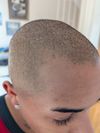
community 30M, 1 Year Balding, Can Finasteride and Minox Regrow Corners?
The conversation discusses whether finasteride and minoxidil can help regrow hair at the corners, with one user suggesting that recovery is possible even from worse conditions.
community Chat Gpt approves ,my Current Regimen
The conversation is about a hair loss treatment regimen that does not include finasteride. Specific treatments used are not mentioned.
community Tell me I should be grateful, I’m trying not to shave it off. I’ve had about 2500 graft’s transplanted but I hate seeing my scalp.
A user who had two hair transplants and is still concerned about their crown area, despite other people reassuring them that it looks normal. The advice given was to use Minoxidil, Finasteride, SMP, and to consider speaking with a therapist.
community [M23] Almost 7 months on fin, 2 years on min, and microneedling for 5 months, I’m almost ready to stop wearing a hat everywhere I go
A user's progress with treating hair loss using finasteride, minoxidil and microneedling over the course of 7 months. Other comments suggested additional treatments such as toppik to help hide it in the meantime.
community Can Fin + Min save my hair? [20M]
A user is considering using finasteride and minoxidil to address hair loss, particularly at the temples and crown. Responses include encouragement, humor, and additional suggestions like using a derma roller.
community Minoxidil Sandalore Procapil on ebay, link below. What do you think?
The conversation discusses a hair regrowth treatment containing Minoxidil, Procapil, Sandalore, and caffeine. The focus is on evaluating the effectiveness of this product available on eBay.
community Hair loss journey 3 years in. A public service announcement
community U/joaopassos444 , HATS OFF brother !!
A new hair loss treatment theory beyond minoxidil and finasteride is proposed, causing mixed reactions in the community, with some members eager to explore and support it, while others call for more research and evidence.
community If pp405 isnt the “cure” is there anything else that’s promising thats atleast better than min or dut?
Hair cloning and new treatments like ET-02, Veradermics (vdphl01), and wound-induced hair neogenesis show promise but are not yet widely available. Current effective treatments include minoxidil, finasteride, and dutasteride, with early intervention being crucial for better outcomes.
community Is it possible to transplant all of my hair to one spot on my head?
A user humorously discusses wanting to transplant all their hair into one dense circle on their scalp, leaving the rest of their head bald. Replies include a joke about performing the procedure and a story about someone using their hair to fight crime.
community 5.5 month progress - 3500 grafts- WSC clinic Istanbul
A user underwent a hair transplant with 3500 grafts at WSC clinic in Istanbul and uses finasteride, biotin, multivitamins, minoxidil with finasteride, biotin shampoo, and coconut oil with peppermint oil for hair loss treatment. Another user commented that the result looks like a barren patch of hair.
community Close up of hairline at widow's peak. Started treatment January 20th.
The user reports positive progress in hair regrowth using 1mg oral finasteride, 3mg oral minoxidil, biotin, vitamin D, red light therapy, and microneedling. They note thickening at the hairline and some regrowth at the temples.
community This is the condition I so feared?
The conversation discusses coping with hair loss and the emotional impact of balding, with some users finding peace in shaving their heads. Treatments mentioned include minoxidil, finasteride, and lifestyle changes like diet and exercise.
community Winlevi for 1 month on scalp. Testing it out so y’all don’t have to.
A user is testing clascoterone (Winlevi) on their scalp for hair loss and has noticed a reduction in scalp sebum after one month. They are also using other unspecified treatments and plan to provide an update after the second month.
community 3 week hair transplant update - HLC Ankara - How's it looking?
community (26M) I just received the test results for my hair loss.
A 26-year-old man with diffuse alopecia is using electric scalp massage, dermastamp, and multivitamins for treatment but is intolerant to finasteride. A dermatologist recommended PRP and mesotherapy with exosomes and dutasteride.
community 28M progress pic, fin and min since 27th Jan 2023
Hair loss progress with fin and min treatments since 27th Jan 2023. User experienced positive results using 1mg fin daily, 1ml topical min daily, and 0.75mm dermaroller weekly.
community Considering Min/Fin for Receding Corners at Norwood 2/2.5, Need Advice
The user is considering starting minoxidil and finasteride for hair loss at Norwood 2 or 2.5. Another user suggests consulting a dermatologist and possibly using finasteride to prevent progression and minoxidil for regrowth, with dutasteride as an alternative.
community [21M] seb derm + probably mbp.
Minoxidil and finasteride are being considered for hair loss due to seborrheic dermatitis and male pattern baldness. The user is also using ketoconazole and zinc pyrithione shampoo.
community Diffuse Hair thinning all around the head with no noticable difference in thinning
A 22-year-old is experiencing diffuse hair thinning all over the head, losing about 300 long hairs daily, despite having good genetics and vitamin levels. They are seeking advice on whether this pattern is normal and considering consulting a dermatologist.
community Anyone immediately lose hope for gt20029 when they realised it’s developed by kintor
The conversation discusses various hair loss treatments, including minoxidil, finasteride, dutasteride, pyrilutamide, alfatrodial, and nizoral, with a focus on the potential of new treatments like gt20029 and breezula. There is optimism about novel treatments that don't have systemic effects, although skepticism remains about the effectiveness of some new drugs.
community Reducing tension on the back, sides and top of head causes hair growth in MPB sufferers. Studies inside
Reducing scalp tension can help reverse male pattern baldness (MPB). Firm scalp massages and scalp stretching exercises are beneficial.