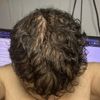
The conversation humorously discusses using anal administration of Dutasteride as a novel method for treating hair loss, suggesting it could target DHT production more effectively. It includes satirical comments about the method's potential effects and absurd outcomes.
Topical finasteride may have higher systemic absorption and lower efficacy when using a Propylene Glycol/Ethanol formulation compared to the hydroxypropyl chitosan (HPCH) formulation. The safety profile of topical finasteride relies heavily on the HPCH formulation, and using standard solutions might lead to different pharmacokinetics.
The user is experiencing significant hair thinning on the front scalp while taking oral finasteride and minoxidil. They are unsure if it's androgenetic alopecia or related to seborrheic dermatitis.
There are no updates on GT20029, and concerns about its safety and effectiveness remain. The phase III trial has not started, and there are no new studies or data releases.
The conversation is about the potential release of GT20029 on the grey market and concerns about its safety and authenticity. One user advises waiting for the official release by Kintor.
User experienced hair kinking after starting minoxidil, despite being on finasteride for two years. Another user confirmed similar issues and suggested switching brands due to propylene glycol in minoxidil.
Users discuss the effectiveness of low-dose topical finasteride (0.005-0.05%) for hair loss, often combined with minoxidil. Some report stable results or new growth, but it's unclear if improvements are due to finasteride or minoxidil.
Using both oral and topical minoxidil is not considered dumb, and some users report better results with both, though it may cause shedding and scalp irritation. Combining minoxidil with finasteride is recommended for better effectiveness.
Hair cloning and new treatments like ET-02, Veradermics (vdphl01), and wound-induced hair neogenesis show promise but are not yet widely available. Current effective treatments include minoxidil, finasteride, and dutasteride, with early intervention being crucial for better outcomes.
Switching to Amazon for finasteride prescriptions can save money, with a 90-day supply costing around $17 for Prime members. Oral minoxidil requires monitoring, so a local doctor is needed for that prescription.
Using topical finasteride alongside oral finasteride likely won't provide significant benefits and may increase the risk of side effects. The "4-in-1" spray offers a higher minoxidil concentration but may not be worth switching if oral finasteride is well-tolerated.
The user reported hair recovery on the scalp after 4 months using finasteride and 5% topical minoxidil, with anxiety as a side effect. Reducing caffeine intake helped manage anxiety, which may be linked to minoxidil's effects.
A user is seeking help to purchase and ship Alpecin DMG to the United States due to issues with eBay sellers. They prefer Alpecin DMG over minoxidil because of concerns about minoxidil's effects on insulin production, as they have diabetes.
The user experienced mental side effects from both oral and topical finasteride and is considering trying dutasteride or liposomal topical finasteride. They are concerned about potential worsening of hair loss if they quit dutasteride.
The user shared their 12-month hair regrowth progress using 1mg finasteride, 5mg oral minoxidil, and topical minoxidil. They also used a derma stamp weekly and treated seborrheic dermatitis with Mometasone and Nizoral.
A user is considering using RU58841 for female pattern baldness and is also planning to use Minoxidil. They are hesitant to ask their doctor for spironolactone due to its cosmetic nature and are experiencing significant hair loss possibly due to stress and hormonal issues.
The conversation is about enhancing dermarolling for hair loss by using topical peptides like tb-500 or GHK-Cu to aid in healing and hair growth, and whether anyone has experienced significant results from this method.
The user experienced reduced hair loss using grey-market KX-826 alongside Minoxidil foam, achieving better results with Minoxidil liquid but restricted to foam due to an allergy. Initial side effects included shortness of breath, racing heart, and dizziness, which subsided after the first week.
A user found that scalp itch might be linked to inflammation rather than DHT alone and noticed hair improvement with certain cancer drugs. They also discovered that black seed oil relieved their scalp itch and are experimenting with a mix of essential oils for dry scalp, questioning if oils affect minoxidil absorption.
The user has been using Pyrilutamide (Pyril) for hair loss for a month alongside finasteride/dutasteride since 2021 but hasn't seen results. They are considering switching to RU58841 due to its many success stories, despite being skeptical about the legitimacy and testing of Pyrilutamide.
This conversation is a humorous discussion about the effects of Minoxidil and Finasteride on hair growth, with some users speculating that it may have turned the poster into a "scientific horror story".
Minoxidil may cause skin aging effects like wrinkles and dark circles, but evidence is mixed. Alternatives like dermarolling and retinol are suggested.
The conversation is about future hair loss treatments. Current treatments mentioned include finasteride, minoxidil, and RU58841, with potential future treatments like GT20029, TDM-105795, JW0061, and follicle cloning.
Hair regrowth using estradiol, spironolactone, minoxidil, and finasteride, showing significant improvement over four years. HRT is not advised for cis men solely for hair loss due to feminizing effects.