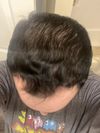
A user suggests that deeper microneedling with Verteporfin injections might help regrow hair in areas with scar tissue, alongside a DHT blocker. Another user explains that hair loss might be due to reduced Wnt/β-Catenin signaling and suggests that treatments like Minoxidil, Finasteride, and microneedling could potentially reverse it.
The user reported significant hair thickness improvement using Minoxidil 5% twice daily for three months and Finasteride 1mg daily for one month, along with Biotin and Vitamin D supplements. The user no longer notices bald patches and is hopeful for continued progress.
A 21-year-old noticed vellus hair regrowth on their hairline after adopting a healthy lifestyle and meditation, without using treatments like Minoxidil or Finasteride. Other users are skeptical, attributing the regrowth to placebo effects.
A user's 6-month journey to treat their hair loss using 1mg finasteride twice daily, topical minoxidil, vitamin D3, keto diet, and microneedling. They experienced shedding at the end of month 3 but have seen progress in recent months despite this.
The user has been using a daily topical spray of finasteride and minoxidil, along with occasional microneedling, to address hair loss since August 2023, and is considering switching to oral medication for convenience and cost reasons. Despite progress, they are exploring options like increasing microneedling frequency or potentially undergoing a hair transplant to address a stubborn spot.
A 16-year-old female experiencing severe hair loss and sebum buildup, likely due to telogen effluvium and PCOS, is currently using vitamin D3 supplements, Redenser serum, and T follihair supplements. Recommendations include addressing PCOS first and consulting a doctor.
The user experienced chronic telogen effluvium and mild male pattern baldness, treated with finasteride, oral minoxidil, and later switched to dutasteride, which stopped excessive hair shedding. Other treatments like low-level laser therapy, hair loss shampoos (except ketoconazole), and supplements were ineffective.
The conversation discusses hair loss treatments, including oral finasteride, topical minoxidil, and microneedling, and the potential impact of Vitamin D and folic acid deficiencies on hair regrowth. It suggests that while male pattern baldness is the primary cause, addressing vitamin deficiencies may aid in improving regrowth.
A user with diffuse thinning alopecia uses a custom full cap wig for an active lifestyle, costing $450 and lasting about 10 months. They share their positive experience with the wig as an alternative for those for whom treatments like Minoxidil, finasteride, or RU58841 don't work.
A 40 year old male using Dutasteride every other day, Minoxidil once daily, micro needling roughly every other week, Nizoral twice a week and taking vitamins and biotin, with results showing hair darkening. The conversation includes discussion of side effects experienced by the user, as well as potential alternative treatments such as finasteride or RU58841.
The individual is experiencing hair loss and has a vitamin D deficiency, with levels at 7.49ng/ml or 26nmol/l. They are unsure if the deficiency is causing the hair loss and are seeking advice on vitamin D supplementation.
User noticed beard and sideburn hair loss, and thinning eyebrows, diagnosed with alopecia barbae and male pattern baldness, and prescribed Desonide cream. User seeks feedback on Desonide cream.
The conversation discusses applying a topical solution containing 0.01% tretinoin, 1.5% azelaic acid, and 5% minoxidil for hair loss. It is recommended to apply tretinoin at night and use sunscreen during the day to prevent skin damage.
A user shared their experience with hair loss treatments, including RU58841, ketoconazole shampoo, caffeine shampoo, and topical finasteride. They found RU58841 effective for diffuse thinning but experienced severe hair loss after stopping it; topical finasteride worked well for a receding hairline but caused side effects. They also use a charcoal shampoo and practice scalp massages.
The user is treating alopecia areata with 1.25mg oral minoxidil daily and topical mometasone furoate, considering increasing the dose or adding finasteride, though finasteride is not typically used for this condition. A gluten-free diet is suggested, and alternatives like Olumiant are mentioned.
A 27-year-old is using finasteride, minoxidil, microneedling, and Pilexil shampoo to combat hair loss, with plans to add Nizoral shampoo and light stimulation. Initial results show reduced hair loss and some hair thickening, despite a period of shedding.
A user with diffuse thinning recommends a root cover-up spray as a temporary, medication-free solution. They plan to consult a dermatologist for treatments like Minoxidil and finasteride while using the spray for special occasions.
A 21-year-old is using a topical solution with minoxidil and finasteride for hair loss, along with supplements and specific shampoos, and is considering switching to oral treatments if no progress is seen in a few months. They are concerned about diffuse thinning and potential future hair transplants, and are exploring additional treatments like microneedling and tretinoin.
The user improved diffuse thinning without finasteride by using minoxidil foam, cold showers, gentle hair drying, 2% ketoconazole, sulfate-free tea tree oil shampoo, dermastamping, and supplements like Omega-3, Vitamin-D, Biotin, Keratin, Collagen, B3, Zinc, and Magnesium. The regimen was followed for about six months under dermatologist guidance.
This post by "vicky8201" documents their progress in treating hair loss with Minoxidil and Finasteride, which resulted in a transition from NW4 to NW2.5 over the course of two months. Master_Blaster999 and lovindicks both commented on the results, noting that it is nearly impossible to grow that much hair in such a short time frame.
The conversation is about hair loss treatments and multivitamin recommendations. The user mentions Minoxidil, finasteride, RU58841, biotin, procyanidin B-2, floral oils, and Viviscal.
A user is exploring VEGF gene therapy to enhance hair transplant results, considering measuring hair shaft diameter and growth rate. Suggestions include using phototrichograms and possibly adding PRP, though its effectiveness is uncertain.
The user experienced hair thinning and used microneedling, DHT blocking shampoo, and Biotin DHT blocking oil to address it, avoiding finasteride and minoxidil unless necessary later. They reported mild improvement but received mixed feedback, with some suggesting other conditions or treatments like ciclopirox shampoo.
So maybe vitamin D is important here
This conversation discussed the user's successful results from a combination of treatments, including finasteride, minoxidil, ketozolin shampoo, Vitamin D and biotin. The discussion also included advice about frequency and dosages for these treatments.
The user experienced stable hairline but diffuse thinning after switching from oral finasteride to a topical solution of minoxidil and finasteride. They are concerned about the effectiveness of the topical treatment and are considering other options due to a recent decline in hair density.
The user is using a hair loss treatment involving dutasteride, minoxidil, finasteride, microneedling, and supplements like multivitamins, D3 K2, and Omega 3 fish oil. They are considering adding tretinoin and are open to suggestions while managing gut issues.
The user is considering another hair transplant or scalp micropigmentation (SMP) for a congenital bald spot, but previous transplants were less effective due to scar tissue. Suggestions include using hair fibers, changing hairstyles, or doing nothing, as the spot is not very noticeable.
The user has seen positive results after over six months using 0.05% topical finasteride, 5% minoxidil, 50mg/ml RU58841, weekly needling, and twice-weekly ketoconazole shampoo for hair loss. They express gratitude for the support from an online community and are open to questions about their treatment.
A user shared progress pictures showing successful hair retention using a low-dose topical finasteride (0.008%) combined with minoxidil. Users discussed the effectiveness of the treatment, minimal effective dosing, and avoiding systemic side effects.