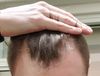
The conversation discusses hair regrowth using oral minoxidil and RU58841, with visible baby hairs appearing after two months. One user questions the choice of RU58841 over finasteride.
User "Ant1pal" shares progress pictures of hair regrowth using Minoxidil, Estradiol valerate, and Spironolactone. Users discuss potential side effects and the possibility of localizing estrogen to hair follicles for better treatment.
The user is using 2.5mg oral Minoxidil, rosemary mint oil, scalp massaging, a derma roller, multivitamins, and hair vitamins for hair regrowth. They are considering adding pumpkin seed oil, a derma pen, and saw palmetto vitamins, and are advised to consider finasteride.
Latisse (bimatoprost) is discussed as a potential treatment for hair growth due to difficulty obtaining PGE2. Users also mention concerns about sourcing reliable products from China.
Hair loss discussion includes LLLT treatments and a satirical condition called PLLLTS, causing patients to resemble lighthouses and attract moths. Some users express concern about others taking the satire seriously.
The conversation is about hair regrowth, with the original poster using natural oils and supplements like pumpkin seed, saw palmetto, and zinc, while considering pharmaceutical options like minoxidil, finasteride, and dutasteride. Most users suggest using finasteride or dutasteride for effective results, as natural remedies are seen as ineffective.
Clascoterone in Winlevi, a topical AR antagonist, is being re-examined due to concerns about HPA axis suppression in adolescents, but it's unlikely to be banned for adult use in androgenetic alopecia (AGA). The European Medicines Agency recommended refusing Winlevi for acne vulgaris, but this may not affect Breezula's approval for AGA.
The conversation discusses hair loss treatments, focusing on a new slow-release oral minoxidil compared to topical minoxidil and finasteride. The results show that twice-daily dosing of the new treatment is slightly more effective than once-daily, but concerns about cost, side effects, and the accuracy of reported results remain.
Travoprost may be more effective than minoxidil for hair growth and can be used alongside it, but its effectiveness is debated due to inconsistent dosing results. Travoprost is expensive and not widely used, with alternatives like latanoprost and bimatoprost being more accessible.
The user is experiencing hairline recession and plans to use minoxidil, finasteride, and biotin for a year, considering a hair transplant if needed. They seek advice on their treatment plan and additional ways to support hair growth.
The user experienced significant hair loss after stopping a treatment with vitamins, minoxidil (2.5mg), and dutasteride (0.5mg) for three months. They resumed the treatment 20 days ago and are hopeful for recovery, with no side effects reported.
Finding treatments for regrowth on the hairline which have not been successful so far, with suggestions of maintaining what they currently have and considering a hair transplant as an option.
The user is documenting their experience with oral dutasteride (dut) 0.5 mg and minoxidil (min) 5 mg for hair loss, planning to add RU58841 after three months. They previously used finasteride with success and are now experiencing increased shedding but also new hair growth.
The user is experiencing hair loss and has tried various treatments including topical and oral finasteride, minoxidil, dutasteride, and ketoconazole, but continues to lose hair. They are considering alternative solutions like hair systems due to the lack of improvement and a scalp condition called CVG.
The conversation discusses an individual's 8-month hair regrowth progress using topical Minoxidil, oral Finasteride, dermastamping, and rosemary keratin oil. The user shares their experience to provide a realistic update for those experiencing slow hair regrowth.
An 18-year-old is experiencing positive hair regrowth results using 2.5mg minoxidil, 0.5mg finasteride daily, and dermarolling twice a week. They are satisfied with the progress and hope for continued improvement.
The conversation discusses skepticism about group buys for hair loss treatments, highlighting issues with unverified chemicals and the risks involved. It suggests stabilizing with dutasteride and minoxidil, and considering a hair transplant instead of experimenting with untested products.
The conversation is about choosing a minoxidil product for hair regrowth. Users recommend cheaper options like Kirkland or Target brand, with a preference for foam versions.
The user is considering simplifying their post-hair transplant regimen, which currently includes oral finasteride, topical minoxidil, and has topical finasteride and dutasteride available but unused. They seek advice on whether to maintain or adjust their treatment plan to achieve the minimum effective treatment.
A 20-year-old is using minoxidil for hair regrowth and considering finasteride despite concerns about side effects. Many suggest adding finasteride to maintain gains, with recommendations to start with a low dose or use a topical form to minimize side effects.
A user is seeing good results with RU58841 for hair loss, noting reduced shedding and thicker hair. They plan to use pumpkin seed oil as a solvent to avoid water content, which they believe reduces the effectiveness of anti-androgens.
Latanoprost/bimatoprost's effectiveness in hair loss treatment is discussed, with its potential to convert vellus hairs to terminal hairs. It works differently from minoxidil and finasteride, and may be best for hairline application, but is not a replacement for them due to price and mechanism.
The conversation discusses obtaining an online EU prescription for Bimatoprost/Lumigan for hair loss without an in-person doctor visit. The user is seeking alternatives to physical consultations for this treatment.
2.5mg oral minoxidil can be effective for hair regrowth, but 5mg often shows more dramatic results. Users at Norwood 2 using 1mg finasteride may see modest regrowth with 2.5mg, and it's suggested to give it a proper trial.
The conversation provides a six-step guide on how to get a prescription for oral minoxidil (OM) for hair loss by finding a supportive dermatologist, even if they are not local, and preparing a case for its use during a virtual consultation. The guide emphasizes the importance of research, insurance considerations, and the potential for initial hair shedding with OM treatment.
RU and Pyri block androgen receptors to prevent hair loss but may also hinder hair regrowth since they prevent testosterone, which can stimulate hair growth, from binding to these receptors. The user is questioning if this understanding is correct.
A young female diagnosed with Lichen planopilaris (LPP) experienced years of misdiagnosis and ineffective treatments, including a hair transplant and other procedures. She is considering litigation due to the misdiagnosis and has learned that LPP is chronic, hair loss can be stopped with ongoing medication, but lost hair cannot regrow.
The post discusses concerns about the practicality of using Minoxidil foam for hair loss, including the frequency of application, preparation, coverage area, and drying time. Responses suggest that missing a dose isn't detrimental, it can be applied once a day, it works on all hair areas, and it doesn't need to be perfectly dry before application.