Minoxidil 5%, finasteride 1 mg, and L-arginine are discussed for male pattern baldness. L-arginine may help with blood flow but its effectiveness for hair loss is uncertain.
A 24-year-old male experienced hair loss despite using minoxidil and finasteride, later switching to dutasteride, higher-dose minoxidil, iron supplements, and derma stamping, which initially improved his condition. However, after moving to a stressful environment and undergoing minor surgery, his hair loss rapidly increased, particularly on one side of his temple.
The user experienced increased hair loss and scalp itchiness despite using finasteride and plans to resume minoxidil and start microneedling. They are considering using clay, Aveda thickening tonic, and a beanie to manage the appearance of thinning hair.
The conversation discusses a user experiencing short, curly, wiry hair above and behind the ears, linking it to pattern baldness. The user suggests starting treatment early but personally chose not to pursue treatments like Minoxidil, finasteride, or RU58841 due to the hassle.
The user experienced hair loss due to a crash diet and later developed scarring hair loss. They are now on finasteride, oral minoxidil, LDN, Zyrtec, and Oztela to reduce scalp inflammation and promote hair regrowth.
The conversation discusses using RU58841 for hair loss, with OP experiencing thinning in the front area and steady hair loss. OP plans to try microneedling while avoiding finasteride and dutasteride.
A 27-year-old is using finasteride, minoxidil, microneedling, and Pilexil shampoo to combat hair loss, with plans to add Nizoral shampoo and light stimulation. Initial results show reduced hair loss and some hair thickening, despite a period of shedding.
The conclusion of this conversation about hair loss is that the user, y00sh420, tried various treatments including a $700 lllt helmet, topical minoxidil and finasteride, spectraDNC, and micro needling, but did not achieve the desired results. They have decided to stop trying until a cure for male pattern baldness is found. Other users expressed different opinions on hair loss treatments.
The conversation discusses hair thinning and treatments like finasteride, dutasteride, oral and topical minoxidil, and RU58841. Users share experiences with retrograde alopecia, hair transplants, and stress-related hair loss, while also considering thyroid issues and other potential causes.
The user experienced regrowth and stabilization in hair density using finasteride, minoxidil, a derma roller, and an LLLT helmet, but noticed a recent decline in hair quality. They only take finasteride orally and are unsure about the effectiveness of the LLLT device.
The conversation is about a female's difficulty in obtaining a prescription for a DHT blocker other than Spironolactone for hair loss. She is seeking advice on the severity of her condition and discussing specific treatments like Minoxidil, Finasteride, and RU58841.
The user experienced rapid diffuse hair thinning for five years despite no signs of AGA or miniaturization. They tried finasteride and oral minoxidil without success and have checked thyroid, iron, and vitamin D levels.
The review discusses traditional hair loss treatments like minoxidil and finasteride, and newer options like Low-Level Laser Therapy, microneedling, and platelet-rich plasma for androgenetic alopecia. It highlights the need for more high-quality trials to assess these treatments' effectiveness and standardized protocols for emerging therapies.
The user has experienced significant hair regrowth using finasteride, oral minoxidil, microneedling, keto shampoo, an LLLT helmet, vitamins, and supplements. They note progress but hope for further improvement in a specific area.
The conversation is about a person experiencing treatment-resistant androgenic alopecia despite using high doses of dutasteride and minoxidil, along with other treatments like microneedling and purilutamide. Suggestions include considering a hair transplant, checking medication authenticity, and exploring other treatments like RU58841 or topical estradiol.
L. reuteri, a probiotic, is being explored for its potential benefits in treating androgenic alopecia, possibly enhancing finasteride's effects and reducing inflammation. The user combines this with finasteride, oral minoxidil, and other supplements, noting some improvement in hair loss.
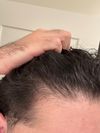
My hairline, I am only 23.
This conversation is about a user's experience with treatments for androgenic alopecia, including finasteride, dutasteride, RU, minoxidil, progesterone, melatonin, LLLT, oral minoxidil, and Pyrilutamide. They have tried many treatments over the course of two years without seeing much success, and they are considering getting a hair system as a last resort.
A 33-year-old experienced hairline improvement using finasteride and minoxidil, later stopping minoxidil while continuing ketoconazole shampoo. Initial side effects included shedding, reduced libido, and anxiety, but these resolved, leading to a full hairline recovery.
A woman with hair loss discovered she has thyroid cancer, which was found during an MRI and confirmed with an ultrasound. She advises others with symptoms to see a doctor and shares that her cancer was detected after her dog sniffed her neck and she experienced neck pain.
The conversation discusses severe hair loss, possibly due to telogen effluvium or male pattern baldness, lasting over three years. Suggested treatments include minoxidil, finasteride, and dermarolling, with a recommendation to consult a dermatologist.
The user noticed increased hair loss over the past three years and is seeking advice. A suggestion was made to consult a dermatologist or trichologist and consider blood tests, particularly for vitamin D levels, to address potential androgenetic alopecia (AGA).
Male pattern baldness (MPB) may be influenced by androgen receptors in scalp hair follicles and potentially poor blood flow. Transplanted hair is not immune to DHT, and factors like inflammation and scalp tension might also contribute to hair loss.
A user shared a 9-month hair loss treatment update using scalp micropigmentation (SMP), finasteride, minoxidil, derma pen, ketoconazole shampoo, and low-level laser therapy (LLLT), with plans for a hair transplant. Another person suggested increasing the dosage of finasteride and minoxidil and using a derma roller weekly.
Diffuse thinning is often due to androgenetic alopecia, and DHT blockers like finasteride are recommended. Treatments mentioned include minoxidil, finasteride, dutasteride, and RU58841, with emphasis on starting early and using a holistic approach.
Hair regrowth after telogen effluvium, with the user experiencing hair loss at the temples and regrowth after taking omega-3/fish oil tablets. Suggestions include consulting a dermatologist and considering supplements like Biotin, Zinc, and Vitamin D.
A female user is seeking feedback on using topical minoxidil on eyebrows due to eyebrow loss, as oral minoxidil hasn't worked and they avoid Latisse due to potential fat loss.
A 40-year-old woman with naturally thin and fine hair is seeking advice on over-the-counter treatments for hair loss and is open to prescription options for her upcoming doctor's appointment. She has tried biotin, Nioxin, various haircuts, and colors, and has had blood tests for deficiencies.
A 21-year-old is experiencing severe hair loss despite using finasteride and minoxidil, and plans to try dutasteride. Others share similar struggles and suggest various treatments like RU58841, spironolactone, and hair systems, while emphasizing the emotional impact of hair loss.
A 15-year-old experiencing severe diffuse thinning plans to use minoxidil, dermarolling, and possibly ketoconazole, with hopes to later incorporate finasteride. Concerns about starting finasteride too young and the need for a dermatologist consultation are discussed.
A 27-year-old male is experiencing hair loss and dandruff, despite trying various treatments like cortisone, diflucan, and natural remedies. He is considering shaving his head and is seeking advice on the "Big 3" treatment, which includes Minoxidil, finasteride, and RU58841.