Search
for
Sort by
Community Join
60-90 / 1000+ resultscommunity Best Sources for High Purity Ru58841
The conversation is about finding high-purity RU58841 solutions for hair loss treatment, with mentions of Anagenic, Selleckchem, MV Supplement, and rudirect.co.uk as potential sources. Users discuss their experiences and preferences regarding product quality and shipping.
community 3/9/26 to 7/5/26 results - Oral Min + Fin + GHK-Cu (SubQ)
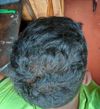
community 18, Experiencing Diffuse Thinning Since 8th Grade - Need Advice
An 18-year-old experiencing diffuse hair thinning since 8th grade seeks advice. They are concerned about having less hair than their 52-year-old father and are looking for treatment options.
community Wanting to try topical AHK-CU/GHK-CU
community Anyone here actually getting results with Low-Level Laser/Light Therapy (LLLT)
Finasteride has shown great results for hair loss. The discussion also inquires about the effectiveness and side effects of Low-Level Laser/Light Therapy (LLLT).
community 3yr Fin/Dut/Niz NW3+ —> NW1.5 Pictures with Writeup
A user improved their hair loss from NW3+ to NW1.5 over three years using a regimen of dutasteride, finasteride, Nizoral, biotin, and collagen. They experienced some side effects and adjusted dosages over time, and noted additional benefits like better skin and muscle gain.
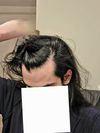
community What Norwood am I?
A 30-year-old male is experiencing hair loss and is concerned about his receding hairline, seeking advice on his Norwood scale classification. He is apprehensive about using Minoxidil and finasteride as treatments.
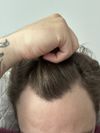
community Norwood scale ? 28m
A 28-year-old is assessing their hair loss on the Norwood scale, considering adding topical minoxidil and dermastamping to their current regimen of oral finasteride and minoxidil. They feel their hair loss is worsening and seek opinions on their condition.
community Is 8% ru58841 significantly stronger than 5%
A user increased their RU58841 treatment from 5% to 8% to combat hair loss and is questioning the effectiveness of the higher dosage. Another user shared their extensive hair loss treatment regimen, suggesting that while 8% RU58841 might not significantly change results, it's worth trying as individual responses vary.
community How life feels after replying to fin/dut
community 52 year old norwood 6 vellus to terminal, 5 months progress

community 31M: Assessing Norwood Scale After 8 Days Growth & Past Finasteride Use
A 31-year-old male considering returning to finasteride at a lower dose or using topical finasteride to assess his Norwood scale for a potential future hair transplant. He previously stopped finasteride due to side effects and has been shaving his head.
community Dr Gokhan Gur. 2nd HT - 1849 grafts. Focus on midscalp and crown
A user shared their experience with a second hair transplant by Dr. Gokhan Gur, focusing on the midscalp and crown with 1849 grafts. Their current treatment includes dutasteride, finasteride, oral and topical minoxidil, and Nizoral shampoo.
community The final nail in the coffin. PP405 is confirmed JXL069.
community Are these levels normal for a 22 year old Male
A 22-year-old male started taking finasteride a month ago and is seeing some progress in hair loss treatment. He is concerned about high estradiol levels but plans to continue the medication and consult an endocrinologist.
community 1 year Monthly Progress (Top Minox, Oral Fin, Vitamin D, Dermastamp)
community RU58841 5% is roughly equivalent to Dutasteride 2mg — here's why
RU58841 5% is theoretically equivalent to 2mg of dutasteride for hair loss treatment, with RU58841 offering higher potential but more variability due to absorption issues. Users discuss the effectiveness of RU58841 and dutasteride, with some preferring dutasteride for consistent results and others finding success with RU58841.
community How to test a shady AliExpress RU58441 in Europe
A user bought questionable RU58841 powder from AliExpress and seeks a way to test its composition in Europe. Another user suggests using Janoshik for testing.
community Why you can still look forward to PP405 and JXL-069
community 5 month results on the big 4 (Fin/Min/Niz/Derma).
The user shared their positive 5-month results using finasteride, minoxidil, derma rolling, and supplements like biotin, zinc, iron, and vitamin C. They provided before and after photos and mentioned applying minoxidil even when derma rolling.
community Switched to DUT from Fin after 30 months of no progress
community 2 month progress on oral min and dut
community Assembling a list of exceptional Norwood 6/7 cases, open for your contributions.
The conversation is about people with advanced hair loss (Norwood 6 or 7) who have seen significant hair regrowth using treatments like finasteride, minoxidil, microneedling, and RU58841. Nine cases were collected to motivate others to try these treatments despite advanced hair loss.
community Help in Germany to get recommended medicine
A user in Germany is seeking advice on obtaining Dutasteride, Minoxidil, and Biotin for hair treatment before a hair transplant. They face difficulties getting prescriptions and are concerned about delays due to required exams.
community Progress 1.25years M36 fin/min/ru
A 36-year-old man shared his 1.25-year progress using oral finasteride, oral minoxidil, RU58841, microneedling, nizoral, and LLLT for hair regrowth. He is thrilled with the results and considering a hair transplant for increased density.
community 26 months fin and min progress.
community I'm a 32 year old male with Norwood 3 with heavy diffuse thinning, I'm about to start my hair loss regiment. It goes as follows
A 32-year-old male with Norwood 3 and heavy diffuse thinning is starting a hair loss treatment including RU58841, Minoxidil, finasteride, derma rolling, vitamins, and possibly MK677, while cutting out most sugars from his diet. He plans to share progress photos and updates on his test levels.
community can someone confirm the dosage math for making RU58841
The conversation confirms that to make a 5% RU58841 solution, 1.5 grams should be added to 30 mL of KB Solution. The discussion involves calculating the correct dosage for hair loss treatment.
community M18,on minox 5% for 1.5 months,is this progress
An 18-year-old using 5% minoxidil topically and derma rolling weekly for 1.5 months shows visible hair growth progress. The user also addresses vitamin D deficiency and thyroid imbalance with medication.