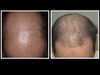
TWIST-1 gene's role in hair loss and potential as a treatment target. Inhibiting TWIST-1 may prolong hair growth and reduce hair follicle sensitivity to DHT.
Emerging hair loss treatments like PP405, a topical MPC inhibitor, show promise in activating stem cells for hair growth. The conversation seeks information on the development stages and accessibility of these treatments.
Pyrilutamide/KX-826 is being discussed for its effectiveness in hair regrowth, with some users reporting positive results, especially in early hair loss cases. Users have combined it with treatments like Minoxidil, and some experienced initial shedding before seeing regrowth.
UCLA's PP405 shows promise in reactivating dormant hair follicles for hair loss treatment but is still in clinical trials. Minoxidil and finasteride remain common treatments until PP405 becomes available.
The user has been using minoxidil foam and a dermaroller for three months to combat hair loss, with noticeable progress. They are seeking finasteride but face difficulties obtaining it in Germany.
Pyrilutamide did not show effectiveness in regrowing hair compared to a placebo, but it may still help maintain existing hair by preventing DHT from causing follicle miniaturization. Some users believe it could be beneficial when used with other treatments like minoxidil, finasteride, and dutasteride.
User's 2-month progress with hair loss treatment includes Ket 3x a week, Min 2x a day, Dut 0.5 every other day, Vit D 125mcg daily, and PRP once a month. Users discuss treatment effectiveness, side effects, and alternative solutions.
Setipiprant and Fevipiprant are questioned for their effectiveness in hair maintenance, with skepticism due to lack of convincing results beyond vellus hair growth. The user is satisfied with Minoxidil and Finasteride but is curious about the potential of DP2 inhibitors.
Minoxidil, dutasteride, and copper peptides are used in a tattooing method for hair regrowth, with some users noting better results compared to oral treatments. Copper peptides are considered to have minimal impact, but the method may reduce side effects.
A user with aggressive male pattern baldness found that topical melatonin significantly reduced their hair shedding to 1 or 2 hairs per day and noticed some thickening of side hair. They tried many treatments like finasteride and minoxidil with little success, but topical melatonin showed immediate results in reducing hair loss.
The user is considering continuing minoxidil and microneedling, possibly adding low-dose topical finasteride, and undergoing a large FUE hair transplant to improve hair appearance. They plan to use hair fibers for added density, aiming for a convincing cosmetic look rather than full density.
A user increased their RU58841 treatment from 5% to 8% to combat hair loss and is questioning the effectiveness of the higher dosage. Another user shared their extensive hair loss treatment regimen, suggesting that while 8% RU58841 might not significantly change results, it's worth trying as individual responses vary.
The user is unhappy with their hair transplant results, feeling the hairline looks unnatural, but most commenters reassure them it looks good and natural. Some suggest styling changes or focusing on hair care routines.
The conversation is about someone's three-year experience with irregular derma rolling, Minoxidil, and Redensyl for hair loss, hoping to thicken areas with fine hair.
The post and conversation are about the high cost and skepticism surrounding pyrilutamide as a hair loss treatment, with comparisons to minoxidil, finasteride, and RU58841. The original poster defends pyrilutamide's effectiveness and criticizes others for dismissing it without proper understanding.
The user experienced significant hair shedding in the second week of using pyrilutamide, more so than with finasteride and minoxidil, and reported a headache after the first application. They believe the treatment may be working but acknowledge it's too early to confirm results.
The conclusion of this conversation about hair loss is that the user "its_zi" has been using a combination of minoxidil, finasteride, dutasteride, and RU58841, along with microneedling, and has seen great results in regrowing hair. They plan to continue the treatment and consider a hair transplant in the future.
Researching the effectiveness of the hair loss treatment Pyril in comparison to other treatments such as Minoxidil, Finasteride, and RU58841. Replies suggest that users often fail to provide updates on their experience with Pyril.
The user is experiencing significant hair shedding after starting RU58841, despite using dutasteride and oral minoxidil for over a year without stabilization. Others suggest continuing the treatment as shedding can be a normal phase, but caution that RU58841 is unpredictable.
The user is trying a new hair loss regimen including Spirolactone, Finasteride, oral Minoxidil, microneedling, and various supplements. They are experiencing increased shedding and seeking advice on microneedling and treatment effectiveness.
RU58841 for hair loss, with users discussing sources, effectiveness, and side effects. Some users report side effects and question the long-term safety of RU58841.
This post and conversation are about the molecular mechanisms triggered by microneedling, specifically its effects on inflammation, tissue remodeling, epithelial proliferation, differentiation, and collagen synthesis. The discussion highlights the potential benefits of microneedling for hair loss treatment.
The conversation is about the use of peptide therapies for hair loss, specifically GHK-CU, ZN-Thymulin, and PTD-DBM. The user is seeking feedback on the effectiveness of these treatments from those who have tried them.
The user is seeking advice on hair transplant techniques and surgeons to reshape a natural widow's peak into a more rounded hairline, preferring long hair transplants with minimal scarring and maximum density. They are currently using finasteride and oral minoxidil, which have not been effective, and are considering various surgeons primarily in English-speaking countries and the EU, excluding Turkey.
The conversation discusses how different factors can stimulate type 1 and type 2 isoforms of 5-alpha reductase, which are enzymes linked to hair loss. Specific treatments mentioned include oral Dutasteride and topical Finasteride.
PP405 updates are seen as vague and lacking substance, causing frustration among users. Some users report positive effects from using minoxidil and dutasteride, while others remain skeptical about new treatments.
Essential oils like rosemary, thyme, lavender, and cedar wood in a carrier oil may effectively treat alopecia areata and potentially male pattern baldness by stimulating the scalp similarly to minoxidil. The user plans to try this routine and share results.
Carpronium chloride 5% is a hair growth treatment in Japan, considered less effective than minoxidil or finasteride. Some users report moderate success with it, but its efficacy is not well-verified.
Pyrilutamide phase 3 results showed little to no significant hair regrowth, but may be sufficient for maintaining current hair density. The user is unsure due to lack of recent discussions on pyrilutamide.