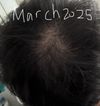
A human trial of verteporfin, a potential treatment for hair loss, with some users noting potential improvements in scarring and overall healing compared to control areas.
The user experienced rapid hair growth using Minoxidil, Finasteride, and microneedling, with some initial skin irritation from a retinal serum. They stopped microneedling due to limited results but may continue due to positive anecdotal evidence.
The conversation is about using liposomal finasteride for hair loss treatment, highlighting its cost-effectiveness and ease of preparation. It suggests using lecithin and crushed finasteride pills to make the solution, which has shown to be significantly more effective than other topical formulations.
The user is using a solution of Finasteride, Minoxidil, and Tretinoin, which increases Minoxidil's effectiveness. They are seeking a reliable source of Tretinoin to add to over-the-counter Minoxidil solutions.
The conversation discusses hair regrowth using oral minoxidil and RU58841, with visible baby hairs appearing after two months. One user questions the choice of RU58841 over finasteride.
The conversation is about creating a topical melatonin treatment for hair loss. Specific treatments discussed include Minoxidil, Finasteride, and RU58841.
User tried oral finasteride, topical finasteride, topical dutasteride, and RU58841 but experienced side effects. They discuss upcoming treatments like clascoterone, pyrilutamide, gt20029, and KY19382 as potential options.
A 24-year-old male has been using topical Minoxidil twice daily for nearly three months and is considering reducing the application to once daily. Users suggest adding finasteride or dutasteride for better long-term results and recommend combining treatments like microneedling, ketoconazole shampoo, and tretinoin for maximum effectiveness.
The user used Kirkland brand minoxidil foam twice daily for a year and noticed initial progress, but feels they might be losing progress or experiencing shedding. They are considering starting finasteride but prefer to avoid it and are seeking hair styling advice.
The conversation is about a user experiencing positive hair regrowth results after using finasteride, minoxidil spray, dermapen, and low-level light therapy (LLLT) for four months. The user recommends using a specific device for LLLT and mentions using the Hims spray for finasteride and minoxidil.
The user is considering adding Pyrilutamide or Alfatradiol as a topical treatment for hair loss after oral Finasteride and Dutasteride became less effective. Other users suggest Pyrilutamide for its safety profile, while one user shares positive experiences with RU58841 for reducing scalp itch and improving hairline.
The user mixes their own RU58841 solution and found that increasing the ethanol content improved absorption and reduced scalp itching. A study on minoxidil showed that penetration increased with higher ethanol concentrations, reaching maximum penetration at 90% ethanol.
A 21-year-old is using a combination of topical finasteride, topical and oral minoxidil, a liquid multivitamin, collagen powder, liquid biotin, microneedling, and red light therapy to address hair thinning. They are cautious about side effects and unsure if their hair loss is due to DHT or past brushing habits.
A 24-year-old shared six months of progress using 1mg finasteride daily and topical minoxidil twice daily, reporting improved hairline and temples with no side effects. The user experienced initial shedding but noted significant regrowth and no erectile dysfunction issues.
A 37-year-old man treated his hair loss with 0.5mg finasteride every other day and 5% minoxidil twice daily for 5 months, reducing finasteride from 1mg due to side effects. His hair improved significantly, with positive changes visible from all angles, and he experienced no more side effects after the dosage adjustment.
The conversation is about using adenosine, finasteride, and minoxidil for hair loss treatment. The user ordered a 0.75% adenosine solution and is currently using finasteride 1mg and minoxidil 5%.
Significant hair regrowth was achieved using a topical combination of 0.3% finasteride and 6% minoxidil, with weekly dermastamping and ketoconazole shampoo, without side effects. Others suggested additional treatments like red light therapy and PRP.
Oral minoxidil and finasteride are the main treatments for hair loss, with microneedling as an additional method. Tretinoin gel is not necessary with oral minoxidil but can be used for skincare.
The user is experiencing scalp itching from a PG ethanol base in their hair loss treatment, which includes 0.025% finasteride and 2.5% minoxidil, and is seeking alternatives without PG or ethanol. Suggestions include Zeuss non-PG foam and Ulo, which do not use PG or hydrocortisone.
This conversation discussed the potential for a hair loss treatment alternative to minoxidil, with many users debating the economic and health implications of such an option. Some suggested that finasteride could be used as an alternative, while others argued that this would ultimately not benefit pharmaceutical companies due to their reliance on planned obsolescence.
The conversation is about someone using minoxidil, biotin, a laser cap, and a derma roller for hair loss, and considering finasteride. Some users are skeptical about the treatments, while others advise patience for results.
The conversation is about a person using dutasteride and minoxidil for hair loss, considering adding RU58841 and PP405 for more density. They are seeking advice on using these treatments and exploring other options like GT20029.
The user is using Minoxidil 5% with procapil spray and oral Minoxidil 2.5mg daily, and plans to add finasteride 1mg. They accidentally ordered a Minoxidil solution with finasteride 0.1% and are seeking advice on which to use.
The user is undergoing Mesotherapy and Low-Level Laser Therapy for hair loss, with plans for multiple sessions. They are also using oral finasteride, topical minoxidil, dutasteride, and hair fibers.
A user was prescribed betamethasone dipropionate spray for a receding hairline, which caused skin peeling and depigmentation. They stopped using it and are considering alternatives like BPC-157/TB-500 for healing.