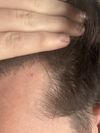
People are discussing their experiences with kx-826 (pyrilutamide) for hair loss, using concentrations of 0.5% and 0.9%. They are sharing personal results and progress with this treatment.
The user has been using topical finasteride and minoxidil for a month to address hair thinning. They are experiencing shedding but have noticed small hairs on their temples.
Minoxidil, finasteride, and RU58841 are discussed as treatments for hair loss, with excitement around a new drug, PP405, and a reformulated oral minoxidil in trials. Concerns about cost, side effects, and long-term use are also mentioned.
A user plans to order Pyrilutamide for hair loss after losing ground on finasteride. Another user advises against buying from Hairliciously, suggesting Amazon instead.
Follica's preferred microneedling protocol for hair growth, which includes needle depth, frequency and movement parameters as well as the use of topical treatments such as minoxidil and finasteride.
The conversation discusses the effectiveness of RU58841 and pyrilutamide for hair loss treatment. It seeks personal success or failure stories and scientific data on these treatments.
Quitting RU58841 after over two years reduced scalp itching and inflammation, despite concerns about losing hair gains. The user continues using finasteride and oral minoxidil.
User shares progress after 2 months using finasteride, nizoral shampoo, and microneedling for hair loss. Comments discuss early treatment, results, and differing opinions on starting treatments.
The user has seen positive results after over six months using 0.05% topical finasteride, 5% minoxidil, 50mg/ml RU58841, weekly needling, and twice-weekly ketoconazole shampoo for hair loss. They express gratitude for the support from an online community and are open to questions about their treatment.
The user has been using a topical combination of finasteride and minoxidil for six months, with some progress noted. They also use Nizoral twice a week and plan to start microneedling.
The user is using finasteride (1 mg daily), topical minoxidil, and microneedling with a derma stamp for hair loss. They reported shedding stopped and new hair growth appeared after a few months, with no side effects.
A 78-year-old man regrew hair after suffering burns, suggesting that injury-induced healing processes might trigger hair growth. Microneedling and other treatments like minoxidil and finasteride are discussed as potential methods to stimulate similar regrowth.
The user shared progress pictures after three months of using RU58841, finasteride, and OM (oxidative stress modulators) for hair loss treatment. They haven't noticed much change but are seeking feedback on their results.
A user shared their 9-month post-hair transplant results with 4600 grafts, using only Nourkin hair vitamins, Vitamin D, and B12, and expressed satisfaction. The replies debated the necessity of medications like finasteride and minoxidil for maintaining hair health.
A user's progress with hair loss treatments over 5 months, using topical finasteride (0.3%) and minoxidil (6%), as well as weekly microneedling sessions; other users have asked questions about the results and offered compliments.
The conversation discusses Dr. Blake Bloxham's experiment with Verteporfin for hair loss, with one person suggesting more doctors should try it as it seems beneficial. Another comment notes that results at 4-5 months were not very impressive.
Low-Level Laser Therapy (LLLT) is considered expensive and may not provide significant benefits, with some users suggesting alternatives like finasteride, minoxidil, and microneedling. Many users report limited success with LLLT and similar treatments, recommending more proven options instead.
PP405 is a new topical treatment for hair loss, showing promise in trials but still requires finasteride for maintenance. There is skepticism about its effectiveness and safety, with concerns about needing finasteride to maintain results.
A poem humorously suggests hope for a new hair loss treatment, PP405, while users debate the effectiveness and side effects of current treatments like Finasteride. Concerns are raised about Finasteride's side effects, especially for young users, and skepticism about new treatments is expressed.
A man shared his 4-month progress using finasteride, minoxidil, and microneedling for hair loss treatment. He experienced positive results without side effects, and plans to continue the regimen.
A 24-year-old has been using finasteride, oral minoxidil, and microneedling for hair loss. They reduced minoxidil due to heartburn and are considering a hair transplant.
The post discusses a new hair loss treatment involving an improved pyri formula that has shown promising results, including thicker hair and a restored hairline, with minimal side effects. The author seeks investors to collaborate with Kintor or acquire the pyri patent, offering equity rewards and complimentary samples for verification.
A user shared progress pictures after 7 months of 5% topical Minoxidil and 3 months of 1000mg daily Pumpkin Seed oil. Replies suggest adding finasteride for better results.
A new topical treatment, PP405, shows promising results for hair regrowth, potentially outperforming existing treatments like finasteride and minoxidil. However, it may still need to be combined with DHT blockers for optimal results, and its long-term effectiveness remains uncertain.
People who had posted about using pyrilutamide for hair loss, but did not return with an update; the potential side effects of pyrilutamide, RU58841 and other treatments such as minoxidil and finasteride were discussed.
A 40+ year old is regrowing their hairline using microneedling, minoxidil, tretinoin, low-level laser therapy, massages, and Nizoral, without using finasteride or dutasteride. They noted progress in hair growth below a birthmark, an area that hadn't seen growth since their teenage years.
The user increased their steroid dosage and noticed hair shedding, so they adjusted their regimen by reducing steroid doses and adding oral dutasteride. They are also experimenting with combining RU-58841 and KX-826/pyrilutamide in minoxidil to address hair loss.
Spraying pyrilutamide on the crown area shows noticeable improvement compared to using a dropper. Applying directly to the vertex is challenging without wasting the product.