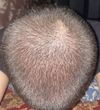
Exosomes combined with fractional picosecond laser treatment were effective in treating androgenetic alopecia and promoting repigmentation in white hair patches. The role of exosomes in hair repigmentation, particularly in conditions like poliosis, is not well-studied.
PP405 is a new hair loss treatment in phase 2 trials that may promote hair growth by increasing lactate production and activating hair follicle stem cells. It could potentially replace hormone-disrupting treatments like Minoxidil and finasteride.
Hair loss treatments discussed include Minoxidil, Finasteride, and RU58841. HMI-115, a monoclonal antibody drug, is in phase 1 and 2 trials for different conditions, but its availability on the gray market is unlikely due to high production costs.
The conversation discusses using NAC and quercetin as supplements for hair loss, with some users also mentioning finasteride. NAC is highlighted for its potential benefits, but concerns about its safety and absorption are also raised.
The conversation is about a user trying a new hair loss treatment, Ruxolitinib, alongside their existing regimen of finasteride, minoxidil, ketoconazole shampoo, and microneedling. They plan to apply Ruxolitinib to their temples daily for 1-2 months.
The conversation is about finding the optimal concentration of topical melatonin for hair loss treatment. The user is considering making their own solution and is unsure whether a higher concentration is more effective for deactivating prolactin receptors.
The conversation discusses how to mix pyrilutamide for hair loss treatment, suggesting a mixture of 500mg pyrilutamide with 70% ethanol and 30% propylene glycol, and a potential application dose of 1mL. The user has not personally used pyrilutamide but has researched its preparation and application based on others' experiences.
L. reuteri, a probiotic, is being explored for its potential benefits in treating androgenic alopecia, possibly enhancing finasteride's effects and reducing inflammation. The user combines this with finasteride, oral minoxidil, and other supplements, noting some improvement in hair loss.
The user started using topical latanoprost and dutasteride, experiencing significant hair shedding and scalp itchiness, possibly due to an allergic reaction. They are considering stopping the treatment if the shedding is linked to an allergy.
The user experiencing diffuse hair loss is using various treatments including RU58841, finasteride, minoxidil with tretinoin, anti-hair loss shampoo, and microneedling, and is considering adding peptides TB500, BPC157, and GHK-Cu. They have low growth hormone levels and are questioning its impact on hair loss, while another user suggests androgenic alopecia and androgens are likely the main cause of hair loss.
The launch of Pyrilutamide as a potential hair loss treatment, with people discussing whether it is better than treatments like finasteride and minoxidil. Some participants have also discussed the risks associated with importing drugs from China.
Hair regrowth treatment involving 3aHSD enzyme shows 6% improvement in 18 weeks. Sulforaphane, L-Menthol, and Dexpanthenol are potential ingredients for new hair loss solution.
The user is experimenting with a zinc sulfate and B6 topical solution called "Zix" for hair loss, alongside using a zinc oxide scalp mask and low-level laser therapy (LLLT). They report minimal hair loss after three months of use and are seeking feedback from others who have tried similar treatments.
The user is experiencing irritation from using PG with RU58841 and is seeking alternative solutions like K&B in the UK. They report redness, itchiness, and flaky skin from the current treatment.
Comparing the effectiveness of RU58841, Pyrilutamide and CB-03-01 as treatments for hair loss, with people discussing different aspects such as binding affinity, time of inhibition, safety data and cost.
A woman is frustrated with her hair loss and the slow, ineffective healthcare system in Canada. She has tried treatments like minoxidil, doxycycline, and kenalog injections, but continues to experience painful inflammation and hair loss.
Kintor Pharma successfully dosed the first patient in a Phase II trial for KX-826 for acne vulgaris. Users are more interested in results for male pattern baldness (MPB).
AMP-303 and AMP-601 are new hair loss treatments targeting dermal papilla cells, with AMP-303 showing early efficacy in transitioning vellus hairs to terminal hairs after one injection. Further clinical trials are planned, and these treatments are seen as promising due to their biologic approach and less frequent application compared to daily treatments.
Hair follicle stem cells remain in bald individuals, but progenitor cells do not, raising questions about hair regrowth claims by Pelage. PP405 is discussed as a potential treatment, with skepticism about its effectiveness compared to existing treatments like Minoxidil and Finasteride.
The user reported healthier, firmer, and thicker hair follicles with minimal regrowth at the front after using Regenera Activa, topical finasteride, minoxidil, tretinoin, caffeine solution, and vitamin D supplements. Hair loss has stabilized with no side effects.
The conversation is about a user seeking information on a clinical trial by Amplifica - Scube3 for Androgenetic Alopecia (AGA). The user is unsure if it's a formal phase 1 study.
KX-826 (Pyrilutamide) 0.5% and 1.0% solutions showed promising results in increasing hair count for male androgenetic alopecia, with the 0.5% dose slightly outperforming the 1% dose. The treatment was well-tolerated with no sexual side effects, but skepticism remains due to past inconsistencies in trial results.
The user added P5P (vitamin B6) to their shampoo to reduce scalp itch, which improved significantly. They have been using finasteride for hair loss but are exploring additional treatments like topical antiandrogens and prolactin inhibitors.
Pyrilutamide's systemic degradation is unclear, unlike fluridil, which becomes inactive in the body. The discussion focuses on whether pyrilutamide shares this property.
A user shared progress pictures 1.5 months after a hair transplant of 3500 grafts, using oral finasteride, topical finasteride, minoxidil, and vitamins. They are concerned about potential shock loss and the thinning appearance.
Users discussed hair loss treatments, specifically 0.1% latanoprost with melatonin, caffeine, and biotin. Other treatments mentioned include minoxidil, finasteride, RU58841, and microneedling.
Increased scalp itching during shedding phases while on finasteride treatment may coincide with hair regrowth and recovery. This suggests that itching might not always indicate continued hair loss and could encourage persistence with the treatment.