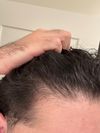
The conversation discusses using Tretinoin for treating androgenic alopecia. Specific treatments mentioned include Minoxidil, Finasteride, and RU58841.
PP405, a topical LDH inhibitor, has shown to stimulate hair follicle stem cell proliferation in humans with moderate hair loss. They are advancing to more detailed trials this year.
The user experienced hair thinning, possibly due to long COVID and prediabetes, and saw regrowth after dietary changes and using biotin shampoo. They are taking vitamins and noticed significant hair regrowth, especially at the widow's peak.
The conversation discusses the potential of a new hair loss drug, CB-03-01, with users sharing their experiences and seeking advice on dosages and application methods. One user mentions using topical finasteride, minoxidil, dermarolling, and a clean diet for hair maintenance but is interested in CB-03-01 due to side effects from finasteride.
A 30-year-old with diffuse thinning and a balding crown is using a treatment regimen of a 2-in-1 pill containing finasteride, minoxidil, and biotin, along with various supplements. After two weeks, no side effects have been experienced, and updates with pictures will be posted monthly.
A 35-year-old shared a 2-month update on their hair transplant of 3153 grafts, noting redness, itching, and some pimples, while using finasteride for over 12 years to maintain hair. Users discussed the effectiveness and timing of starting finasteride, with some suggesting consulting a doctor for young individuals considering the treatment.
Clascoterone 5% topical solution shows promise for treating male-pattern hair loss by blocking DHT at the follicle without systemic absorption, potentially offering fewer side effects than oral treatments like finasteride. While results are promising, long-term safety and effectiveness need further study, and it may serve as a starting point for developing more effective treatments.
Adding an LLLT laser cap to a routine of finasteride, minoxidil, and ketoconazole shampoo significantly reduced hair shedding from 200+ hairs a day to around 80, improving scalp health. The user attributes the laser cap as the key factor in stabilizing hair loss after two years of using other treatments.
After a 1,200 graft hair transplant and using minoxidil and finasteride, the user's hair initially improved but later thinned and changed texture. They are seeking advice on this issue and have a dermatologist appointment scheduled.
Gut microbiome imbalances can cause scalp inflammation and affect hair follicles, potentially leading to hair loss. Treatments include finasteride, peptides like BPC-157, TB-500, KPV, and lifestyle changes such as diet and exercise.
Hair loss from seborrheic dermatitis can be temporary. Treatments discussed include Minoxidil, finasteride, and RU58841, along with collagen and biotin supplements.
An 18-year-old experiencing hair loss and seborrheic dermatitis has tried finasteride, dutasteride, and various shampoos without success. They are considering anti-androgens like RU58841 and KX-826 for oil control and dandruff reduction.
Seborrheic dermatitis can cause hair loss, and treatments like ketoconazole shampoo, topical steroids, and oral antifungals may help. Some consider using finasteride and minoxidil for hair loss despite dermatitis.
Baldness is difficult to cure because current treatments like finasteride, dutasteride, and minoxidil only prevent hair shedding, and new developments are mostly ineffective. Botox shows potential in aiding skin regeneration and hair growth, but maintenance therapy with treatments like dutasteride and minoxidil may still be necessary.
PP405 is a potential hair loss treatment undergoing trials, with discussions on its effectiveness and comparison to existing treatments like finasteride and minoxidil. There is skepticism about its status as a cure, with hopes for future advancements in genetic treatments like CRISPR.
Diffuse thinning can result in varied regrowth, with some users experiencing better results at the hairline and others at the crown. Treatments mentioned include finasteride, minoxidil (oral and topical), RU58841, microneedling, and dermarolling.
A quercetin-encapsulated and polydopamine-integrated nanosystem (PDA@QLipo) shows promise for treating androgenetic alopecia by reshaping the perifollicular microenvironment, outperforming minoxidil in hair regeneration. The nanosystem promotes cell proliferation, hair follicle renewal, and recovery by scavenging reactive oxygen species and enhancing neovascularity.
User tried various hair loss treatments with limited success. RU58841 was effective but caused side effects, now trying Eucapil and continuing Finasteride.
A user is participating in a phase 3 trial for Clascoterone, a topical acne medication that may stimulate hair growth, and will share results after 6 months. They will have a section of their hair shaved and marked with a tattoo for the study.
The conversation discusses severe hair shedding and thinning, with the original poster using finasteride, oral minoxidil, and other supplements without improvement. The discussion highlights the possibility of telogen effluvium and the importance of addressing potential underlying health issues, such as stress and gut health, rather than assuming diffuse unpatterned alopecia (DUPA).
The user noticed increased hair loss over the past three years and is seeking advice. A suggestion was made to consult a dermatologist or trichologist and consider blood tests, particularly for vitamin D levels, to address potential androgenetic alopecia (AGA).
The user discusses their hair loss experience, exploring various hypotheses including thyroid levels, vitamin D, DHEA, nutritional deficiency, diabetes, seborrheic dermatitis, lack of nutrition to hair follicles, chronic inflammation, female pattern hair loss causes, cortisol, and prolactin levels. They are currently using finasteride, beta-sitosterol, and have tried topical dutasteride and microneedling therapy.
A user is interested in seeing scalp tattoos as a response to hair loss, specifically looking for creative designs rather than scalp micropigmentation. They are considering this approach for their own Norwood 5 hair loss situation.
The user is experiencing severe hair loss despite using finasteride for 10 months and suspects scalp buildup might be contributing. Suggestions include using ketoconazole shampoo, consulting a dermatologist, and trying terbinafine cream.
The user is struggling with seborrheic dermatitis and plans to try ciclopirox olamine after finding ketoconazole too drying. They are also using finasteride daily.
A potential non-invasive topical treatment targeting the WNT Signaling Pathway for hair regeneration is being researched, with positive results on human hair follicle cells. Current effective treatments for hair loss include Minoxidil, finasteride, and hair transplantation.
A user claims to have reversed baldness, possibly due to telogen effluvium recovery after weight loss. Others discuss the potential success of using GHK-Cu for hair regrowth.
The conversation discusses hair loss, with users suggesting treatments like ketoconazole shampoo, finasteride, and dutasteride. Symptoms like burning and tenderness are mentioned, with recommendations to see a dermatologist for potential scarring alopecia.