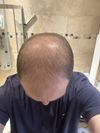
Minoxidil and finasteride are being considered for hair loss due to seborrheic dermatitis and male pattern baldness. The user is also using ketoconazole and zinc pyrithione shampoo.
A 35-year-old man shares his one-year progress using 1.25 mg oral finasteride and 5% topical minoxidil for hair loss, with no side effects and slight improvement in his front hairline. He also uses keto shampoo twice a week and a 0.5mm roller weekly.
A user shared their 5-month hair loss treatment progress using 1mg finasteride, topical minoxidil, biotin, Nizoral shampoo, and weekly dermarolling. Replies noted the user's hair was already thick, and there was interest in trying topical minoxidil.
The user shared progress pictures after a year of treating hair loss with 5% minoxidil, then a combination of minoxidil/finasteride topical, and microneedling at 1.5mm bi-weekly. They plan to switch to oral finasteride and more frequent microneedling at a shallower depth while continuing the current regimen.
After 6 months of adding topical finasteride to minoxidil, the user saw significant hair improvement, with noticeable results starting from the 5th month. The treatment included 5% minoxidil, 0.5 mg topical finasteride, and supplements like omega-3, minerals, and vitamins, with minimal side effects reported.
Adding melatonin to minoxidil can improve hair growth and thickness, and it's easy to use with minimal side effects. The recommended concentration for melatonin in the solution is between 0.05% and 0.2%.
The user "mspamnamem" shares their progress with a hair loss treatment stack consisting of finasteride, minoxidil, biotin, and microneedling. They express satisfaction with their progress and hope for continued improvement. Other users in the conversation provide encouragement and share their own experiences.
The conversation is about a person starting a hair loss treatment regimen including 1mg finasteride, 2ml minoxidil twice daily, dermarolling with a 1mm needle, and taking vitamin C, biotin, and vitamin D3. They plan to share their results in 6 months to a year.
A user's progress with hair loss treatments including minoxidil 5% twice daily, dermaroller 1.5mm, ketoconazole shampoo 2%, and a buzz cut; other users were surprised by the results as no finasteride was included in the treatment plan.
PP405 targets hair follicle stem cells differently than exercise-induced lactate, suggesting exercise alone may not replicate its benefits. Minoxidil and finasteride are recommended alongside exercise for hair regrowth, with additional suggestions like spicy food and infrared exposure.
A user's progress with hair loss treatments over 5 months, using topical finasteride (0.3%) and minoxidil (6%), as well as weekly microneedling sessions; other users have asked questions about the results and offered compliments.
A 51-year-old man uses 1mg oral finasteride daily, 5% topical minoxidil twice daily, dermarolling, and Nizoral twice a week for hair regrowth. He shows significant progress after two months and is happy with the improvement.
Hair regrowth treatment involving 3aHSD enzyme shows 6% improvement in 18 weeks. Sulforaphane, L-Menthol, and Dexpanthenol are potential ingredients for new hair loss solution.
The user experienced noticeable hair regrowth, especially at the hairline, after using Minoxidil, microneedling, vitamins, and specific shampoos for 2-3 months. They are considering adding finasteride but are hesitant due to potential side effects.
User shared 12-month hair loss progress using oral minoxidil, oral dutasteride, and 2% ketoconazole shampoo. They detailed their medication regimen and dosages.
The user is happy with hair regrowth after 5 months using topical minoxidil twice daily, oral finasteride once daily, derma stamping weekly, and Watermans shampoo. They noticed darker hair and stopped using creatine, suspecting it worsened hair loss.
A user's successful 4-month hair growth progress using Hims spray with 6% Minoxidil, 0.3% Finasteride, and a .25mm dermaroller twice a week. The user applies the spray once a day and has not experienced any side effects.
The user is generally happy with their hair transplant results but has concerns about graft density and placement, particularly on the left temple and hairline. They are using finasteride and minoxidil inconsistently, plan to add Priorin, and are considering microneedling and PRP sessions for future care.
The user experienced significant hair regrowth using a combination of oral minoxidil (5mg) and dutasteride (0.5mg) along with monthly mesotherapy injections. Despite the progress, the user plans to proceed with a hair transplant to address a receding hairline that hasn't fully responded to the treatment.
A user reports positive results with finasteride, noticing thicker hair and regrowth at the temples and hairline. Another user shares their experience with minoxidil, noting small hairs that haven't grown, and plans to add finasteride to their regimen.
Mallia Aesthetics has developed MAL-838, a hormone-free product derived from sCD83, which stimulates hair growth without disrupting the skin microbiome. sCD83 promotes hair growth by activating hair follicles and preventing cell death, offering a localized treatment without systemic side effects.
A user shared their 6-month update on hair loss treatment, using daily Dutasteride, oral and topical Minoxidil, Ketoconazole shampoo, topical Finasteride, dermastamping, and PRP treatments. They reported improved hair quality but no significant regrowth or density increase, and plan to continue the regimen for another year before considering a hair transplant.
A 20-year-old has been using finasteride and minoxidil tablets for over six months with minimal hair improvement. They also use topical minoxidil twice daily and recently started derma rolling, questioning if a hair transplant is necessary.
PP405 shows promise in treating severe hair loss, with 31% of users experiencing over 20% hair density increase in four weeks, faster than minoxidil and finasteride. Some users are skeptical about the results' significance and long-term efficacy.
A user discussed using finasteride for six months to treat hair loss, noting minimal side effects and uncertain hair regrowth. They mentioned not using minoxidil and considering future options like hair transplants.
User started balding at 16 and began treatment at 18, using RU58841, minoxidil, derma rolling, and peptides. After 6 months, they experienced significant hair regrowth and are happy with the results.
The user experienced significant hair regrowth after six months of using oral Finasteride (1mg) and Minoxidil (2.5mg) nightly, with no side effects. They also used dermastamping and biotin, emphasizing consistency and a healthy lifestyle.
A 26-year-old man shared his positive results after 10 months of treating male pattern baldness using a regimen that includes Estradiol Enanthate, DHPA, Bicalutamide, Dutasteride, oral and topical Minoxidil, and a dermaroller. He experienced mild gynecomastia and reduced body hair as side effects but was satisfied with the outcome.
The user has been using finasteride for 7 months, along with dermarolling, Nizoral shampoo, vitamins, and minoxidil spray and oral minoxidil. They experienced variable hair shedding and improvement, and are concerned about the normalcy and future of their hair condition.