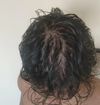
PTD-DBM is being explored for hair regrowth by targeting CXXC5, with clinical trials expected after pre-clinical studies. Users express anticipation and skepticism about its effectiveness.
Many are unaware of effective male pattern baldness treatments like finasteride and minoxidil, often opting for ineffective remedies. Educating others on proven treatments and potential side effects is crucial.
The conversation discusses personal experiences with hair loss and highlights the potential impact of anemia and nutrient deficiencies on hair health. Treatments mentioned include changing shampoo/conditioner, taking MSM, collagen, hyaluronic acid, astaxanthin, B12, folate, and bovine blood capsules.
A 24-year-old experiencing severe hair thinning has been using minoxidil for 2 years but is still shedding hair. A doctor recommended plasma treatment over a DHT blocker for better and healthier results.
Methylsulfonylmethane (MSM) is not a treatment for male pattern baldness but can accelerate hair growth and thicken miniaturized hairs, with the side effect of increased hair growth all over the body. The user asks others to share their experiences with MSM.
New product Tomorrowlabs HSF targets hair loss through HIF pathway indirectly by removing scalp iron. Minoxidil and Stemoxydine also relate to HIF pathway.
Iron or vitamin deficiencies can lead to decreased hair diameter, not just androgenetic alopecia. Treatments discussed include Minoxidil, finasteride, and RU58841.
A breakthrough in hair follicle cultivation using induced pluripotent stem cells (iPSCs) has been achieved, producing large hair follicles suitable for transplantation. Clinical trials for this hair multiplication technology are planned in partnership with Yinguan Biotechnology.
The conversation discusses hair loss treatments, focusing on vitamin D and B12 deficiencies, and mentions using finasteride. It also suggests getting a biopsy to differentiate between MPB and other conditions.
The importance of lighting when taking progress pictures and discussing hair growth, as dramatic changes can be seen even without real improvements. The users also discussed methods such as Fin min and dermarolling for treating hair loss.
The conversation is about using vitamin C and Magnesium L-Threonate for hair growth by reducing DHT binding to dermal papilla cells. The original post about vitamin C's pH levels and sebum control was possibly removed by a moderator.
A method for treating androgenic alopecia using minoxidil, antiandrogens, exercise, and cold exposure to promote hair growth. Environmental factors and lifestyle changes, like diet and exercise, can improve treatment effectiveness.
Vitamin D may counteract DHT and help with hair growth, as seen in mice and human hair cultures. Some users discuss using Vitamin D, magnesium, and other supplements for hair health, while others humorously note the success in mice.
The user reports that MSM supplementation has thickened their hair strands while using finasteride and topical minoxidil. They also take zinc, copper, B-complex, vitamin C, vitamin D3, and K2, and plan to add omega-3, magnesium, astaxanthin, and pterostilbene.
Using a silicone scalp massager may help with dandruff and potentially improve the absorption of minoxidil and finasteride. The user has noticed peach fuzz growth after using minoxidil for over a month and finasteride for almost a month.
This post and conversation are about the effects of Minoxidil on renal electrolytes transport in the Loop of Henle. The replies show a lack of interest and a brief summary stating that rectal Minoxidil electrolytes are bad.
HMI-115, a potential treatment for hair loss that can reverse miniaturization and make individual hairs thicker, as evidenced by data from macaques given the treatment and one subject in the phase I trial.
The user is treating hair loss with dermarolling, a laser helmet, scalp massages, and Nizoral. They stopped using minoxidil and finasteride and are considering pumpkin seed oil and sulforaphane.
The user is frustrated with ongoing hair loss despite using oral finasteride and topical minoxidil. They are considering adding magnesium to their diet and exploring other treatments like micro-needling and keto shampoo.
A person is struggling with hair loss despite using finasteride and minoxidil, considering dutasteride and magnesium supplements. They are advised to be patient, consider a hair transplant, and check for thyroid issues.
The conversation discusses the theory that scalp fibrosis contributes to male pattern baldness (MPB) by increasing DHT concentration, and mentions treatments like Minoxidil. The user seeks opinions on the theory and the effectiveness of scalp massages.
The safety of combining alfatradiol and fluridil with finasteride as a potential treatment for male pattern baldness, which is approved in the European Union. Other treatments such as minoxidil and RU58841 were also discussed.
Minoxidil increases blood supply to the scalp, strengthening dormant follicles and extending the growth phase, but may increase scalp activity that can be countered with DHT blockers. Women experiencing side effects from finasteride or dutasteride for hair loss might consider alternatives like estrogen, especially if on birth control.
A satirical post where someone claims to have developed a radioactive isotope scalp serum using Polonium-210 that outperforms Minoxidil and finasteride for hair regrowth. The serum reportedly stimulates DNA repair in hair follicles, leading to significant hair density increase, but the post is met with skepticism and concerns about safety.
Minoxidil 0.5% MMP® showed better results in parietal-vertex regions for less advanced female pattern hair loss compared to Minoxidil 5%. MMP® with Minoxidil can improve the quality of life for these patients.
Vitamin D deficiency is linked to hair loss, and supplementation with vitamin D can improve conditions like androgenic alopecia and telogen effluvium. Users discussed various dosages of vitamin D, emphasizing the importance of getting blood tests to determine the appropriate amount.
Microneedling may enhance hair loss treatment by increasing the effectiveness of topical minoxidil, especially for those lacking the necessary enzyme to activate it. It might also work by triggering growth factors and improving topical absorption.
A 28-year-old male experienced significant hair regrowth over 8 months using 1.25mg of finasteride daily, without minoxidil or micro needling. He also took vitamin D3, K2, magnesium, and a B100 complex, reporting increased libido as a side effect.
Stress can lead to hair loss by affecting hair-follicle stem cells, and this loss is harder to recover from if one has male pattern baldness (MPB). Treatments like finasteride and minoxidil are used to address hair loss, but stress-related hair loss differs from androgenic alopecia.