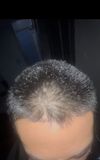
The user experienced reduced hair loss using grey-market KX-826 alongside Minoxidil foam, achieving better results with Minoxidil liquid but restricted to foam due to an allergy. Initial side effects included shortness of breath, racing heart, and dizziness, which subsided after the first week.
A user is concerned that prolonged use of valisone (betamethasone) and clotrimazole solution for scalp dermatitis may be causing hair thinning and loss. They noticed thinning in the area where the solution was applied.
The post discusses using at-home Dutasteride mesotherapy for hair loss, combined with topical minoxidil, microneedling, and a red laser cap. The user reports initial shedding, thicker hair, and a temporary dip in libido as side effects.
Increasing the sult1a1 enzyme on the scalp may improve response to topical minoxidil. The user suggests using a baking soda solution, DMSO, and tretinoin to enhance enzyme activity and minoxidil effectiveness.
A 49-year-old user shared progress pictures after six months of using oral finasteride (1mg), oral minoxidil (2.5mg), and ketoconazole shampoo twice a week, reporting no side effects.
The user experienced side effects like watery semen, erection problems, and decreased libido from finasteride, which resolved after stopping it. They are considering dutasteride mesotherapy as an alternative, as advised by their dermatologist, and are concerned about potential side effects.
The user experienced aggressive hair loss despite using oral finasteride and minoxidil, with additional issues like dandruff and eyebrow hair loss. They are considering switching to oral minoxidil and dutasteride due to scalp inflammation and lack of improvement.
The conversation discusses hair loss treatments, specifically Breezula, Minoxidil, finasteride, and RU58841. Participants express curiosity about Breezula's safety and its steroidal nature.
OP struggles with scalp flakes causing hair loss and has tried Selsun Blue, Ketoconazole, and ZPT Shampoo without success. Suggestions include using salicylic acid shampoo, shaving the head, using Nizoral, and combining treatments like Minoxidil and finasteride.
A user reported significant hair improvement using oral minoxidil, Rogaine 5%, and spironolactone but experienced worsening PMS. They seek advice on managing the PMS symptoms.
The conversation discusses the theory that scalp fibrosis contributes to male pattern baldness (MPB) by increasing DHT concentration, and mentions treatments like Minoxidil. The user seeks opinions on the theory and the effectiveness of scalp massages.
Minoxidil's effectiveness varies due to differences in sulfotransferase enzyme levels in the scalp, affecting people with conditions like ASD, liver disease, and androgenic alopecia. Treatments like topical tretinoin, microneedling, and using minoxidil sulfate instead of regular minoxidil can improve results for those with low enzyme levels.
User is experiencing increased sebum, dandruff, and acne after taking a supplement containing biotin, iron, zinc, and calcium pantothenate along with finasteride. They are questioning if biotin is the cause and whether they should stop taking it.
A person with Alopecia Areata on their beard is using CB-03-01 and oral minoxidil for treatment. Some users question the effectiveness of CB-03-01 for beard hair, suggesting that minoxidil alone may be responsible for any observed hair growth.
Minoxidil is harmful to pets, especially cats, if they contact it. Users recommend switching to oral minoxidil or taking precautions like washing hands and using head coverings to prevent exposure.
OP is experiencing dandruff and is considering switching from climbazole to ketoconazole, with suggestions to use Nizoral and a routine involving ketoconazole, coconut oil, and lemon. OP is also using minoxidil and finasteride for hair loss, and there are discussions about various shampoos and treatments for dandruff.
A user's experience with Pyrilutamide, which they have been taking for 3 months to treat their aggressive male pattern baldness. The user reported that the medication decreased shedding and was hopeful it would work as advertised.
The user has been using 3mg oral Minoxidil and 1.1mg oral Finasteride for 15 months and plans to switch to 5mg oral Minoxidil, 1.1mg oral Finasteride, and 0.1mg oral Dutasteride. They have also used ketoconazole and salicylic acid shampoo for seborrheic dermatitis and hope to see more hair growth with the increased dosage.
Dutasteride mesotherapy is being discussed as a hair loss treatment, with some users not seeing results and considering adding oral finasteride and minoxidil. Dutasteride injections are used as a complement to oral treatments, not as a standalone solution.
A 23-year-old experiencing severe diffuse thinning after scalp inflammation is considering finasteride as a last resort after stopping minoxidil and using anti-inflammatory medication. Users suggest that inflammation causes temporary shedding and recommend consulting a dermatologist, with some advocating for finasteride as a reliable treatment option.
The user is experiencing hair loss and plans to use a treatment protocol including Saw Palmetto Berries, MCT Oil, Zinc, testosterone balancers, L-tyrosine, and L-theanine. They also use a specific dandruff shampoo and are open to non-prescription treatments.
A 27-year-old male experienced hair loss and dermatitis, which improved with tea tree oil and neem extract. He is considering using a 2% Ketoconazole solution for further treatment.
The conversation is about whether it is safe to take Xeljanz, a JAK inhibitor, while also taking finasteride for hair loss. The concern is that Xeljanz weakens the immune system, which could be risky.
The user started using 0.1% finasteride and 5% minoxidil twice daily and experienced an itchy scalp. Suggestions include checking for allergies, dry scalp, or seborrheic dermatitis.
The Derma Harmony Sulfur/Salicylic acid soap bar shampoo caused significant hair shedding, oily scalp, and cystic acne. The user experienced better results with rosemary shampoo.
The conversation is about managing an itchy, flaky scalp, possibly due to psoriasis, and the use of a hydrating conditioner to address dryness. The user is concerned about using conditioner due to experiencing telogen effluvium.
The conversation discusses experiences with Dutasteride Mesotherapy for hair loss. Users share their results and compare it to other treatments like Minoxidil and Finasteride.
User experienced hair thinning due to high cortisol and thyroid issues, along with insulin resistance. They are taking magnesium, zinc, vitamin D, calcium, and selenium as supplements.
A new topical medication, Clascoterone, shows promise for hair loss, improving hair count significantly. Trials for Breezula are ending, but sign-ups for PP405 trials are available for 2026.